 Thursday, May 21Thursday, May 21
NATO’s eastern flank, particularly the Baltic region, faces growing security challenges amid shifting U.S. commitments and heightened threats from Russia. The U.S. has announced plans to reduce its military presence in Europe, including halting the deployment of 4,000 troops to Poland and withdrawing 5,000 troops from Germany, while scaling back combat brigades in Europe from four to three. NATO Secretary General Mark Rutte downplayed concerns, stating the reductions were "expected" and would not affect defense plans, though Polish Prime Minister Donald Tusk urged Washington to maintain its alliance commitments .
The U.S. withdrawal has raised alarms about Europe’s ability to defend itself, particularly in the Baltics, where repeated drone incursions and simulated Russian attacks have exposed vulnerabilities. A military exercise in Germany, where a Russian-style "lightning attack" on Lithuania was simulated, revealed that NATO could struggle to respond effectively if political reactions are delayed or divided. Analysts warn that Europe’s bureaucratic procurement processes—unlike Ukraine’s rapid innovation in drone warfare—could hinder its ability to counter threats, especially as China advances technologically .
In response, Baltic states and Canada have called for improved NATO situational awareness, emphasizing the need for better coordination on Europe’s eastern flank. Foreign ministers from Estonia, Lithuania, Latvia, and Canada met in Tallinn to address these concerns, while NATO foreign ministers convened in Sweden to discuss the alliance’s future amid U.S. disengagement. Czech President Petr Pavel, a former NATO general, warned that peace in Europe can no longer be taken for granted, urging the continent to strengthen its independent defense capabilities .
Meanwhile, European reliance on U.S. military technology, such as Palantir’s systems, has been criticized as a strategic weakness, with a NATO commander warning that Europe lacks alternatives to American war tech. Romania, for instance, faces challenges with its defense procurement, as some expensive weapons systems may become obsolete, highlighting gaps in long-term military strategy . Germany’s refusal to deploy troops to Romania while sending Patriot systems to Turkey has further strained regional defense efforts, underscoring the need for stronger European-led initiatives .

Debate: US halts troop deployment to Poland The US last week called off plans to deploy 4,000 US troops to Poland. According to the Pentagon, the number of US combat brigades in Europe will be reduced from four to three. Polish Prime Minister Donald Tusk called on Washington not to jeopardise its friendship with Warsaw. At the beginning of May, the US had also announced the withdrawal of around 5,000 troops from Germany.
eurotopics.net · about 2 hours ago
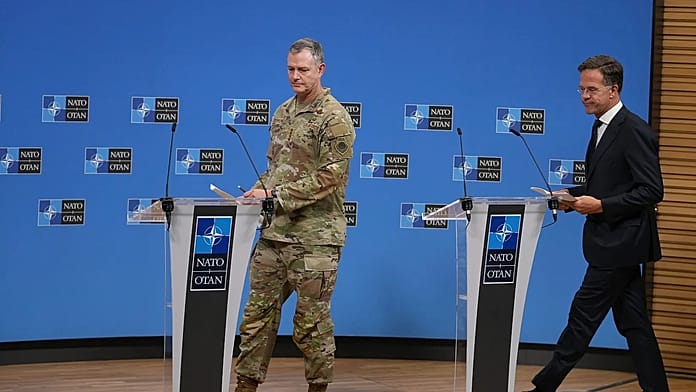
NATO ministers meet as US plans to pull away from European security The summit will focus on the Trump administrations plans to withdraw guarantees of support for European security architecture – even in wartime – and the depletion of the alliances critical weapons stocks due to the ongoing war in Iran.
euronews · about 3 hours ago
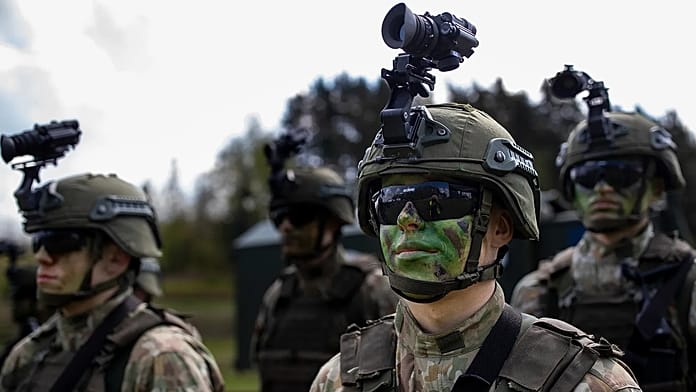
Newsletter: NATO alliance and Balts hold the defensive line As NATO foreign ministers meet in Sweden on Thursday to discuss the role of Washington in the military alliance, as well as dwindling ammunition stocks, the Baltics are coming to grips with repeated drone incursions threatening chaos in capitals – and Europes eastern flank.
euronews · about 3 hours ago
Armele pe care dăm miliarde, dar prezintă risc pentru viețile militarilor în război. General NATO: „Există soluții mai ieftine și mai sigure România dă miliarde pe arme, dar unele ar putea deveni inutile pe termen mediu și lung, avertizează generalul (r) Dorin Toma, fost comandant al Comandamentului Diviziei Multinaţionale Sud-Est a NATO. El explică cine ar fi trebuit să se ocupe de strategia militară a României, care nu există până azi.
adevarul · about 4 hours ago
Europa, în genunchi în fața gigantului Palantir. Avertismentul dur al unui comandant NATO: „Nu avem alternativă la tehnologia americană de război Într-un moment în care bătrânul continent încearcă cu disperare să își definească o „suveranitate strategică, realitatea din teren lovește necruțător.
adevarul · about 4 hours ago

Peace in Europe no longer default situation, warns Czech president Petr Pavel – Europe live European state officials are meeting in Prague to discuss the state of the transatlantic alliance at a global security conferencePavel also warns against Europe losing out through bureaucratic obstacles.He points to Ukraines ability to innovate and live test new solutions, such as drones, within days, going through procurement and production to an accelerated timeline.Ukraine has demonstrated not only determination and heroism, but also unbelievable capacity to adjust, to innovate, to change. It is something that we in Europe have lost through many regulatory measures that are necessary in peacetime, but of course in conflict you have to be … flexible and achieve the results in shortest possible time. …I think we have to take it seriously, because mainly China is our is doing tremendous progress in this, and experience from both Ukraine and the Middle East shows that technological superiority can be a true game changer. Continue reading...
theguardian · about 5 hours ago
Czech president Petr Pavel warns Russia will be Europes main security threat for decades – Europe live European state officials are meeting in Prague to discuss the state of the transatlantic alliance at a global security conferenceIn a stark warning, Pavel – a retired Nato general – warns that peace in Europe can no longer be treated as the default state of affairs.It must once again be actively protected, defended and maintained. The lesson of this moment is not that Europe is alone it is that Europe needs to be strong enough to stand on its own when needed. Continue reading...
theguardian · about 5 hours ago
Șeful NATO spune că reducerea prezenței militare americane în Europa era „așteptată și nu va afecta planurile de apărare ale Alianței Secretarul general al NATO, Mark Rutte, încearcă să joace cartea calmului în fața unei decizii care riscă să destabilizeze flancul estic al Alianței.
adevarul · about 5 hours ago
Baltics and Canada call for improved NATO situational awareness The Minister of Foreign Affairs of Canada and the Foreign Ministers of Estonia, Lithuania and Latvia were due to meet in Tallinn, Estonia for the fourth Canada–Baltics 3+1 Foreign Ministers Meeting on May 20th.
lsm.lv · about 5 hours ago
Miniștrii de Externe ai NATO se reunesc în Suedia după anunțurile SUA legate de reducerea implicării în securitatea Europei Miniștrii de externe ai statelor NATO se reunesc timp de două zile în Suedia, într-un context marcat de discuții privind viitorul implicării Statelor Unite în securitatea europeană, după anunțurile administrației Trump privind o posibilă reducere a rolului american în cadrul Alianței.
adevarul · about 6 hours ago
De ce ne refuză Germania trupele, deși trimite Patriot în Turcia? Cum poate Bucureștiul să forțeze mâna Berlinului Germania trimite o baterie Patriot în Turcia și vrea un rol sporit pe flancul de Est NATO, dar refuză să trimită trupe în România. Experții consultați de „Adevărul explică cum funcționează apărarea în Est și ce ar trebui să facă România, pentru a beneficia de o prezență militară germană.
adevarul · about 9 hours ago
„Am atacat NATO și am câștigat. Simularea unui atac fulger al Rusiei asupra Lituaniei nu s-a terminat bine pentru europeni Un analist militar care a jucat rolul șefului Statului Major rus într-un exercițiu strategic desfășurat în Germania afirmă că NATO ar putea fi vulnerabilă în fața unei crize rapide pe flancul estic, în special dacă reacția politică europeană este întârziată sau divizată, scrie Foreign Policy.
adevarul · about 10 hours ago