
Egyptian inscription links ancient Heracles to Greek demigod: New evidence challenges myth origins
A newly uncovered inscription in Egypt suggests a direct link between the legendary Greek hero Heracles and an ancient Egyptian king of the same name, reigniting debate over the myth’s origins. According to Greek Reporter, archaeologists working near Luxor have identified a 14th-century BCE stele that explicitly names a pharaoh as "Heracles," a title previously thought to be a later Hellenic adaptation. The discovery, dated to the reign of Amenhotep III, predates Homer by at least 500 years, challenging the long-held assumption that the Greek Heracles was purely a product of Mycenaean or later tradition.
The stele depicts the king performing feats strikingly similar to those of the Greek demigod, including the slaying of a lion and the capture of a bull—motifs central to Heracles’ Twelve Labors. Egyptologists at the American University in Cairo note that the iconography aligns with the "Heracleopolitan" period of Egyptian history, a time when the cult of Heryshaf, a ram-headed deity associated with strength, flourished. "This isn’t just a case of shared mythology," said lead researcher Dr. Amina Khalil. "The Egyptian Heracles appears to be a historical figure whose exploits were later absorbed into Greek tradition, possibly through trade or military contact with the Aegean."
The findings coincide with renewed interest in Heracles’ military associations, particularly in Spain, where Princess Leonor of Asturias has completed an advanced parachuting course as part of her military training. *El Mundo* reports that the 18-year-old heir to the Spanish throne is the first royal in her lineage to qualify as a paratrooper, a role historically tied to elite units like the Spanish Legion—whose insignia includes the mythological figure of Hercules. While the palace has not commented on the symbolic connection, military historians point to the Legion’s 1920s adoption of Heracles as a patron, citing his labors as metaphors for endurance and discipline.
Scholars caution that the Egyptian Heracles may not be a single individual but a dynastic title, much like "Pharaoh." However, the Luxor stele’s detailed carvings—including a scene of the king wrestling a serpent—mirror the Greek Heracles’ battle with the Hydra, suggesting a deliberate cultural borrowing. "The Greeks didn’t invent these stories in a vacuum," said Dr. Khalil. "They repurposed them, much like the Romans later did with Greek myths."
The research, published in the *Journal of Egyptian Archaeology*, arrives as Greece prepares to host the 2026 International Congress of Classical Studies, where the Heracles debate is expected to dominate discussions. Meanwhile, in Spain, Princess Leonor’s parachuting milestone has sparked speculation about her future role in the armed forces, with some analysts drawing parallels to Heracles’ dual identity as both warrior and divine protector. The Spanish Ministry of Defense declined to confirm whether her training included references to the myth, but a source close to the royal household noted that "the princess is well aware of the symbolism."
- independent
- courrier international
- adevarul
- france24
- elmundo
Articles

The Ancient Egyptian King Known as Heracles Heracles, also known as Hercules, is one of the most famous heroes of Greek mythology. Interestingly, ancient records reveal that an Egyptian king from the time before Homer also went by the same name of Heracles, but what do we know about him, and what might his connection to the Greek one be? Heracles of […]
greek reporter · 5 days ago

Del primer salto a uno nocturno: así se ha convertido la Princesa Leonor en paracaidista La Princesa de Asturias se diferencia así de su padre, Felipe VI, y su abuelo, Juan Carlos I, pues ninguno de los dos realizó el curso básico de paracaidismo complementario a su formación militar Leer
elmundo · 5 days ago
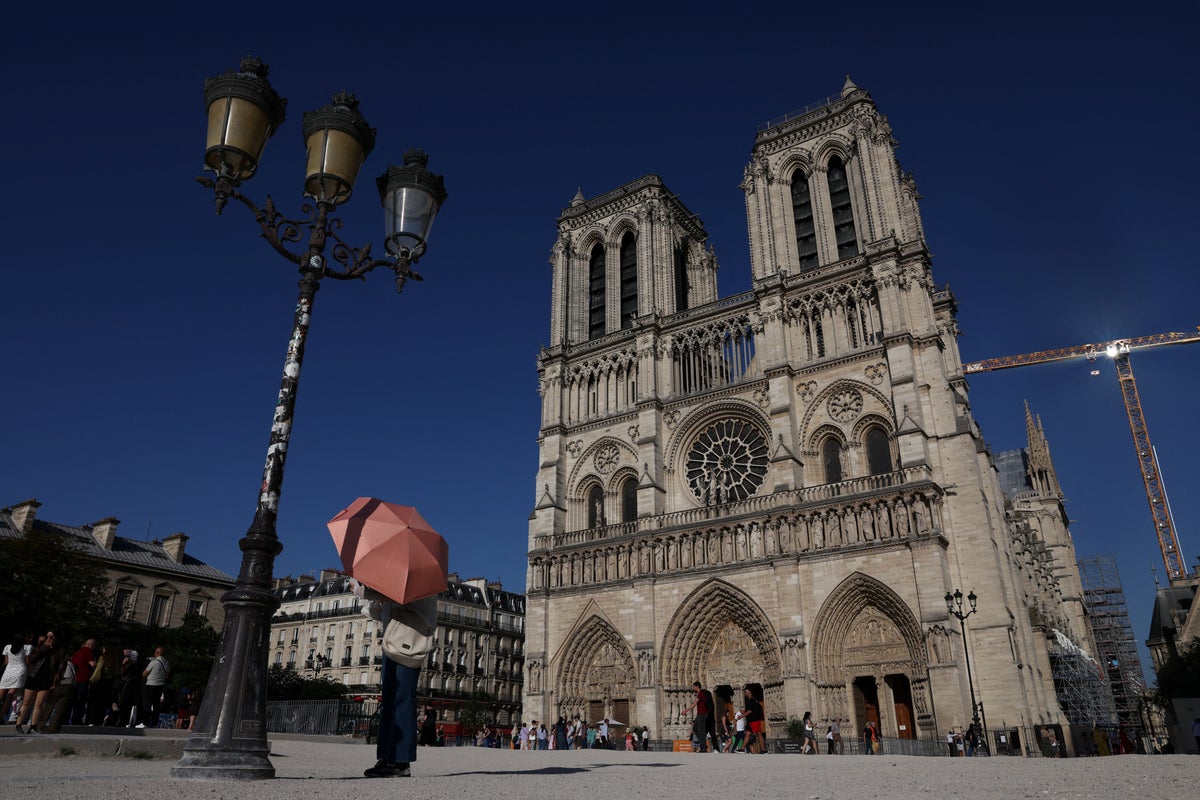
Archaeologists digging beneath Notre Dame uncover 2,000 years of history Archaeologists are digging beneath Notre Dame Cathedral to explore as far back as Roman Paris from 2,000 years ago
independent · 5 days ago

En Géorgie, 40 000 bouteilles de vins ayant appartenu à Staline mises aux enchères Fin mai, une cave à vin denviron 40 000 bouteilles, certaines datant du début du XIXe siècle et ayant ensuite appartenu au dictateur Joseph Staline, a ouvert ses portes. La mise aux enchères par le gouvernement permettra de financer une école dœnologie.
courrier international · 5 days ago
How Greece Influenced Venice and Its Republic Venice is a city whose history conjures up all sorts of images, memories and feelings, but how many of us think of Greece when we talk about Venice? Gondolas cutting through water, the impossible beauty of St. Marks Square, maybe the mystery of Carnival masks and the many museums—these are the classic images. Venice feels […]
greek reporter · 5 days ago
Misterul Eufratului, râul din Grădina Edenului. O descoperire geologică majoră elucidează originile „leagănului civilizației O descoperire geologică de proporții a scos la iveală ceea ce cercetătorii numesc un capitol necunoscut din istoria unui curs de apă legat ombilical de una dintre cele mai fascinante povestiri din Biblie, scrie Daily Mail.
adevarul · 5 days ago

Tras la herencia de los "Zapatero Espinosa" en el pueblo de su abuelo pudiente...al que nunca quiso ir: "No ha querido saber nada, es como si sintiera alergia de la memoria" Las joyas de la caja fuerte de Ferraz han reabierto una historia familiar que en Tordehumos nunca se consideró un misterio. Entre partidas de bingo y relatos compartidos, los vecinos evocan la figura de Faustino Zapatero, un médico admirado por generaciones, "pudiente pero humilde", y se preguntan por qué el ex presidente del Gobierno nunca ha visitado el pueblo donde nació su madre, quien le dio su célebre apellido Leer
elmundo · 5 days ago
French wine made in late 1890s and hidden under Czech castle lovingly restored Eight bottles of Chateau dYquem – one of the worlds most expensive white wines – were among a collection of 136 bottles discovered under a Czech castle floor that were hidden by the owners after the end of World War II. They have now been restored by the original French winemakers in what the cellar master called a "magical experience" of preserving "liquid memory".
france24 · 5 days ago
Legendary 130-year-old French wine restored after decades under Czech castle floor 👉 Read more:
telegram bot · 5 days ago