
Dettol pulls China ad after outrage over 'dirty women' and 'toxic men' framing
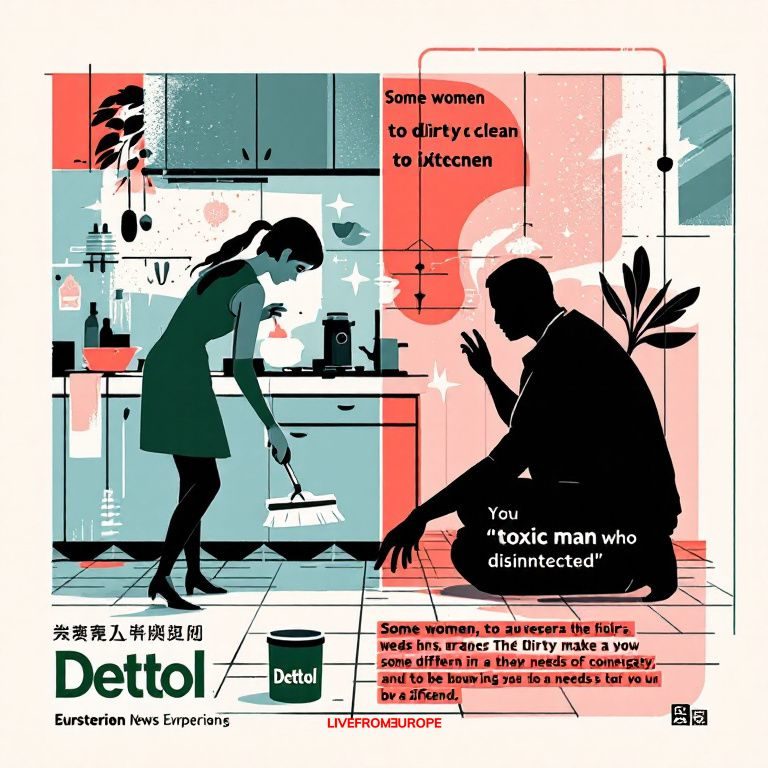
Dettol withdrew a controversial advertisement in China on Tuesday after it sparked widespread outrage for framing women as “dirty” and men as “toxic,” prompting an immediate apology from the disinfectant brand. The 30-second spot, which aired on Chinese social media platforms on 23 June 2026, depicted a woman scrubbing a kitchen floor while a voice-over intoned that “some women are too dirty to clean,” before pivoting to a male character described as “a toxic man who needs to be disinfected.” The campaign was intended to challenge gender stereotypes but was widely interpreted as reinforcing them, drawing swift condemnation from Chinese users on Weibo and WeChat.
By Wednesday morning, Dettol had removed the advertisement and issued a public apology in both English and Mandarin. “We are deeply sorry for the offence caused by our recent advertisement in China,” the company said in a statement posted on its official Weibo account. “The intent was to promote hygiene and respect, but the execution missed the mark entirely. We have taken immediate action to withdraw the content and are reviewing our creative process.” The apology echoed reactions on Chinese social media, where users described the advertisement as “shocking,” “backwards,” and “a new low in corporate messaging.”
The backlash unfolded within hours of the advertisement’s release. Users shared screenshots and video clips of the spot, tagging Dettol and Chinese regulators, while state media outlets highlighted the incident as an example of foreign brands failing to understand local cultural sensitivities. “This is not just bad advertising—it’s a betrayal of basic respect,” wrote one influencer with 2.3 million followers on Weibo. Another user commented, “If Dettol thinks women are dirty, what does that say about their products?”
Dettol, owned by British multinational Reckitt, has faced similar controversies in the past, including a 2024 advertisement in India that was criticised for promoting gender stereotypes. The company’s swift response in China contrasts with its slower reaction in previous incidents, reflecting the heightened scrutiny of multinational brands operating in the country’s tightly controlled digital ecosystem. Regulators have not yet commented publicly, but industry analysts expect tighter oversight of foreign advertisements targeting Chinese consumers.
The episode underscores the risks of global brands attempting to address social issues through advertising without adequate localisation or cultural insight. As one marketing professor at Peking University noted, “What works in one market can backfire spectacularly in another. Dettol’s apology is a necessary first step, but the damage to its reputation in China may already be done.”
- 2
- 1
- 1
- 1
- 1
Articles

32 millió szúnyogot akar szabadon engedni a Google Rengeteg szúnyogot akar a Google szabadon engedni Kaliforniában és Floridában, természetesen nem gonoszságból. Ezek a rovarok ugyanis ártalmatlan, baktériumok segítségével módosított hímek, és megszabadíthatják az embereket a valóban veszélyes szúnyogoktól.
hvg.hu · about 3 hours ago

Stämplad som dömande vit medelklasskvinna I USA har namnet Karen blivit en etikett för en krävande och dömande vit medelklasskvinna. Vad händer när ett namn plötsligt får andra att se dömande på dig?
svenska dagbladet · about 3 hours ago
Σάλος στην Κίνα με διαφήμιση καθαριστικού για «βρώμικες γυναίκες» και «τοξικούς άνδρες», την απέσυραν άρον άρον, δείτε βίντεο Η Dettol προχώρησε σε δημόσια συγγνώμη - «Τι απαίσια διαφήμιση, με άφησε άφωνο», γράφουν χρήστες σε κινεζικά μέσα κοινωνικής δικτύωσης
protothema · about 4 hours ago
„Resurrection: Wundertüte chinesischer Kinogeschichte [premium] Bi Gans neuer Film ist eine Hommage an den Film und die menschlichen Sinne. Das klingt verkopft, funktioniert aber dank eindrucksvoller Bilder.
die presse · about 4 hours ago

"Resurrection" übersetzt das Filmgedächtnis der Menschheit ins Chinesische Der chinesische Regisseur Bi Gan ist ein internationaler Festivalstar, zu Hause aber ein unverstandenes Unikum. Filme wie dieser über Menschen ohne Träume sind selten geworden
der standard · about 4 hours ago
Disinfectant brand apologises after toxic men advert backfires in China Dettol has apologised after an advert in China intended to challenge sexism was accused of reinforcing it.
aljazeera · about 4 hours ago