
China recovers first reusable rocket as SpaceX nears Starship test flight

Story Timeline
3 days · 2 summary articles
China recovers first reusable rocket as SpaceX nears Starship test flight
China recovers orbital rocket stage with net-capture system in South China Sea
Continuation
China has successfully recovered its first reusable rocket, marking a significant milestone in the country's space program. The Long March 10B rocket was caught in a net on a platform at sea, a method different from that used by SpaceX. The rocket was not damaged during the recovery and is expected to be reused soon. This achievement is a major step forward for China's space program, which aims to become a major space power by 2030.
The Chinese method involves using a net to catch the rocket, which is then lowered onto a platform. This method is seen as a way to reduce the risk of damage to the rocket during landing. The successful recovery of the Long March 10B rocket is a significant achievement for China's space program, as the country aims to become a major space power by 2030.
Meanwhile, the Federal Aviation Administration (FAA) has concluded its review of SpaceX's Starship, clearing the way for the next test flight later this week. The review was necessary to ensure that the Starship meets all safety and regulatory requirements before it can be launched again. The successful completion of the FAA review is a major milestone for SpaceX, as it prepares for the next test flight of the Starship.
The Starship is SpaceX's next-generation spacecraft, designed to be fully reusable and capable of carrying crew and cargo to Earth orbit, the Moon, Mars, and beyond. The upcoming test flight is highly anticipated, as it will demonstrate the capabilities of the Starship and bring SpaceX one step closer to its goal of making space travel more accessible and affordable.
In another development, NASA's Swift satellite, which observes the death of stars, is in danger of being lost due to a technical issue. A startup has developed a rescue mission in just nine months to save the satellite and continue its mission. The satellite has been instrumental in observing gamma-ray bursts and other astronomical phenomena, and its loss would be a significant blow to the scientific community.
In the commercial space sector, Voyager Technologies has completed its acquisition of Astrobotic Technology, a lunar infrastructure company. Astrobotic recently won two NASA lunar lander missions, highlighting the growing role of private companies in space exploration. The acquisition is expected to strengthen Voyager's position in the space industry and support NASA's plans for lunar exploration.
These developments highlight the rapid advancements in space technology and the increasing competition in the space industry. China's successful recovery of a reusable rocket, SpaceX's preparation for the next test flight of the Starship, the race to save NASA's Swift satellite, and the acquisition of Astrobotic Technology by Voyager Technologies are significant milestones that will shape the future of space exploration.
As the space industry continues to evolve, the focus will be on developing new technologies and improving existing ones to make space exploration more efficient and cost-effective. The successful recovery of the Long March 10B rocket, the upcoming test flight of the Starship, the rescue mission for the Swift satellite, and the acquisition of Astrobotic Technology are just the beginning of what promises to be an exciting era in space exploration.
Follow us for live European news
- 3
- 2
- 2
- 2
- 2
- 1
- 1
- 1
- 1
- 1
- 1
- 1
2 further sources not geolocated
Articles

Japonia înființează o nouă agenție de securitate pentru a consolida măsurile împotriva activităților de spionaj străin Guvernul Japoniei a declarat că intenționează să își consolideze capacitatea de a contracara activitățile serviciilor de informații străine, după publicarea unei investigații a The New York Times care susține că Rusia folosește teritoriul japonez pentru colectarea de informații și procurarea de comp
adevarul · about 6 hours ago
Cu sufletul la gură: un avion Wizz Air a decolat la 162 de metri de finalul pistei. Ce au omis piloții Un avion care opera un zbor pentru Wizz Air a decolat de pe aeroportul Luton cu doar 162 de metri de pistă rămași în față, după o eroare procedurală a echipajului.
adevarul · about 6 hours ago
Surpriză pe Autostrada Transilvania. În decembrie s-ar putea circula pe tronsonul Biharia - Chiribiș, care apropie Târgu Mureș de Oradea Lotul de 28,55 kilometri dintre Biharia și Chiribiș al Autostrăzii Transilvania ar putea fi „marea surpriză, deoarece există posibilitatea încheierii lucrărilor în ultima lună a acestui an, cu 5 luni înaintea termenului prevăzut în contract, arată Asociația Pro Infrastructură.
adevarul · about 6 hours ago
ESA welcomes new UK space and defence gateway His Majesty King Charles III visited the UKs largest space cluster on 10 July to launch a new initiative designed to shape the future of the space and defence economy.
esa · about 6 hours ago
FAA Starship Review Ends Ahead of SpaceXs Next Test Flight Washington, D.C., July 13 Brussels Morning Newspaper – FAA Starship review has concluded, clearing an important regulatory milestone for SpaceX as the company prepares for its next Starship test flight later this week. The Federal Aviation Administration announced that it … Read more
brussels morning · about 6 hours ago
🇬🇧 🇫🇷 Bayeux Tapestry arrives in London after epic journey from France The medieval Bayeux Tapestry arrives in London after a hugely complicated journey to leave France for the first time in more than 900 years for an exhibition in the British capital.
bluesky_AFP English · about 6 hours ago

La huelga de Renfe de este miércoles contará con servicios mínimos del 66 El Sindicato Ferroviario convoca este miércoles la segunda jornada de huelga de 24 horas en Renfe, tras la llevada a cabo el pasado lunes 29 de junio, para la que el Ministerio de Transportes establece unos servicios mínimos de al menos el 66 en media distancia y el 73 en alta velocidad. Leer
expansion · about 6 hours ago

Rakete gefangen, Rückstand auf SpaceX verkürzt – so funktioniert Chinas Seil-Trick Vor zehn Jahren begann die Ära wiederverwendbarer Raketen durch den Raumfahrtkonzern SpaceX von Elon Musk. Jetzt ist China als weltweit zweitem Staat die Rückholung gelungen – allerdings mit einer komplett anderen Landetechnik.
welt.de · about 6 hours ago

Kína megcsinálta: karcolás nélkül leszállt az ország első újrahasználható rakétája – videó Sikerrel leszállt egy hálóval körbevett vízi platformra a kínai Hosszú Menetelés 10B hordozórakéta. Eddig hasonló bravúrra csak az amerikai SpaceX volt képes.
hvg.hu · about 6 hours ago
Bahnhofsmodernisierung: Bahn schließt 70 von 130 geplanten Bahnhofssanierungen ab 130 Bahnhöfe sollen in diesem Jahr »zukunftsfähig« werden. Mit dem Programm will die Bahn den »Start einer jeden Fahrt so positiv wie möglich« gestalten.
die zeit · about 6 hours ago
Primii metri de asfalt pe cel mai mare nod rutier din România, care leagă autostrăzile A7 și A8. Anunțul secretarului de stat în Transporturi A început așternerea asfaltului la cel mai mare nod rutier turbion din România, construit pe Lotul 3 Mircești-Pașcani al Autostrăzii A7 Bacău-Pașcani. Nodul, amplasat la sud de Pașcani, va asigura conexiunea dintre autostrăzile A7 și A8.
adevarul · about 6 hours ago
New public transport strikes looming as contract talks stall New strikes are looming in public transport this autumn.
nltimes.nl · about 6 hours ago
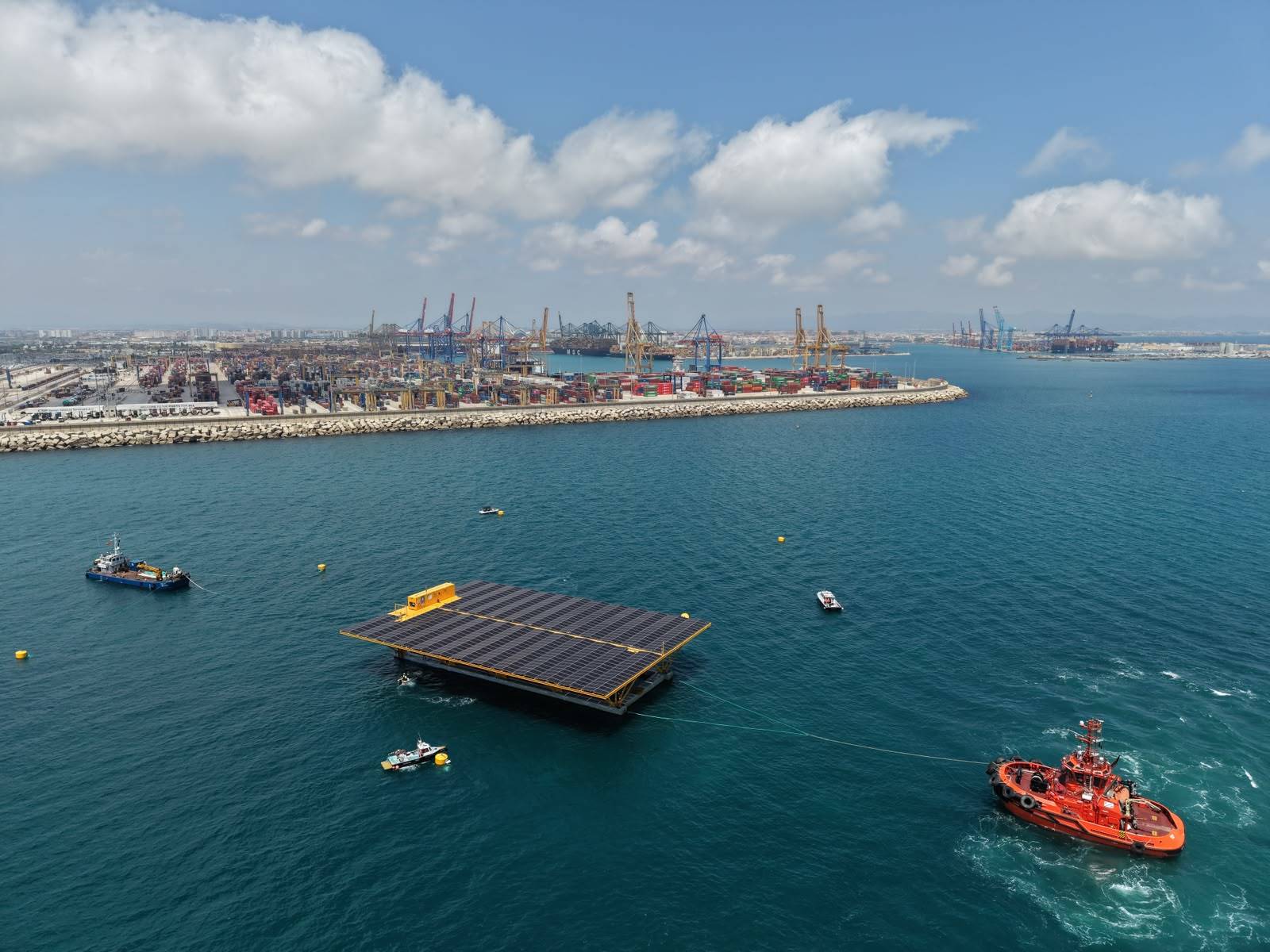
El Puerto de Valencia instala la primera plataforma solar marina de España Tiene un equipo flotante similar a un catamarán y placas bifaciales que absorben la luz solar directa y el reflejo en el agua del mar. Leer
expansion · about 6 hours ago

China desarrolla una batería nuclear barata que puede durar miles de años Investigadores chinos crean una batería nuclear de carbono-14 que multiplica por 15 su densidad de potencia y puede durar miles de años cuyo desarrollo es un 100 de fabricación nacional. Leer
expansion · about 6 hours ago

Cuatro traslados al hospital en el penúltimo encierro de San Fermín Los toros de Miura protagonizan un recorrido rápido y limpio, sin heridos por asta
la vanguardia · about 6 hours ago
Transavia verzekert dat lange wachtrijen van zondag eenmalig waren Luchtvaartmaatschappij Transavia zegt dat de capaciteitsproblemen in de nacht van zaterdag op zondag op Schiphol een incident zijn. Tientallen mensen misten hun vlucht door lange rijen bij de incheckbalie.
nu.nl · about 6 hours ago

Rekordschiff „Notre Dame setzt auf LNG und Biomethan – ein Blick in die Zukunft Die „Notre Dame bringt eine neue Größenordnung in den Hamburger Hafen – und ein Versprechen für klimafreundlichere Transporte. Das LNG-Gigantschiff läuft künftig regelmäßig die Hansestadt an und verknüpft Hamburg direkt mit den großen Häfen Asiens.
welt.de · about 6 hours ago
Bauarbeiten: Neuer Tunnel soll U-Bahn-Betrieb in Berlin stabiler machen Südlich vom Alexanderplatz erneuert die BVG aufwendig einen Tunnel unter der Spree. Fahrgäste werden dort nicht durchfahren. Trotzdem sollen sie davon profitieren.
tagesspiegel · about 6 hours ago
Typhoon Bavi grounds thousands of flights across China Chinese carriers scrapped more than 2,800 inbound and outbound flights scheduled for Sunday as Typhoon Bavi swept across eastern and southern provinces, bringing torrential rains and thunderstorms that also triggered widespread delays at Beijings major air transport hubs, according to state media reports.
yenisafak · about 6 hours ago
Getting ready for lunar planetary defense Development in space is gaining serious momentum. Impressively, NASA recently unveiled plans for a new moon base — the first concrete step toward permanently moving human civilization off Earth. However, as we […] The post Getting ready for lunar planetary defense appeared first on SpaceNews.
spacenews · about 6 hours ago
Voyager completes acquisition of Astrobotic Voyager Technologies has completed its acquisition of lunar infrastructure company Astrobotic Technology, weeks after Astrobotic won two NASA lunar lander missions. The post Voyager completes acquisition of Astrobotic appeared first on SpaceNews.
spacenews · about 6 hours ago
Reditus Space completes first reentry vehicle Reditus Space, a startup developing recoverable and reusable spacecraft, has completed its first vehicle for launch later this year. The post Reditus Space completes first reentry vehicle appeared first on SpaceNews.
spacenews · about 6 hours ago
Care este stadiul de construcție al celor 8 spitale prevăzute în PNRR. Guvernul a alocat bani de la buget pentru finalizare Ministrul interimar al Dezvoltării, Cseke Attila, a afirmat, luni, că unu dintre cele opt spitale realizate prin PNRR, cel de la Constanţa, nu va fi terminat la timp, finalizarea lucrării prin fonduri europene structurale fiind estimată pentru primăvara anului viitor. Pentru alte cinci spitale programate a fi realizate cu fonduri din PNRR a fost nevoie de suplimentarea finanţării cu fonduri de la bugetul statului.
digi24 · about 6 hours ago

The Green Great Wall of China: Scientists issue new warning despite 50 years of work to tame desert growth For half a century, workers in northern China have been using a technique called straw checkerboards to combat desertification
independent · about 6 hours ago

FAA closes Starship review ahead of SpaceXs next test flight this week reut.rs/4fcgPn8
bluesky_Reuters · about 6 hours ago
Kas kosmoses on tuumarelvi – uus tehnoloogiline lahendus aitaks seda tõestada 1967. aastal allkirjastasid paljud riigid lepingu, mille alusel ei tohi keegi paigutada kosmosesse tuumarelvi. 2022. aastal aga lennutas Venemaa orbiidile kahtlase satelliidi, millel kahtlustatakse olevat tuumaseadme komponente – riik ise eitab seda. Kasvava kosmose-tuumaohu valguses on üks Ameerika teadlane pakkunud välja viisi, kuidas tuvastada satelliitidel olevaid tuumarelvasid.
postimees · about 6 hours ago
Tallinna Reaalkool tahab kaks mälestusmärki ümber tõsta Reaalkoolil on plaan teisaldada senisest asukohast Estonia puiesteel Tallinna Keskraamatukogu kõrval olev Rootsi sõjalaeva Riksens Ständeri mälestusmärk ning tuua selle asemele praegu teisel pool tänavat, Eesti Panga hoone nurgal asuv Ernst Peterson-Särgava mälestusmärk.
postimees · about 6 hours ago
Darovat krev mohou lidé nově v Plané na Tachovsku. Na zájemce tu čekají vždy jednou měsíčně Dárci krve mohou nově přicházet do Nemocnice Svatá Anna v Plané na Tachovsku, kde už funguje odběrové místo krevní plazmy. V minulosti měli lidé možnost darovat krev v Českém červeném kříži v Tachově, kam dojížděli pracovníci plzeňské transfúzní stanice. Výjezdní odběry tam ale loni na konci roku skončily.
irozhlas.cz · about 6 hours ago

Des chantiers dampleur à Bruxelles, dont la métamorphose du rond-point Meiser Le gouvernement bruxellois a donné son aval pour poursuivre les procédures de trois chantiers : la métamorphose du rond-point Meiser, la rénovation de la chaussée de Ninove (Mettewie-frontière régionale) et lesplanade du CHU Brugmann à Laeken. Détails et explications. ...
la libre · about 6 hours ago

Plusieurs lignes de tram à larrêt ce mardi à Bruxelles : voici pourquoi La circulation de plusieurs lignes de tram est fortement perturbée lundi après-midi à Bruxelles en raison de dégâts aux lignes aériennes à hauteur de la place Poelaert, a indiqué la Stib peu après 14h00. Lincident affecte plusieurs axes importants reliant le sud de la capitale au centre-ville. ...
la libre · about 6 hours ago