
Italy orders expulsion of two Russian military attachés after spy ring uncovered

Italy on Thursday ordered the expulsion of two Russian military attachés from its embassy in Rome, accusing Moscow of “serious and unacceptable acts of interference” after prosecutors uncovered a spy ring that had funnelled classified military secrets to Russia.
Foreign Minister Antonio Tajani named the diplomats as Ivan Petrovich Gorbachev and Mikhail Vasilyevich Astakhov, giving them 72 hours to leave the country. “Moscow continues to use hybrid warfare to attack the West and Italy,” Tajani wrote on X, adding that the expulsions followed the arrest of two former Italian intelligence officers accused of passing Moscow details on military aid to Ukraine.
Rome police said one of the detained Italians, a 59-year-old former officer, had been paid by a Russian handler and disclosed “thousands” of items of information over 12 years through six sources, including four serving military personnel with high-level clearances. According to media reports, the material included details of the SAMP/T air defence system—an Italian-French system due to be delivered to Ukraine this year—and the Aster missiles already in Kyiv’s arsenal. Russian handlers also sought intelligence on a NATO mission in Bulgaria and the Italian company Avio, which produces motors for drones and supersonic missiles. The suspect allegedly provided the identities of Italian counter-espionage agents tasked with monitoring the Russians.
Italy’s Defence Minister Guido Crosetto called the case “just the tip of the iceberg” in what he described as Russia’s hybrid war across Europe. In 2024, an Italian court jailed a navy captain for selling classified documents to the Russian embassy.
Across the border, a Polish court sentenced a Russian activist and his wife to prison for spying on behalf of Russia’s Federal Security Service (FSB) and plotting to send a parcel bomb. Igor Rogov, a former employee of the now-defunct Open Russia, received seven years for gathering intelligence on Polish-based Russian opposition figures and activists and passing it to the FSB. His wife, Irina Rogova, was jailed for three years for aiding and abetting.
Prosecutors said Rogov had collected information on individuals and institutions supporting Russian dissidents, including employees of Poland’s foreign ministry, and transmitted it via an electronic storage device handled by his wife. Rogov told investigators he had acted under pressure, claiming FSB officers “knew everything” about him and threatening his father with conscription into the war in Ukraine. The couple were arrested in July 2024 and tried in closed session due to national security concerns.
Rogov and his wife had fled Russia after the 2022 invasion of Ukraine and were granted refugee status in Poland. Their trial, which began in January 2026, heard that they had also participated in a plot to send a courier package containing explosives and a detonator, intercepted by authorities before delivery.
The twin cases underscore a widening pattern of Russian espionage across Europe as Moscow seeks to disrupt Western military support for Ukraine and suppress domestic dissent. In Italy, the expulsions triggered a pledge from Moscow to respond “adequately,” while in Poland the convictions highlight the risks faced by Russian exiles who cooperate with Moscow under duress.
Follow us for live European news
- 2
- 2
- 1
- 1
- 1
- 1
- 1
- 1
- 1
- 1
- 1
7 further sources not geolocated
Articles

Interpol: 5,811 Arrested, $293M Seized in Massive Cyber Crackdown www.occrp.org/en/news/inte...
bluesky_OCCRP · about 2 hours ago

Former Ukrainian Captives Tell of Torment at Hands of Russian Prison Doctor www.occrp.org/en/investiga...
bluesky_OCCRP · about 2 hours ago

Russian opposition activist Igor Rogov was sentenced to seven years in prison by a Polish court after admitting he had shared sensitive information on other Russian dissidents with Moscows Federal Security Service.
bluesky_Politico Europe · about 2 hours ago

Russian serviceman who threatened Putin with mutiny freed after 11 days in jail
telegram_Meduza · about 2 hours ago
Russias FSB says it thwarted unprecedented terrorist attacks targeting military personnel, including plot to assassinate senior Defense Ministry officer
telegram_Meduza · about 2 hours ago
Italy expels two Russian military attachés for spying Italian Foreign Minister Antonio Tajani has said that on 9 July, the Italian government took the decision to expel two military attachés at the Russian embassy in Rome who had been responsible for espionage activities carried out on behalf of Moscow.
ukrpravda · about 2 hours ago
Italové vyhostí dva ruské vojenské přidělence z ambasády, kvůli špionáži Itálie vyhostí dva vojenské přidělence na ruské ambasádě, podíleli se na špionážní činnosti, uvedla podle agentury AFP italská diplomacie. Oba Rusové musí zemi opustit do tří dnů. Krok přichází poté, ...
respekt · about 2 hours ago
Espionnage : lItalie expulse deux agents russes sous couverture diplomatique Ils sont soupçonnés davoir transmis à Moscou des informations sensibles sur laide militaire à lUkraine. Rome dénonce une «ingérence grave et inacceptable» et donne trois jours aux deux diplomates visés pour quitter le pays.
liberation · about 2 hours ago
Russian couple jailed in Poland for espionage and sending parcel bomb The pair had refugee status in Poland but spied on Russian opposition activists.
notes from poland · about 2 hours ago
Italy Expels 2 Russian Embassy Employees for Spying Russias Foreign Ministry said it would respond to Italys expulsion of the two officials.
themoscowtimes · about 2 hours ago
FSB Claims It Foiled Ukrainian Assassination Plots Against Military Officials The FSB accused Ukrainian intelligence of recruiting a young Moscow woman and a Russian ex-convict living in Ukraine to carry out the attacks.
themoscowtimes · about 2 hours ago
Moscow Judge Sentences Veteran Activist Lev Ponomaryov to 5.5 Years in Prison in Absentia A judge convicted Ponomaryov of both evading his foreign agent obligations and participating in an undesirable organization.
themoscowtimes · about 2 hours ago
Polish Court Jails Russian Activist and Wife for Spying for FSB Igor Rogov, a former employee of the now-defunct nonprofit Open Russia, was sentenced to seven years in prison for passing information about Poland-based Russian opposition groups and activists to the FSB.
themoscowtimes · about 2 hours ago
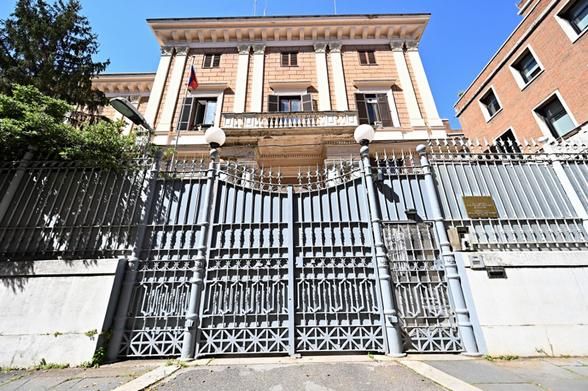
KYIV POST: Italy Expels 2 Russian Diplomats Accused of Spying: Minister The minister named the Russians as Ivan Petrovich Gorbachev and Mikhail Vasilyevich Astakhov and said they had been ordered to leave within three days. The expulsions came two days after police announced the arrest of two former Italian intelligence agents who media reports said gave Russia secrets on military aid to Ukraine. #Europe #World
mastodon bot · about 2 hours ago

⚡️Sham Russian court sentences Ukrainian marine commanders to life imprisonment for Mariupol defense. Russia regularly uses trumped-up charges to jail captured Ukrainian soldiers, activists, journalists, and regular civilians for lengthy terms.
bluesky_Kyiv Independent · about 2 hours ago
Ukrajinský soud poslal do vazby jednoho z podezřelých v případu vraždy Anastasije Berezovské Ukrajinský soud poslal do vazby jednoho z podezřelých v případu vraždy Ukrajinky Anastasije Berezovské, kterou úřady podezřívají z podílu na nedávném bombovém útoku v Monaku. Informoval o tom server RBK-Ukrajina, podle něhož je zmíněným podezřelým pracovník ukrajinské vojenské rozvědky HUR Vladyslav Reut.
irozhlas.cz · about 2 hours ago
Suomi sai virallisen ilmoituksen Venäjältä
iltalehti · about 2 hours ago

Handel met Rusland en een gokker met tonnen cash: zo ging ABN Amro (weer) duur de fout in
parool · about 2 hours ago

Orosz kémházaspárt ítéltek börtönre Lengyelországban A férfi Lengyelországban élő orosz ellenzékiekről és támogatóikról gyűjtött adatokat, amelyeket felesége továbbított az FSZB-nek, majd egy robbanószerkezeteket tartalmazó küldemény előkészítésében is részt vett.
hvg.hu · about 2 hours ago
Scandal de spionaj în Italia: Doi diplomați ruși, expulzați. Moscova pregătește „un răspuns adecvat Italia a expulzat doi diplomați ruși acuzați de spionaj, după arestarea a doi foști agenți italieni de informații suspectați că au transmis Moscovei informații militare. Rusia a anunțat că va oferi „un răspuns adecvat.
adevarul · about 2 hours ago
Primul arestat în cazul atentatului din Monaco. Un fost ofițer SBU, acuzat că a executat suspecta căutată de Interpol Un fost ofițer al Serviciului de Securitate al Ucrainei (SBU) a fost arestat fără drept de cauțiune, fiind acuzat că a ucis-o pe femeia suspectată de atentatul cu bombă din Monaco. Complicele său a povestit în instanță cum ar fi avut loc execuția.
adevarul · about 2 hours ago

Szpiegostwo dla FSB i paczka z bombą. Rosyjskie małżeństwo "uchodźców politycznych" skazane Igor R. oraz Irina R. zostali skazani na 7 i 3 lata kary pozbawienia wolności - zdecydował Sąd Okręgowy w Sosnowcu. Małżeństwo miało w Polsce status uchodźców politycznych, a współpracowało z rosyjską bezpieką.
gazeta.pl · about 2 hours ago

Chcieli wejść do biura ukraińskiej firmy w Poznaniu. Prokuratura przedstawiła mężczyznom zarzuty Kobieta, która na terenie Uniwersytetu Ekonomicznego w Poznaniu wynajmuje biuro do prowadzenia działalności gospodarczej, złożyła zawiadomienie ws. zniesławienia. Policja zabezpieczyła materiały związane ze sprawą, w tym nagranie opublikowane w internecie.
gazeta.pl · about 2 hours ago
Italy expels two Russian diplomats accused of spying, FM Antonio Tajani says
gdeltproject.org · about 2 hours ago
Italy Expels 2 Russian Diplomats Accused of Spying: Minister
gdeltproject.org · about 2 hours ago
Italy expels Russian diplomats suspected of running spy ring Expulsion comes after arrest of two retired Italian officers who allegedly passed on information to Moscow
financial times · about 2 hours ago
Russian activist who admitted spying for Moscow sentenced in Poland Investigators say the Kremlin used Igor Rogov to gather information on fellow Russian exiles and Europeans helping them settle.
politico.eu · about 2 hours ago

⚡️Men charged in killing of Monaco bombing suspect ordered held in custody without bail. Kyivs Pechersk District Court on July 9 ordered two men suspected of killing Anastasiia Berezovska, a suspect in the attempted assassination of businessman in Monaco, into detention for two months without bail.
bluesky_Kyiv Independent · about 2 hours ago
A Russian serviceman predicted his own fate.
telegram_WarTranslated · about 2 hours ago
Ukrainian court reveals details of Monaco explosion plotters murder, names second man involved An investigation has established that Anastasiia Berezovska, who is a suspect in the attempted murder of Ukrainian businessman Vadym Yermolaiev in Monaco, was killed near the village of Yuriv, Kyiv Oblast, by Vladyslav Reut and his accomplice Vitalii Zhykovych on 3 July.
ukrpravda · about 3 hours ago