 Thursday, May 21Thursday, May 21
The 15th Cannes Film Festival (2026) has drawn critical attention for its diverse lineup, jury composition, and standout films in competition. Below are key critiques and observations from the festival:
Jury and Festival Highlights
The 2026 Cannes jury is led by South Korean director Park Chan-wook, with Demi Moore among its members. Critics note the jury’s international diversity, reflecting the festival’s emphasis on global cinema. The opening days featured a strong Asian presence, including Hirokazu Kore-eda’s *Sheep in the Box* (Japan) and a South Korean film in competition, signaling Cannes’ continued engagement with Asian auteurs .
Critiques of Competition Films
1. A Woman’s Life (Charline Bourgeois-Tacquet)
2. Nagi Notes (Kôji Fukada)
3. Butterfly Jam (Kantemir Balagov)
Red Carpet and Cultural Commentary
The festival’s red carpet has drawn attention for its bold fashion choices, including Gillian Anderson’s pale pink and Gong Li’s "bluette" ensembles, though these are largely framed as aesthetic rather than critical discourse .
> Background: **Cannes 2026 opens with honors, AI debates, and political tensions over Gaza and media influence.** — *20 hours ago*
More LFE coverage on this topic
Alternative options if preferred
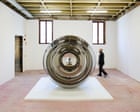
Naked jetskiers, giant bells and a celebrity seagull! Venice Biennales wildest moments – in pictures The Guardians David Levene braved two-headed worms, Pussy Riot protests and a tank of urine to bring you this photographic extravaganza from the celebrated arts festival Continue reading...
theguardian · 7 days ago

Very demure, very mindful: how Jools Lebron went viral – and her life fell apart In 2024, when she filmed a quick video in her car on a work break, she thought nothing of it. But in days she had become a meme. What followed was excitement, opportunity and a crushing pressure ...Jools Lebron was in her car, taking a break from her job in a supermarket, when she posted the TikTok video that would change her life. You see how I do my makeup for work? she told her followers that day in August 2024. Very demure, very mindful … A lot of you girls go to the interview looking like Marge Simpson and go to the job looking like Patty and Selma. Not demure.At first, it was like any other video, she says, on a video call from her home in Chicago. A few likes, a couple of comments. But then I started noticing the numbers moving faster than usual – faster than anything I had seen before. I remember refreshing my phone and just staring at it like: Wait … what is happening? Continue reading...
theguardian · 7 days ago

The Christophers — Ian McKellen and Michaela Coel have superb chemistry in art-fake comedy Steven Soderberghs film follows a fabled painter and the art restorer determined to forge his works
financial times · 7 days ago
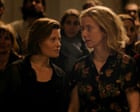
A Womans Life review – a breezy comedy of midlife crisis and same-sex affair Cannes film festival: Léa Drucker gives a bravura performance as a brilliant surgeon whose already chaotic life is further complicated by a same-sex affair with a journalistCharline Bourgeois-Tacquets new film is a hectic, garrulous, breezily agreeable comedy of midlife emotional upheaval, unencumbered by any serious or permanent concern about any of the passion and heartache that it briefly encounters. Its also a movie that declines to allow its characters to be changed in any way by the excitements and disappointments that life has to throw at them. Léa Drucker carries off the lead with terrifically competent elan; theres hardly a scene in which she is not interrupted by a call on her mobile, going into bravura walk-and-talk acting on the phone while on the street, arriving at the office or getting into or out of her car.She plays Gabrielle, a brilliant surgeon – what other sort is there in the movies? – who specialises in maxillofacial reconstruction. Gabrielle is battling budget cuts, scolding her idle interns, doing outstanding work and is heavily reliant on her assistant Kamyar (Laurent Capelluto). At home, she has a tricky relationship with her partner Henri (Charles Berling), whose teen children from his previous marriage she has raised while resenting his ingratitude for this, as well as for his somewhat semi-detached attitude to their relationship. She is also deeply concerned by her elderly mother Arlette (tenderly played by Marie-Christine Barrault) who is entering the twilight of dementia. Continue reading...
theguardian · 7 days ago
I look della seconda giornata a Cannes 2026: da Demi Moore a Gillian Anderson Sul red carpet del festival cinematografico francese molte scelte colorate: dal rosa pallido di Gillian Anderson al bluette di Gong Li
corriere · 7 days ago
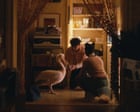
Butterfly Jam review – Barry Keoghan cant save this New Jersey misstep Cannes film festival: The Irish actor plays a disillusioned Circassian chef with a knack with animals in Kantemir Balagovs clunky third filmAll talented directors are allowed an off moment in their careers – and this is the stage arrived at by Kantemir Balagov, whose earlier film Beanpole was such a triumph. This follow-up – his third feature in fact – is his first English language movie, set among the expat Circassian community in New Jersey; it features star names and one colossally self-conscious icon cameo unsubtly signalling cinephile importance. Butterfly Jam is contrived, tonally uncertain, implausible and frankly plain silly in its underpowered kind of magic-unrealism, with some clunky secondhand Mean Streets mob-fraternal dialogue and pedantic ethnic-foodie cred, and elliptically positioning key scenes off camera for no obviously satisfying reason.Barry Keoghan plays Azik, a widower who with his longsuffering pregnant sister Zalda (Riley Keough) runs a Circassian food diner in Newark; as chef he cooks a sublime delens a delicious cheese and potato dish to his own (secret) recipe, accessorised with delicious jams, one of which, he whimsically announces, is made of butterflies. (He is presumably kidding but he has an amazing touch with the natural world, as we will see.) His teen son Temir (Talga Akdogan) is a talented wrestler who dreams of Olympic glory and he has a sweet crush on fellow wrestler Alika (Jaliyah Richards). Continue reading...
theguardian · 7 days ago
Greater New York at MoMA PS1 is a capacious celebration of the citys artistic life With effusive humour and amiable messiness, the exhibition portrays a metropolis thats complicated and unstable
financial times · 7 days ago
Cannes opens with strong Asian presence and Fast and Furious nostalgia Its time for the Cannes Film Festival jury to begin weighing up the 22 films competing for the Palme dOr. FRANCE 24 film critic Emma Jones is on the French Riviera to walk us through the main themes emerging from this years competition. The official selection boasts a strong Asian presence, with one South Korean film in competition and three Japanese features, including Hirokazu Kore-edas Sheep in the Box.
france24 · 7 days ago
Cannes 2026: Park Chan-wook and Demi Moore ready to judge festival contenders Its Day 1 of the annual cinematic marathon for the Cannes jury weighing up the features in competition for the Palme dOr, with 22 films to consider. Critic Emma Jones tells us more about the members of director Park Chan-wooks jury, and we discuss the first two competition screenings: Nagi Notes and A Womans Life, as well as the hotly anticipated features from Asghar Farhadi, Pedro Almodovar and Cristian Mungiu.
france24 · 7 days ago

Nagi Notes review – clear, calm light shed on criss-crossed family passions Cannes film festival: Set in a beautifully filmed provincial Japanese town, what could have been a soapy drama is told with poetic restraint and subtlety by Kôji FukadaJapanese film-maker Kôji Fukada has created a film of great lucidity and calm, a walking-pace drama set in the quiet town of Nagi in the south of the country; this is a provincial place of seclusion and restraint, notable for its military base but also an interesting contemporary art gallery. The movie is less overtly sensational and emotional than Fukadas previous pictures such as Love Life or Goodbye Summer, though it has the same Rohmeresque gentleness, the same considerate and caring mien, the same palate-cleansing wash of cool daylight. These are factors which do not however preclude intensity, even passion and a feeling that a dreamlife of yearning is taking place underneath innocuous waking reality.At the centre of the film is an enigma: Yoriko (Takako Matsu) is a single woman who runs a dairy farm in Nagi, but her real passion is art. She draws and sculpts, but entirely for her own pleasure. None of her pieces get exhibited or sold. One warm spring day – the movie is elegantly interspersed with chapter-heading closeups in which different kinds of calendar get the days torn off – Yoriko is visited by her good friend Yuri (Shizuka Ishibashi), an architect who after some time in Tokyo, moved to Taiwan to start a practice there with her husband Masato but returned to Japan after her divorce. What makes their friendship interesting is that they are sisters-in-law, or perhaps ex-sisters-in-law. Masato is Yorikos brother. So how exactly has their friendship survived and thrived for so long? Continue reading...
theguardian · 7 days ago
ARENA Festival Is Coming to Štvanice Island This June One of Pragues most distinctive open-air festivals is moving to a new home. Full programme at www.festivalarena.cz. Tickets are already on sale. ARENA, the annual celebration of theatre, new circus, music and visual art organized by the Forman Brothers Theatre, will take over Štvanice Island in Prague 7 from June 4 to 25. Entry to the festival grounds is free. The headline show is Birds Meeting, a production by the Forman Brothers inspired by the work of Persian mystic Fariduddin Attar. The piece is returning to Prague after a year-long tour of France and Belgium. Joining it are two international acts: French visual artist Boris Gibé with a new performance called Anatomy of Desire, and Belgian ensemble Les Ptits Bras with the acrobatic show Vent dOuest. The island will also host the Imaginarium — an interactive exhibition featuring installations, puppets, theatrical props, painted works and mechanical contraptions created by artists and collaborators of the Forman Brothers. It opens on May 10, ahead of the festival itself, and is designed for visitors of all ages. Štvanice Island was chosen deliberately. We were looking for a place that would have its own character — open, by the river, with space for great... The post ARENA Festival Is Coming to Štvanice Island This June appeared first on Prague Morning.
prague morning · 7 days ago

A woman with a bull costume exuding masculine energy: Marisol Mendezs best photograph This is part of my series Mother. I would ask my subjects: Do you feel more like a Mary Magdalene or a Virgin Mary? Its always a fun question to askPaul McCartney famously says that he got the melody for Yesterday in a dream. I used to think that was artistic licence, but then it happened to me with this image. I had a dream about a half woman-half animal, standing alone in the middle of a field, with trees surrounding her.I was working on a series of images, called Madre, about the depiction of womanhood. The media in Bolivia always present women in a traditionally feminine way. It is rare to see a woman who displays more masculine attributes and her not be immediately labelled as a lesbian – there is no nuance. Continue reading...
theguardian · 7 days ago