 Sunday, June 14Sunday, June 14
6 days · 3 summary articles
SVP re-enters Graubnden government after 18 years, gains momentum across Swiss cantons
Swiss voters approve tighter civilian service access in nationwide vote
Left-wing coalition defies odds with key municipal victories in Italy
The Swiss People’s Party (SVP) has re-entered the government of Graubünden after an 18-year absence, securing a seat in the regional executive following Sunday’s elections. Valérie Favre Accola, the SVP’s candidate, won the contest for the vacant position, ending the party’s long opposition role in the canton’s highest political body. The result, confirmed by Europe Elects on 14 June 2026, marks a significant shift in Graubünden’s political balance and underscores the SVP’s growing electoral strength across Switzerland’s German-speaking regions.
The final tally for the Grisons regional government election, published on 14 June 2026, shows Favre Accola elected alongside four incumbents returned to office: Bühler (FDP-RE), Caduff (C-EPP), Maissen (C-EPP), and Peyer (SP-S&D). Parolini (C-EPP) was the sole departing member, having completed his term. Favre Accola’s victory comes after a campaign that highlighted rural concerns and fiscal conservatism, themes central to the SVP’s platform. Her election brings the SVP back into a government it last participated in during 2008, a gap the party framed as an anomaly in its otherwise dominant presence in Swiss politics.
Nationally, the SVP’s gains in Graubünden align with broader trends reflected in the Grisons regional parliament seat projection, also released on 14 June 2026. The SVP/PPS/UDC is projected to hold 35 seats, an increase of ten, while the centre-right C-EPP and liberal FDP both lost ground, shedding six and four seats respectively. The Greens (G/V-G/EFA) gained five seats, reflecting a modest but notable rise in environmentalist support. These shifts suggest a realignment in Swiss cantonal politics, with the SVP consolidating its role as a dominant force and the centre struggling to maintain its traditional dominance.
Elsewhere in Switzerland, closely watched contests in Baselland and Thun underscored the volatility of local politics. In Baselland, Matthias Liechti of the SVP won a narrow victory in the regional executive race, securing the party’s return to government with a margin of just under 2,000 votes. The result, confirmed by SRF on 14 June 2026, was described as a “directional choice” by voters, signalling a preference for the SVP’s conservative policies in a traditionally centrist canton. Meanwhile, in Thun, the race for city president remains unresolved after neither candidate secured an absolute majority in the first round, prompting a runoff scheduled for 5 July 2026.
The electoral outcomes in Graubünden, Baselland, and Thun collectively point to a political landscape in flux, where traditional party loyalties are being tested and new coalitions are forming. For the SVP, the gains in Graubünden and Baselland represent more than symbolic returns to power; they signal a consolidation of its position as a leading voice in Swiss politics ahead of national elections. As the party celebrates its victories, the challenge will be to translate regional momentum into sustained national influence while addressing the concerns of a diverse electorate.

Switzerland, Grisons regional government election: Final result (elected members) Bühler (FDP-RE)* Caduff (C-EPP)* Maissen (C-EPP)* Peyer (SP-S&D)* Favre Accola (SVP~RE|ESN|ECR) *reelected Departing member: Parolini (C-EPP) ➤ europeelects.eu/Switzerland
telegram bot · about 2 hours ago
Regierungsratswahl Baselland – SVP ist mit Matthias Liechti wieder zurück in der Regierung Mit nur knapp 2000 Stimmen Vorsprung gewinnt Matthias Liechti die Regierungsratswahlen in Baselland.
srf.ch · about 2 hours ago
Wahlen Kanton Graubünden – SVP zieht nach 18 Jahren wieder in die Kantonsregierung ein Die Davoserin Valérie Favre Accola holt sich den freigewordenen Sitz in der Bündner Regierung.
srf.ch · about 2 hours ago
Abstimmung Stadt Bern – Tierpark Bern: Grünes Licht für Neubaupläne Der Tierpark Bern will moderner und barrierefrei werden. Die Berner Bevölkerung hat die Pläne deutlich gutgeheissen.
srf.ch · about 2 hours ago
WTA-Turnier in Berlin: Tennisspielerin Lys will in Top 100 bleiben Die Saison von Eva Lys ist bisher nicht optimal verlaufen. Auch wenn Rasen nicht ihr favorisierter Belag ist, hat die 24-Jährige ein großes Ziel.
tagesspiegel · about 2 hours ago
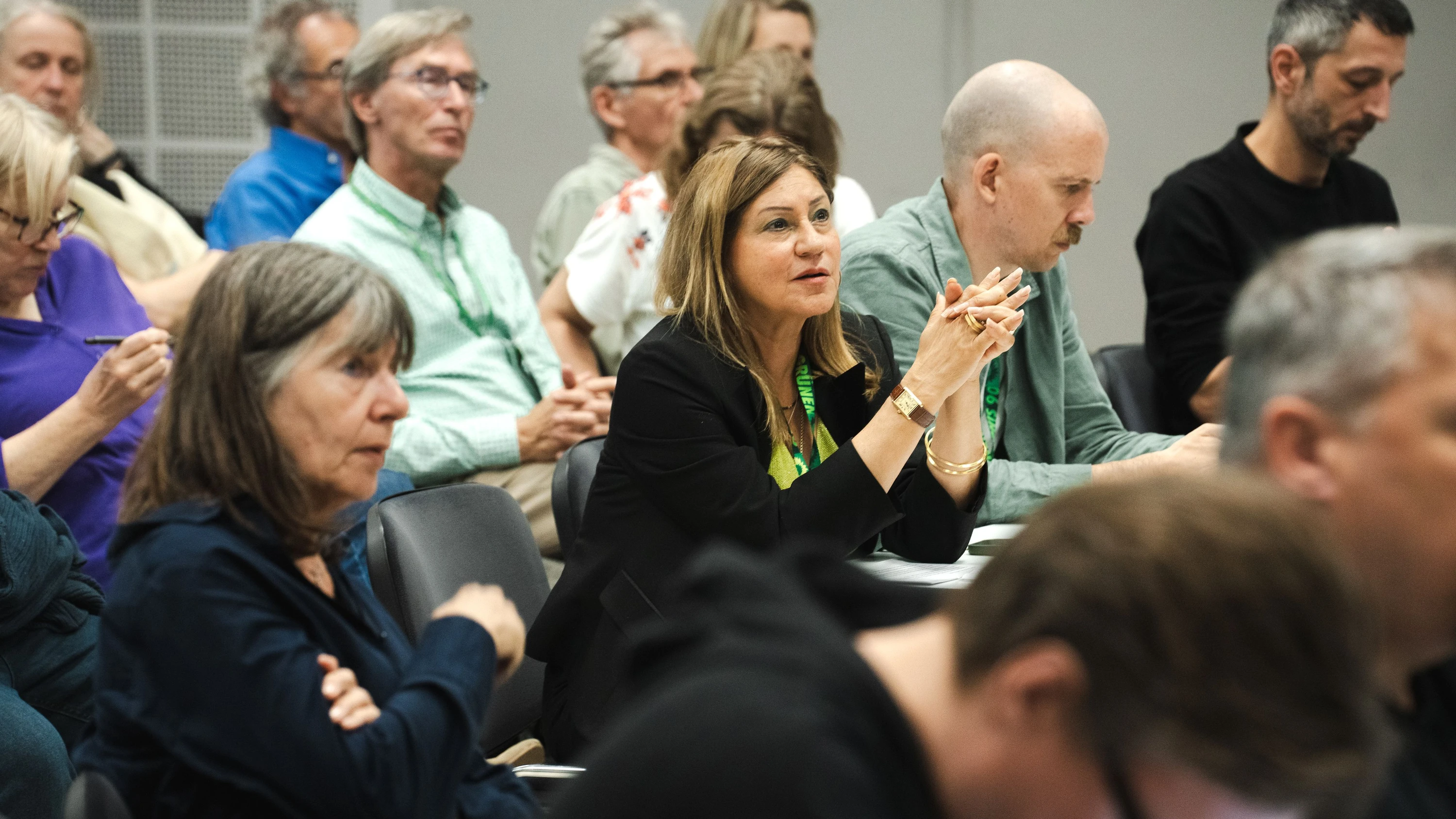
Frankfurter Grüne stimmen ab: Grünen-Basis: Kein Streit um Römer-Koalitionsvertrag Die Frankfurter Grünen stimmen den Absprachen von CDU, Grünen und SPD mit 80 Prozent der Stimmen zu. Doch schon jetzt zeichnet sich ein interner Streit ab, wer den dritten Dezernentenposten im Magistrat bekommen soll.
faz · about 2 hours ago
Biografie über Zohran Mamdani: Leg dich nicht mit Zohran an Dem Superhelden-Charme erlegen: Der ersten deutschsprachigen Biografie über New Yorks jungem Bürgermeister Zohran Mamdani von Luzia Geier fehlt es leider an kritischer Distanz.
sueddeutsche · about 2 hours ago
Switzerland, Final election result: Grisons regional parliament, seat projection SVP/PPS/UDC~RE|ESN|ECR: 35 (+10) M/C-EPP: 28 (-6) FDP/PLD/PLR-RE: 23 (-4) SP/PS-S&D: 20 (-5) GLP/PVL-RE: 7 G/V-G/EFA: 7 (+5) +/- vs. Last election result ➤ europeelects.eu/switzerland
telegram bot · about 3 hours ago
Wahlen Stadtpräsidium – SVP-Frau und Grüne kämpfen um das Thuner Stadtpräsidium Das Rennen um das Präsidium wird erst am 5. Juli entschieden. Die Kandidatin der SP hat sich zurückgezogen.
srf.ch · about 3 hours ago

Georges-Louis Bouchez vise déjà 2029, malgré les sondages: "Nous gagnerons les élections Le parti libéral belge a célébré ses 180 ans à Bruxelles, avec des appels à lunité et à la poursuite des réformes. ...
la libre · about 3 hours ago
Wahlen Stadtpräsidium – Noch keine Stadtpräsidentin für Thun: SP zieht sich zurück Das Rennen um das Präsidium wird erst am 5. Juli entschieden, keine der Kandidatinnen hat das absolute Mehr erreicht.
srf.ch · about 3 hours ago
Wahlkrimi in Baselland – Baselland vor Richtungswahl: Matthias Liechti liegt vorne Kehrt die SVP zurück in die Baselbieter Regierung? Heute entscheidet das Baselbiet.
srf.ch · about 3 hours ago

„In Verlautbarungen des Protestantismus oft das Gefühl, Texte von DGB, SPD oder Grünen zu lesen Der Nürnberger Theologie-Professor Ralf Frisch wirft der evangelischen Kirche politische Einseitigkeit vor: Alles, was nicht einer bestimmten Überzeugung entspreche, werde als „rechts etikettiert. Die Kirche wirft ihm „Diffamierungen vor.
welt.de · about 3 hours ago