 Sunday, June 14Sunday, June 14
The mundane act of buying a football shirt in a Tokyo sports shop on a June afternoon became a moment of existential doubt for one customer. “Which name do you want on the back?” asked the shop assistant, triggering a cascade of self-questioning: Is it cringe? Is it awkward? The article, published today in *Aftenposten*, captures a modern anxiety that transcends borders—from the neon-lit aisles of Jeg Ogikubo to the quiet corners of European wardrobes.
The same question surfaced in Oslo, where a customer hesitated before committing to a national team jersey. The dilemma is not about fit or price, but about identity. Personalising a shirt with a name—whether one’s own, a child’s, or a favourite player’s—has become a rite of passage that feels simultaneously celebratory and embarrassing. The shop assistant’s question, delivered with professional neutrality, exposed the tension between individual expression and social judgment.
Across the continent, the impulse to personalise clothing is colliding with a broader cultural shift. In Amsterdam, a columnist in *Trouw* described donating impulse purchases to charity shops, a practice that reflects both environmental conscience and a rejection of the pressure to stand out. “My mispurchases end up in the thrift store,” the writer noted, framing the act as a quiet rebellion against consumerist excess.
Meanwhile, in Rome, the Vatican’s tailors face a different kind of personalisation challenge: designing garments for the Pope without taking measurements. The anonymity of liturgical vestments strips away individuality, yet the garments must still convey authority and tradition. The contrast with the personalised football shirt could not be sharper—one seeks to erase the self, the other to emblazon it.
In Paris, *Le Monde* explores the political subtext of the summer dress, arguing that a seemingly frivolous garment can carry feminist and class connotations. The “petite robe d’été,” often floral and light, becomes a symbol of both liberation and constraint. The article suggests that even the most innocuous fashion choices are freighted with meaning.
Back in Tokyo, the football shirt buyer’s dilemma remains unresolved. The shop assistant’s question lingers: a prompt for self-reflection in an era when every purchase is a statement. Whether cringe or courageous, the act of personalisation is now a cultural flashpoint—one that reveals how deeply we scrutinise our own choices in the age of social media and sustainability.
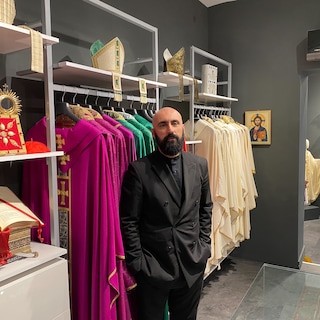
Hoe het is om de kleding voor de paus te ontwerpen: Maten opnemen is er niet bij
trouw · about 2 hours ago

Mijn miskopen gaan naar de kringloopwinkel
trouw · about 2 hours ago
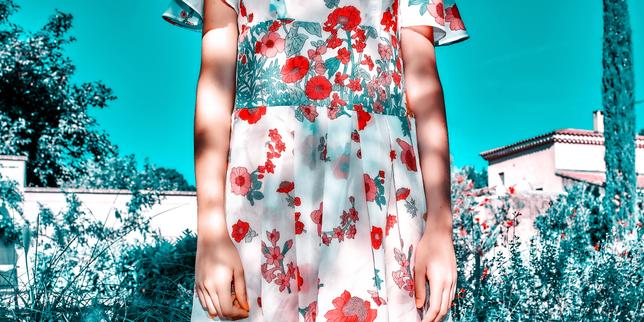
Théorie de la petite robe dété Légère, souvent fleurie, elle peuple les rues de France dès que les températures grimpent. Et si la petite robe dété, archétype de lhabit dit « féminin », était aussi un vêtement politique sans le savoir ?
le monde · about 2 hours ago

– Jeg skulle kjøpe fotballdrakt. Butikkdamens spørsmål gjorde at jeg måtte spørre: Er det kleint? «Hvilket navn vil du ha bak på drakten din?» spurte damen i sportsbutikken. Det utløste ett spørsmål: Er det cringe?
aftenposten · about 2 hours ago

À Tokyo, la convivialité à la française du quartier de Nishi-Ogikubo Dans la capitale japonaise, le quartier français historique, Kagurazaka, est devenu célèbre pour son côté chic et huppé. À linverse, celui de Nishi-Ogikubo fédère une petite communauté qui mêle Tokyoïtes et résidents étrangers, unis autour de la francophilie et dun art de vivre sans chichis.
courrier international · about 2 hours ago