 Monday, June 8Monday, June 8
Denmark’s new four-party government has yet to decide whether a controversial working group on citizenship should continue its work or be disbanded, leaving 14,300 foreign applicants in limbo as the granting of citizenship has been paused. The group, tasked with assessing whether foreigners can be screened for their values, attitudes, and democratic mindset before obtaining Danish citizenship, was established under the previous administration but now faces an uncertain future under the coalition led by Prime Minister Mette Frederiksen. The pause in citizenship processing, which began in early June 2026, has left thousands of applicants waiting indefinitely, while the government debates the group’s mandate and the broader direction of Denmark’s immigration policy.
The working group was originally set to deliver its findings by the end of 2026, but its future remains unclear after the new Minister for Immigration and Integration, Morten Bødskov, indicated he wants the group to continue without committing to its core proposal of value-based screening. “The group must report by the turn of the year,” Bødskov stated, though he has not yet taken a public stance on whether such screenings should be implemented. The delay has drawn criticism from opposition figures, including Denmark Democrats leader Inger Støjberg, who condemned the government’s “absent immigration policy” during a Constitution Day speech on June 5, 2026. Støjberg argued that the coalition’s 77-page platform mentions foreigners only twice, calling it a “betrayal of Denmark” and accusing the left-wing parties of dictating the agreement .
Prime Minister Frederiksen has defended the government’s approach, asserting that the coalition’s policies strike a balance between integration and national values. However, the uncertainty surrounding the citizenship working group reflects deeper divisions within Denmark’s political landscape over immigration. The pause in citizenship processing has also raised concerns among legal experts and immigrant advocacy groups, who warn of potential backlogs and administrative challenges once the moratorium is lifted.
The debate over value-based citizenship screening is not unique to Denmark. Across Europe, governments are grappling with how to balance integration policies with national identity, often amid rising political polarization. In neighboring Hungary, authorities have intensified scrutiny of political refugees, summoning EU citizens granted asylum for political reasons to verify their status . Meanwhile, in the Netherlands, a majority of citizens support labor migration but with strict limits, according to a recent survey .
As Denmark’s government deliberates, the fate of the 14,300 pending citizenship applications hangs in the balance, underscoring the broader challenges of crafting immigration policies that satisfy both political and public demands. With no clear timeline for a resolution, applicants and policymakers alike are left navigating an increasingly complex landscape.

CBS: Meerderheid Nederlanders wil arbeidsmigranten toelaten, maar wel met een maximum
de volkskrant · about 2 hours ago

Węgry zaostrzają kurs. Urzędnicy wzywają politycznych uchodźców Ministerstwo Spraw Wewnętrznych Węgier poinformowało w niedzielę, że trwa weryfikowanie statusów uchodźcy nadanych obywatelom UE z przyczyn politycznych. Osoby, którym status ten przyznano, zostały wezwane do stawienia się osobiście przed węgierskim urzędem.
gazeta.pl · about 2 hours ago

Government casts doubt on citizenship working group The new four-party government has not decided whether a working group on Danish citizenship should report back or be disbanded. This group is looking into whether foreigners can be screened for their values, attitudes, and democratic mindset if they wish to become Danish citizens. Meanwhile, the granting of citizenship has been paused, leaving 14,300 applicants […]
cphpost · about 2 hours ago
Citizenship working group to report around New Year By the turn of the year, a working group must deliver a report on whether foreigners can be screened for their values to obtain Danish citizenship. The new Minister for Immigration and Integration, Morten Bødskov, wants the group to continue, though he has not yet decided if he supports such screenings. Currently, the granting of […]
cphpost · about 2 hours ago
Støjberg slams governments absent immigration policy During her Constitution Day speech, Denmark Democrats leader Inger Støjberg criticized the new governments platform, particularly its lack of a serious immigration policy, calling it a betrayal of Denmark. She argued that the 77-page platform only mentions foreigners twice and claimed that the left-wing dictated the agreement. In response, Prime Minister Mette Frederiksen asserted that […]
cphpost · about 2 hours ago
I am Proud of our people for Their Positive Contributions to Norway
gdeltproject.org · about 2 hours ago
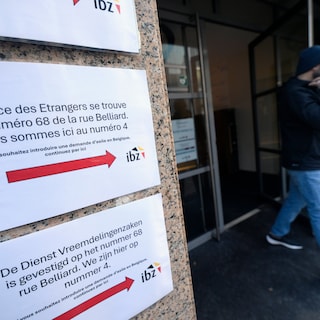
Ombudsman hekelt hardnekkige en structurele problemen bij migratiediensten
de morgen · about 3 hours ago
„Gefährdungsfaktor für die Demokratie: 87 Prozent der Deutschen erwarten wachsende Kluft zwischen Arm und Reich Vor 20 Jahren fürchteten nur 27 Prozent eine wachsende Kluft zwischen Arm und Reich – heute sind es laut einer Umfrage 87 Prozent. Ein Zukunftsforscher erklärt, was das für den Zusammenhalt bedeutet.
tagesspiegel · about 3 hours ago
Parliament wants to know how Cabinet is blocking foreign influence A broad majority in the Tweede Kamer, the lower house of the Dutch parliament, is demanding that the government explain how it plans to counter foreign influence on social media and take stronger s
nltimes.nl · about 3 hours ago
GOP Lawmaker Calls Out Hegseth Over D-Day Immigration Speech
gdeltproject.org · about 3 hours ago

Des réponses trop lentes, des règles complexes et opaques : les services de la migration pointés du doigt par le Médiateur fédéral Plus de 40 des plaintes que traite le Médiateur fédéral visent lOffice des étrangers et le SPF Affaires étrangères. LOmbudsman belge y consacre un rapport détaillé. ...
la libre · about 3 hours ago

"On est trop serré" : face à limmigration, la Suisse tentée de plafonner sa population
lexpress · about 3 hours ago
Dont succumb to Danish culture by forgetting your own: the voice of the international students in Copenhagen For students at the International School of Hellerup, coming to Denmark is an intense experience. On one hand, the freedom, safety, and stress-free nature of society make it very different from many countries around the world. On the other hand, being a young student does not automatically grant you a ticket to inclusion.
cphpost · about 3 hours ago