 Thursday, May 28Thursday, May 28
NATO and the EU escalate military and diplomatic responses as Russia intensifies hybrid threats against the Baltic states, with drone incursions and disinformation campaigns testing regional defenses.
European Commission President Ursula von der Leyen declared in Vilnius on Tuesday that Russia’s recent drone incursions into Baltic airspace form part of a deliberate Kremlin strategy to destabilize Europe, not isolated incidents. Meeting with leaders from Estonia, Latvia, and Lithuania, von der Leyen warned that hybrid threats—including airspace violations and cyberattacks—target the entire EU, not just its eastern flank. Lithuanian President Gitanas Nausėda urged Brussels to move beyond statements of solidarity, demanding concrete action to counter the escalating risks .
NATO is preparing to reinforce its presence in the Baltics, with plans to establish a rapid-mobilization army corps amid the surge in drone activity. The alliance’s move follows heightened tensions over repeated airspace violations, which officials describe as a test of NATO’s readiness. Portuguese media reported that the bloc aims to deter further provocations by bolstering its eastern defenses .
Lithuania’s government accused Russia of waging an information campaign alongside the drone incursions, designed to undermine Baltic security and test responses to potential conflict scenarios. The country’s State Security Department said Moscow is amplifying narratives of regional instability to erode public trust in NATO and EU defenses. Lithuanian Foreign Minister Kęstutis Budrys added that his recent remarks about neutralizing military threats in Russia’s Kaliningrad exclave were intended to counter Kremlin exaggerations about the region’s strategic invulnerability .
The drone incursions have exposed gaps in regional preparedness. Estonia lacks a unified protocol for schools to respond to drone threats, leaving institutions to interpret national risk assessments independently. Meanwhile, Finland’s business federation argued that employers are not obligated to pay salaries if drone warnings prevent employees from commuting, framing the threat as beyond “normal business risk” .
Russia’s response has been marked by disinformation and internal pressure. FSB Director Alexander Bortnikov accused NATO of developing “selective biological weapons” in former Soviet states and using AI to engineer “color revolutions,” claims dismissed by Western officials as baseless propaganda. Separately, Russian billionaires lobbied President Vladimir Putin for enhanced air defenses and the mobilization of reservists to protect industrial assets from drone strikes, highlighting vulnerabilities in Moscow’s own security apparatus .
The standoff reflects broader geopolitical tensions, with NATO and the EU accelerating military and diplomatic measures to counter Russian aggression. Analysts warn that the Baltic states remain a flashpoint, with hybrid warfare tactics—from drone incursions to cyberattacks—likely to persist as Moscow seeks to exploit perceived weaknesses in Western cohesion.
NATO and EU escalate Baltic defenses as Russia intensifies hybrid warfare

No obligation to pay salaries if drone threat prevents commute to work, business body says The Federation of Finnish Enterprises argues that a drone threat warning is not a "normal business risk".
yle.fi · 2 days ago
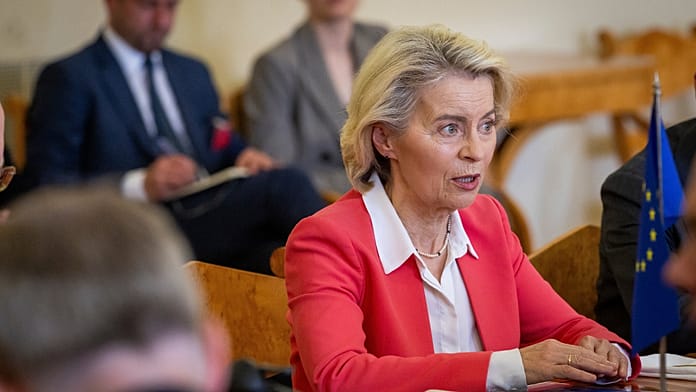
Baltic drone incursions test EU security, von der Leyen warns, amid escalating hybrid threats European Commission President Ursula von der Leyen said that recent drone incursions into EU airspace are not isolated incidents, as Baltic leaders and EU officials warn of escalating hybrid threats engineered by Russia along Europes eastern border.
euronews · 2 days ago
Von der Leyen: When the Baltic states are put to the test, the whole of Europe is put to the test The President of the European Commission met with the leaders of Estonia, Latvia, and Lithuania in Vilnius. Russian drone incursions into Baltic airspace are not isolated incidents, but part of a deliberate strategy by the Kremlin. Meanwhile, from Brussels, the Berlaymont Building has responded to Moscow: We will remain operational in Kyiv
eunews.it · 2 days ago
De olho na Rússia, NATO vai reforçar presença nos bálticos Von der Leyen esteve em Vílnius numa altura em que os incidentes com drones no espaço aéreo da região se têm intensificado. NATO quer criar um corpo de exército para mobilização rápida.
publico · 2 days ago
Șeful FSB lansează teorii halucinante: NATO creează arme biologice cu acțiune selectivă în spațiul CSI și pregătește revoluții prin AI Serviciile secrete occidentale creează în țările Comunității Statelor Independente (CSI) o rețea de „laboratoare digitale pentru a provoca „revoluții colorate, a declarat directorul FSB, Alexander Bortnikov.
digi24 · 2 days ago
No unified drone alert protocol leaves Estonias schools to decide response Officials say schools and kindergartens should follow national risk assessments, but without a school-specific protocol, responses to drone threats still vary in practice.
news.err · 2 days ago
Miliardarii ruși i s-au plâns lui Putin de ineficiența sistemului antiaerian. Ce i-au cerut dictatorului pentru protejarea afacerilor Companiile ruse au nevoie de arme de calibru mare și de posibilitatea de a mobiliza rezerviști pentru a-și proteja întreprinderile împotriva atacurilor cu drone. Acest lucru a fost declarat marți, la o întâlnire cu președintele Vladimir Putin la Kremlin, de către Alexander Shokhin — principalul lobbyist al marilor întreprinderi și șeful RSPP, cea mai mare asociație de afaceri din țară, cu miliardari din lista Forbes în componența consiliului de administrație.
digi24 · 2 days ago
Baltic leaders meet von der Leyen, urge EU actions not words over drone incursions Lithuanian President Gitanas Nausėda said Tuesday that amid increasing violations of Baltic airspace, the European Union is expected to take concrete action rather than issue messages of solidarity.
lrt · 2 days ago
![[lalibre] Alertes aux drones dans les Etats baltes : Moscou cherche à "déstabiliser" les démocraties européennes, dénonce Von der Leyen à Vilnius #Europe](https://files.mastodon.social/cache/preview_cards/images/194/277/497/original/4aa4db290f3f07da.jpg)
[lalibre] Alertes aux drones dans les Etats baltes : Moscou cherche à "déstabiliser" les démocraties européennes, dénonce Von der Leyen à Vilnius #Europe
mastodon bot · 2 days ago
Lithuanian FM says Kaliningrad remarks aimed at countering Russian narrative Lithuanias Foreign Minister Kęstutis Budrys says his recent comments about NATOs ability to neutralise military capabilities in Russias Kaliningrad region were intended to counter what he described as Moscows exaggerated narrative about the exclaves strength.
lrt · 2 days ago
Lithuania says Russia waging information campaign amid Baltic drone incidents Lithuanias State Security Department says Russia is conducting an information campaign against the Baltic states following recent drone incidents in the region, while also testing their readiness for a range of possible scenarios.
lrt · 2 days ago
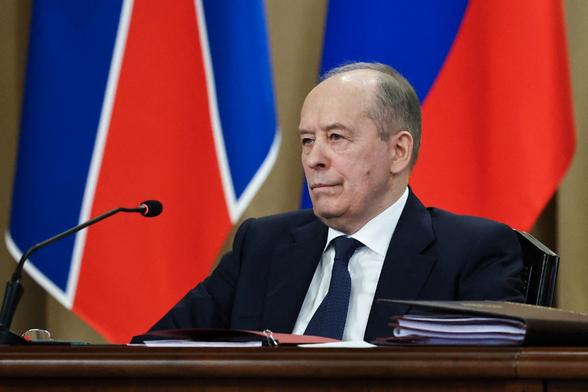
KYIV POST: Russia Warns Smart Cameras Could Expose Leaders Locations FSB chief Alexander Bortnikov on Tuesday said the alleged use of surveillance systems to track Iranian officials is a serious signal, warning that reliance on Western technology creates security risks. His comments followed Russian claims that US and Israeli intelligence used video monitoring systems in Tehran to obtain officials locations. #World #Europe
mastodon bot · 2 days ago