 Monday, June 8Monday, June 8
Xi Jinping and Kim Jong Un launch high-stakes summit in Pyongyang to counter Western pressure
Xi Jinping arrived in Pyongyang on Monday for his first state visit to North Korea in seven years, launching a two-day summit with Kim Jong Un aimed at deepening their alliance against Western pressure and accelerating regional infrastructure projects. The Chinese leader’s arrival, broadcast live on North Korean state television, marks the highest-level diplomatic engagement between the two capitals since 2019 and comes as both governments seek to counter what they describe as encroaching geopolitical isolation.
Speaking at Pyongyang’s airport, Xi hailed the “invincible friendship” between Beijing and Pyongyang, a phrase echoing the language used in their 1961 mutual defense treaty, now celebrating its 65th anniversary. “The China–North Korea relationship is not only a strategic choice for both sides but also a cornerstone of regional peace and stability,” Xi told reporters, flanked by Kim Jong Un. The summit agenda includes discussions on a new cross-border road linking North Korea to Russia, a project that would bypass South Korean and Japanese ports and reduce Pyongyang’s dependence on Western trade routes .
Western analysts see the visit as part of a broader Chinese push to consolidate influence on the Korean Peninsula amid stalled denuclearization talks. “Both leaders want to signal unity against what they perceive as U.S.-led containment,” said a senior fellow at the Council on Foreign Relations quoted by *The Wall Street Journal* . Seoul, meanwhile, has urged restraint. South Korean President Lee Jae-myung called for “complete denuclearization” of the peninsula, though neither Xi nor Kim addressed the issue publicly upon Xi’s arrival .
The timing of Xi’s visit is politically sensitive. It follows weeks of protests in South Korea over election irregularities and coincides with Beijing’s push to integrate its western regions—home to 300 million people—into a single economic zone ten times the size of Britain . Analysts suggest Xi may be leveraging North Korea as a geopolitical bargaining chip in broader negotiations with Washington and Brussels over technology transfers and market access.
For Kim Jong Un, the summit offers a rare diplomatic victory. His regime has faced international isolation since 2019, when nuclear talks with the U.S. collapsed. The new road to Russia—part of a broader Eurasian rail and road network—could revive Pyongyang’s moribund economy by connecting it to Chinese and Russian markets without Western oversight .
As Xi and Kim hold closed-door talks, the international community watches for signs of a revived arms-for-oil barter system or a formal military cooperation clause. Either move would escalate tensions with Japan and the U.S., which have warned against any transfer of nuclear or missile technology. With no joint statement expected before Xi’s departure on Wednesday, the summit’s immediate outcome remains uncertain—but its geopolitical ripple effects are already being felt across Asia.

Chinese refiners delay projects with Middle East oil supply disrupted reut.rs/43TnZHo
bluesky bot · about 2 hours ago

Xi. Amizade com Coreia do Norte "perdurará para sempre" China e Coreia do Norte celebram o 65.º aniversário do Tratado de Amizade, Cooperação e Assistência Mútua
observador · about 2 hours ago

Si Ťin-pching je na návštěvě Severní Koreje, kde posiluje vztahy Čínský prezident Si Ťin-pching dnes zahájil dvoudenní návštěvu Severní Koreje, která je první od roku 2019. Na programu má mimo jiné i summit se svým severokorejským protějškem Kim Čong-unem, informov...
respekt · about 2 hours ago

Xi Jinping arrive en Corée du Nord, loue lamitié "invincible" de Pékin et Pyongyang Le président chinois Xi Jinping est arrivé lundi en Corée du Nord pour une visite de deux jours après avoir loué lamitié "invincible" de Pékin et Pyongyang. ...
la libre · about 2 hours ago

Xi Jinping habla de un nuevo comienzo en su primera visita a Corea del Norte en siete años El presidente chino se adelanta a la inauguración de la primera carretera entre Corea del Norte y Rusia
la vanguardia · about 2 hours ago
Loslopende beer in Japanse stad, honderd scholen dicht In de Japanse stad Utsunomiya zijn bijna honderd scholen dicht. De reden: er loopt een wilde beer rond.
rtl nieuws · about 2 hours ago
Panne bei Regionalwahlen: Tausende fordern Neuwahlen in Südkorea – Präsident Lee ordnet Untersuchung an Südkoreas Präsident Lee nennt die Wahlpannen der vergangenen Woche „absurd. Doch während er Betrug ausschließt, wächst auf den Straßen Seouls der Unmut.
tagesspiegel · about 2 hours ago
China urges political settlement after Chernobyl zone strike Foreign Ministry spokesperson Lin Jian said Beijing attaches high importance to nuclear facility safety and urged all parties to pursue dialogue, following Ukrainian allegations that Russian forces struck a spent fuel storage facility in the Chernobyl Exclusion Zone.
yenisafak · about 2 hours ago
SUA avertizează că avansul Chinei în inteligența artificială ar putea schimba echilibrul în securitatea cibernetică Statele Unite încearcă să consolideze măsurile de securitate în jurul celor mai avansate modele de inteligență artificială, pe fondul îngrijorărilor că tehnologii similare ar putea deveni disponibile și pentru China în următoarele luni.
adevarul · about 2 hours ago
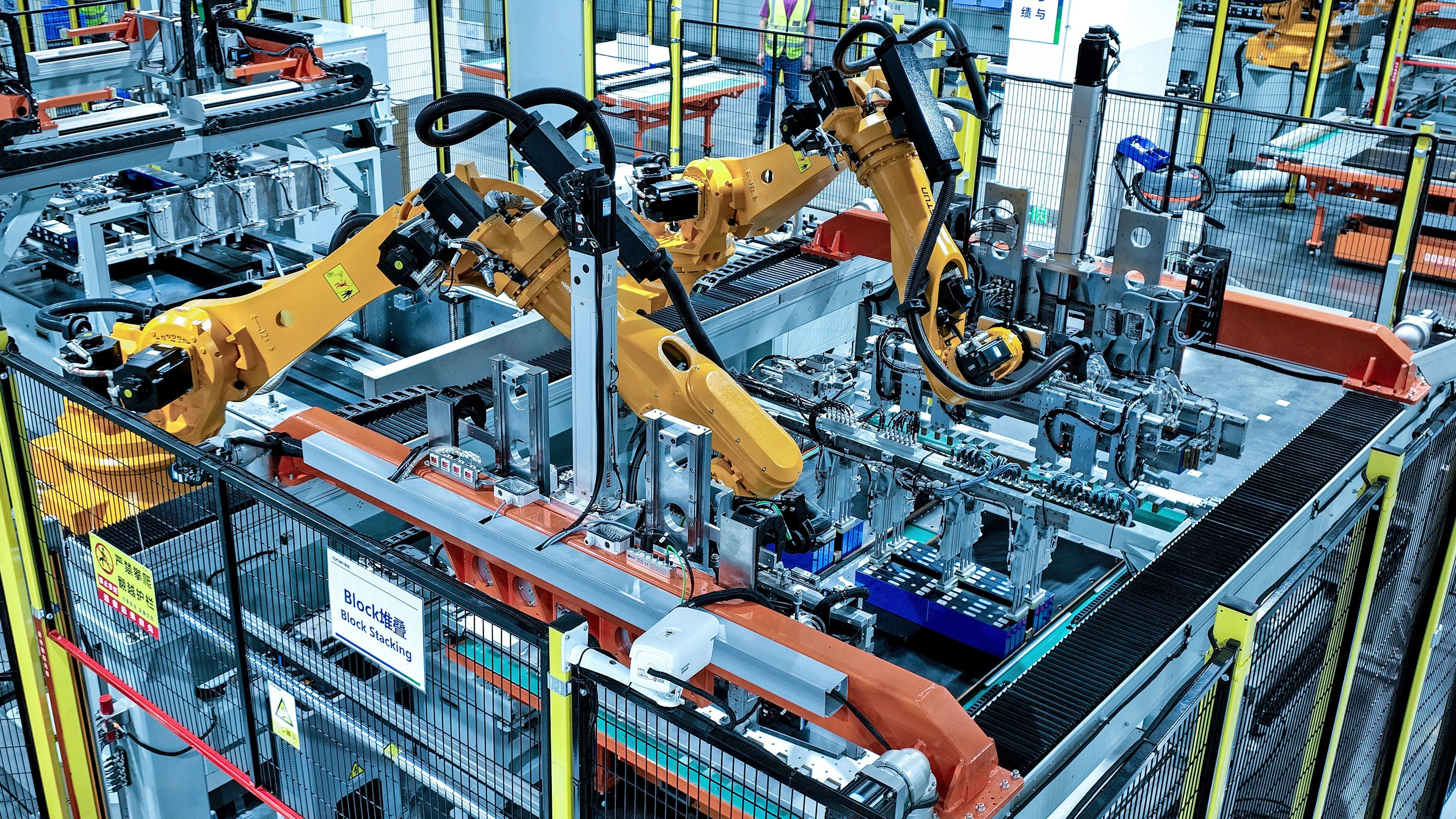
Akkus aus China: 14 Stunden am Tag Der Aufstieg von Deming Dai, Gründer des Batterieherstellers Cornex, beruht auf harter Arbeit. Nicht nur der eigenen.
faz · about 2 hours ago

What Xi and Kim Want From Their Summit in North Korea The Chinese leader arrived in Pyongyang for a two-day summit with Kim Jong Un, seeking to strengthen their alliance against the West.
wsj · about 2 hours ago
28 May 2026 - Water scarcity is a problem across Central Asia: the five countries work to address the problem together
commonspace · about 2 hours ago
Global leaders seek new technology partnerships to counter threat posed by China
gdeltproject.org · about 2 hours ago
Hong Kong proposes letting city leader decide what counts as national security offence After massive democracy protests rocked the Asian financial hub in 2019, Beijing imposed a national security law that has been used to arrest many leading activists.
euronews · about 2 hours ago
Maailma kõige üllatavam majandusedulugu on… Põhja-Korea Pärast seda kui Rowan Beard oli käinud Põhja-Koreas enam kui sada korda, oli ta harjunud sellega, et Kim Jong-uni režiimi all tuleb takso saabumist kaua oodata. Aga hiljutisel Pyongyangi-reisil saabus sõiduk mõne minutiga.
postimees · about 3 hours ago

Presidente sul-coreano pede desnuclearização da península Xi foi recebido esta segunda-feira em Pyongyang pelo líder norte-coreano, Kim Jong-un, à chegada para a sua primeira visita ao país desde 2019
observador · about 3 hours ago
Ce este „Ochiul dragonului, fenomenul natural unic care atrage mii de turiști din întreaga lumea pe vârful unui munte din Japonia Un fenomen aparte atrage curioși din toată lumea în nordul Japoniei la sfârșitul primăverii, când zăpada începe să se topească pe vârful de 1.613 metri al muntelui Hachimantai, situat la granița dintre prefecturile Iwate și Akita. Apariția așa-numitului „Ochi al dragonului este semnul că vara se apropie, potrivit agenției guvernamentale japoneze care promovează Țara Soarelui …
hotnews.ro · about 3 hours ago
Letzter Staatsbesuch ist sieben Jahre her: Chinas Staatschef Xi in Nordkorea eingetroffen Erstmals seit sieben Jahren besucht Xi Jinping wieder Nordkorea. Der chinesische Staatschef stellte den Beziehungen beider Länder zuvor „neue Entwicklungschancen in Aussicht.
tagesspiegel · about 3 hours ago
Diplomatie: Chinas Staatschef Xi beginnt Besuch in Nordkorea Erstmals seit sieben Jahren besucht Xi Jinping wieder Nordkorea. Der chinesische Staatschef stellte den Beziehungen beider Länder zuvor „neue Entwicklungschancen in Aussicht.
handelsblatt · about 3 hours ago
Ultima frontieră a lui Xi Jinping: Planul cu care Beijingul vrea să transforme economic o zonă uriașă din China Administrația liderului chinez Xi Jinping a lansat o campanie politică amplă pentru a conecta regiunile izolate din vestul Chinei de centrele sale economice și demografice. Programul, care include investiții în energie, resurse, infrastructură și turism, ar urma să transforme o treime din teritoriul Chinei – o zonă de 10 ori mai mare decât Marea Britanie și aproape egală cu întreaga suprafață a Europei de Vest.
digi24 · about 3 hours ago
Cea mai veche intervenție chirurgicală din Asia Centrală datează de 4.000 de ani Craniul vechi de aproximativ 4.000 de ani al unui copil din Epoca Bronzului, descoperit pe teritoriul actual al Uzbekistanului, prezintă urme ale unei intervenții craniene cunoscute sub numele de trepanație, scrie Live Science. Aceasta este cea mai veche dovadă documentată a unei operații chirurgicale în Asia Centrală și una dintre cele mai vechi din întreaga Asie, potrivit cercetătorilor.
digi24 · about 3 hours ago