 Monday, June 15Monday, June 15
The Special Olympics flame has been lit in Saarbrücken, marking the start of a historic 11-day sporting festival that organizers hope will become the state’s “Sommermärchen” — a summer fairytale. With 4,300 athletes from more than 170 delegations competing across 27 sports, the 2026 Special Olympics World Games are the largest multi-sport event ever held in the Saarland and the first to cross national borders, uniting participants from Germany, France, Luxembourg, and Belgium. The opening ceremony on Sunday evening drew thousands to the city’s Ludwigsparkstadion, where a symbolic cauldron was ignited under a clear sky, echoing the grandeur of the Olympic Games without their competitive intensity.
“This is not just a sporting event; it is a celebration of inclusion, courage, and human connection,” said Thomas Goppel, Secretary of State for Sport in the Saarland state government. “For 11 days, the world will see what happens when barriers fall and every athlete is celebrated for their effort, not their ability.” The games, officially launched on 15 June 2026, feature sports ranging from athletics and swimming to boccia and equestrian, all adapted to ensure accessibility for athletes with intellectual disabilities.
For the first time, the Special Olympics World Games are being held across multiple cities in the Greater Region, a cross-border cooperation area that includes Saarbrücken, Metz, Luxembourg City, and Liège. Organizers say this reflects the event’s inclusive ethos. “We wanted to show that inclusion doesn’t stop at national borders,” said Marion Reiser, spokesperson for the Saarland 2026 organizing committee. “By sharing the games across four countries, we’re making a statement: diversity is our strength.”
The flame’s journey began in Berlin in early June, traveling through 16 German states before crossing into France, Luxembourg, and Belgium. It arrived in Saarbrücken on Saturday, carried by a relay of athletes, volunteers, and dignitaries, including Paralympic gold medalist Verena Bentele. “When I carried the flame, I felt the weight of responsibility — not just to run, but to represent every athlete who dreams of being seen,” Bentele told reporters.
More than 7,000 volunteers are supporting the games, which run until 25 June. Over 200,000 spectators are expected to attend events, with live broadcasts reaching millions across Europe. Cultural programs, educational workshops, and inclusive art installations are being held daily, reinforcing the games’ role as a platform for social change.
The event comes at a time when disability rights advocates are calling for greater visibility in mainstream sports. “The Special Olympics World Games are a reminder that sport belongs to everyone,” said Jens Merkel, director of the German Institute for Inclusive Sport. “They challenge us to rethink what excellence looks like — and who gets to define it.”
As the cauldron burns in Saarbrücken, the message is clear: this is more than a competition. It is a movement — one that begins with 4,300 athletes and radiates outward, lighting a path toward a more inclusive world.
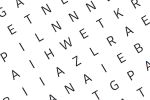
Die STANDARD Wortsuche vom 15. Juni Montag bis Freitag: Begriffe aus einem aktuellen STANDARD Artikel verbergen sich horizontal, vertikal oder diagonal im Buchstabengitter
der standard · about 2 hours ago

PÄEVAHOROSKOOP ⟩ 15. juuni: Sõnn peaks astuma julgelt uute materiaalsete sihtide poole, Vähi hing vajab rahu ja vaikust Edukat esmaspäeva!
postimees · about 2 hours ago
Special Olympics: Special Olympics sollen Saarlands „Sommermärchen werden 4.300 Athleten, 27 Sportarten und erstmals grenzübergreifend – das Saarland feiert ein inklusives Sportfest. Nicht nur die Entzündung der Flamme erinnert an die Olympischen Spiele.
tagesspiegel · about 2 hours ago
„Lassen Sie sich überraschen: Leserbriefe vom 15. Juni 2026
die presse · about 2 hours ago
Digistoria - cele mai importante evenimente petrecute pe 15 iunie Cele mai importante evenimente petrecute pe 15 iunie.
digi24 · about 2 hours ago
Kalenderblatt: Was geschah am 15. Juni? Tag für Tag gibt es Ereignisse, Anekdoten, Geburts- oder Sterbetage, an die erinnert werden soll.
tagesspiegel · about 4 hours ago
Când apar ielele în 2026. Noaptea în care „se deschid cerurile, potrivit tradițiilor populare Noaptea de Sânziene, celebrată în fiecare an între 23 și 24 iunie, este considerată în tradiția populară unul dintre cele mai misterioase și încărcate spiritual momente ale anului. În credințele românești, atunci apar ielele, iar cerurile „se deschid pentru scurt timp.
adevarul · about 6 hours ago