
Federal Police report sharp drop in German real-estate transactions as Audi cuts ripple

The Federal Police report a 17.1 % year-on-year drop in real-estate transactions in Germany during the first quarter of 2026, the sharpest decline since the pandemic, as Audi’s restructuring in Ingolstadt ripples across the Danube region’s housing market .
The figures, released by the Federal Police’s real-estate crime unit, show that nationwide transaction volumes fell to 17.1 % below the first quarter of 2025, with Ingolstadt—where Audi employs 40 000 of the city’s 145 000 residents—experiencing a 16.6 % contraction in deals. “We felt the shift months ago,” said a Federal Police spokesman in Munich. “The Audi cuts are now visible in every price bracket, from starter flats to executive villas.”
Across the EU, the broader housing picture remains mixed. Eurostat’s first-quarter 2026 data show house prices rising 5.1 % year-on-year and rents 3.0 %, both above the 2.3 % inflation rate, but with sharp national variations . Portugal led with a 17.8 % increase, followed by Bulgaria (14.8 %), Slovakia (14.4 %) and Croatia (14.3 %). Germany’s 1.4 % rise was among the lowest, trailing France (0.1 %) and Finland, where prices fell 2 %.
In Romania, the central bank (BNR) reports that the time needed to buy a two-room apartment without a mortgage rose to 6.8 years in Bucharest and 12 years in Constanța during the fourth quarter of 2025, up from 8 years in 2024, despite a marginal price slowdown . BNR’s latest stability report notes that transactions dropped 17.1 % in the first quarter of 2026, with the capital’s average exposure time shrinking to 54 days—the shortest among major cities.
In Denmark, flat prices fell 1.2 % in Odense and 1.5 % in Aarhus between May and June, while Copenhagen and Aalborg posted gains of 0.8 % and 2.3 %, respectively . Analysts attribute the divergence to local labour-market shocks, with Ingolstadt’s automotive dependency now the most visible example.
The Federal Police’s real-estate unit, which tracks money-laundering and fraud linked to property deals, says the transaction slump is “consistent with a market correcting after years of pandemic stimulus.” They warn that falling volumes can obscure price distortions, citing a 28.6 % annual jump in Brașov despite wage growth of only 6.2 %. “Where prices outpace incomes, the risk of distressed sales and financial misconduct rises,” the spokesman said.
Looking ahead, the European Central Bank’s July 23 policy meeting is expected to keep rates on hold, but markets are pricing a 60 % chance of a hike by September as inflation risks persist . Analysts at Generali Investments say any further tightening could further dampen mortgage demand, prolonging the correction in transaction-heavy regions like Ingolstadt.
Follow us for live European news
- 3
- 2
- 1
- 1
- 1
- 1
- 1
- 1
- 1
- 1
- 1
- 1
3 further sources not geolocated
Articles

El inversor de bonos teme una inflación más duradera y más alzas de tipos Las tensiones vuelven al mercado de renta fija, tras el recrudecimiento del conflicto en Oriente Próximo. Suben las apuestas por alzas de tipos del BCE en las próximas reuniones de julio y septiembre Leer
expansion · about 7 hours ago
Jahresbilanz der Bundespolizei: Bundespolizei registriert mehr Gewaltdelikte Die Jahresstatistik der Bundespolizei zeigt einen leichten Anstieg von Gewaltdelikten. Weniger Verstöße gab es gegen das Aufenthaltsgesetz.
die zeit · about 7 hours ago
Britains jobs market downturn eases as temporary hiring hits three-year high Britains jobs market downturn eased slightly last month, according to a survey of recruitment companies on Wednesday that showed an upturn in temporary hiring and starting salaries. The monthly Report on Jobs from accountants KPMG and the Recruitment and Employment Confederation, a trade body, showed temporary billings growth rose to a more than three-year high […]
cyprus mail · about 7 hours ago
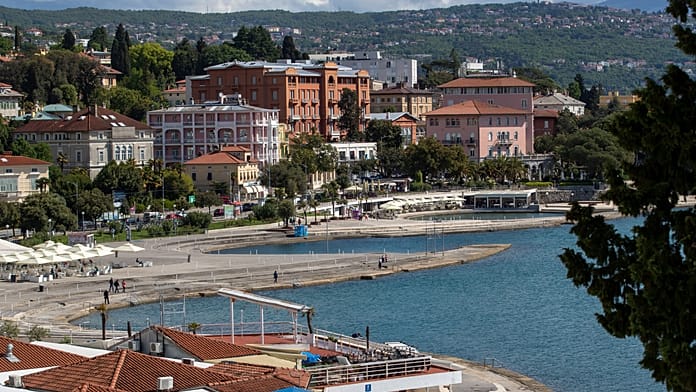
House prices and rents: Where did they rise most in early 2026? House prices and rents rose in almost all EU countries in early 2026. In some European countries, house price increases outpaced overall inflation by around 10 percentage points.
euronews · about 7 hours ago
Konkurrensverket avslutar Hemnet-utredning
svenska dagbladet · about 7 hours ago
Autobauer: Schwindender Absatz, sinkende Erträge: So groß ist das China-Problem von BMW Eine exklusive Datenanalyse zeigt: Die Zahlen auf dem wichtigsten Einzelmarkt brechen ein. Der neue Vorstandschef Milan Nedeljkovic sucht nach Auswegen.
handelsblatt · about 7 hours ago
Trendviertel: So wirkt sich die Krise bei Audi auf den Ingolstädter Wohnungsmarkt aus Die Stadt an der Donau ist geprägt von der Automobilbranche. Die Krise dort beeinflusst auch den Immobilienmarkt. Dennoch steigen die Preise.
handelsblatt · about 7 hours ago
Das Unternehmergespräch: Seltene-Erden-Händler: „Die Amerikaner und Japaner kaufen gerade den Markt leer Andreas Kroll handelt seit zwölf Jahren mit seltenen Erden, dem „Kokain der Industrie. Die Abhängigkeit vieler Sektoren sei groß, aber heilbar, sagt er im Interview.
handelsblatt · about 7 hours ago
Trendviertel: In diesen Leipziger Vierteln sollten Interessenten zugreifen Die sächsische Metropole gehört zu den Boomstädten im Osten Deutschlands. Das sorgt für stark steigende Preise. Exklusive Zahlen legen offen, welche Gegenden jetzt besonders gefragt sind.
handelsblatt · about 7 hours ago
Serie Lagefragen: „Hernals ist eine spannende Lage [premium] Im Gespräch mit Bernhard Jakob: über vielversprechende Immobilien, richtige Entscheidungen und vermeidbare Fehler bei Investments.
die presse · about 7 hours ago
We voelden dat er iets aan de gang is: eerste tekenen van lichte afkoeling vastgoedmarkt
de morgen · about 7 hours ago

Ondernemers slaan munt uit duivelsgekte: Als we winnen van Spanje heeft de Oude Markt een groot probleem
de morgen · about 7 hours ago
Wettbewerb zwischen Käufern beim Unternehmensverkauf Kolumne „Hirt on Management. Folge 282. Der Unterschied zwischen Tag und Nacht.
die presse · about 7 hours ago
Europe needs to heed market need before hyping auto industry threat
gdeltproject.org · about 7 hours ago
Piața imobiliară: pentru un apartament muncești 6,8 ani în București și 12 ani în Constanța, spune BNR În ultimele 3 luni din 2025, prețurile locuințelor au crescut cu 6,7 în termeni anuali în România, față de 5,1 în zona euro și 5,5 la nivelul UE, arată datele BNR publicate în Raportul supra stabilității Dinamica românească s-a situat sub cea din Ungaria (21,2), Bulgaria (14,5) și Cehia (8,5), dar peste cea din Polonia …
hotnews.ro · about 8 hours ago

Das erstaunliche Tesla-Comeback – die großen Gewinner des deutschen E-Auto-Booms Die Deutschen kaufen so viele E-Autos wie noch nie – dank der durch Steuergelder finanzierten staatlichen Elektroprämie. Die großen Profiteure dieses Trends sind jedoch keineswegs die deutschen Hersteller – im Gegenteil.
welt.de · about 8 hours ago
Lågt bränslepris – men bilpoolspriser sänks inte Bensinpriserna är rekordlåga – ändå sänker ledande bilpooler inte sina priser. Bränslet är bara en del av verksamhetens totala kostnader, menar branschen.
svenska dagbladet · about 8 hours ago
Bundespolizei: Bundespolizei hat mehr Gewaltdelikte registriert Die Jahresstatistik der Bundespolizei zeigt einen leichten Anstieg von Gewaltdelikten. Weniger Verstöße gab es gegen das Aufenthaltsgesetz.
die zeit · about 8 hours ago
Flat prices fall in Aarhus, Odense and Frederiksberg According to Boligsiden, average sales prices for owner-occupied apartments in Odense, Aarhus, and Frederiksberg fell from May to June by 1.5, 1.2, and 0.1 percent, respectively. However, nationwide apartment prices rose overall, partly due to Copenhagen, where average prices rose 0.8 percent, and Aalborg, where they rose 2.3 percent. Furthermore, the average nationwide sales price […]
cphpost · about 8 hours ago

El verano en blanco y negro de Viena Fotos analógicas, con procesado químico artesanal, muestran lugares emblemáticos de la capital austríaca
la vanguardia · about 8 hours ago

El Tenedor de Oro es la recompensa al sacrificio del principio El restaurante de Castelldefels, galardonado con el Tenedor de Oro en su primer año, basa su éxito en la cocina de mercado, la especialización en arroces y un trato pensado para que el cliente se sienta como en casa
la vanguardia · about 8 hours ago
We zien de eerste tekenen van een lichte afkoeling van de vastgoedmarkt
de morgen · about 8 hours ago
Marian Kotleba nakúpil byty za milión, všetko platil bez hypotéky. Odkryli sme realitnú sieť šéfa ĽSNS Sumu, ktorú Kotleba vyplatil za byty, by nenašetril, ani keby z každej výplaty neminul ani cent a všetko poctivo 10 rokov odkladal bokom.
aktuality.sk · about 8 hours ago
New passenger car sales increased in June compared to previous months - The Baltic Times TALLINN - The Estonian new passenger car market is continuing its recovery from last years slump, with sales of electric cars also seeing a......
baltic times · about 8 hours ago
Wall Street: Βουτιά πάνω από 570 μονάδες για τον Dow Jones – Πιέσεις από Ιράν και πρακτικά της Fed Η κλιμάκωση της κρίσης στη Μέση Ανατολή επιβάρυνε τη Wall Street, ενώ το ράλι του πετρελαίου και τα μηνύματα από τα πρακτικά της Fed κράτησαν τους επενδυτές σε στάση αναμονής
protothema · about 9 hours ago
Ettevaatust! Õhtul viskub elektri börsihind väga kõrgele Elektribörsi Nord Pool Eesti hinnapiirkonnas tõuseb elektri keskmine hind neljapäeval 6,2 protsenti 36,03 eurole megavatt-tunnist, kuid päeva iseloomustab erakordselt suur hinnakõikumine ja suur erinevus naaberriikidega.
postimees · about 9 hours ago
Mercedes-Benz car sales fall 8 per cent amid tough competition German carmaker Mercedes-Benz (MBGn.DE) said on Wednesday sales in its core car business continued to fall in the second quarter, declining 8 per cent year-on-year due to intense competition in China.
cyprus mail · about 9 hours ago
Asuminen | Kuvat näyttävät vuosien 1996 ja 2009 kuuluisien asuntomessutalojen nykytilan Asuntomessut alkavat perjantaina. Kurkistimme vuosien 1996 ja 2009 trendikkäisiin messutaloihin, joita aikanaan haukuttiin ja ihasteltiin.
helsingin sanomat · about 9 hours ago
Maasikaid osteti vähem väga ootamatul põhjusel, vaarikad võivad hooaja päästa Kui maasikahooajal jäi loodetud tulu teenimata rohkete festivalide tõttu, siis vaarikakasvatajad loodavad selle tasa teha tänavuse saagiga.
postimees · about 9 hours ago
Metsamustikas kipub toidutööstusest üldse kaduma Järvamaal mahedalt kultuurmustikaid kasvatava Ervita marjakasvatuse üks juhtidest Jegor Mitrofanski sõnas, et kuigi head saaki ei soovita enne koristust ära sõnuda, on seni põhjust ettevaatlikuks optimismiks. «Hetkeseis on normaalne,» sõnas ta.
postimees · about 9 hours ago