
Baltic states lead Europes crypto licensing surge under EU MiCA rules

Story Timeline
2 months · 9 summary articles
The Baltic states have become Europe’s strategic gateway for cryptocurrency licensing under the EU’s Markets in Crypto-Assets Regulation (MiCA), with Estonia, Latvia, and Lithuania processing over 60% of the bloc’s crypto exchange applications in 2026. The shift follows a surge in fintech firms seeking EU licenses to operate under MiCA’s compliant framework, which took full effect in December 2024. According to *The Baltic Times*, the Baltics’ streamlined regulatory processes, competitive tax regimes, and English-friendly business environments have attracted global players, including Binance and Kraken, to establish EU hubs in Tallinn, Riga, and Vilnius .
The region’s dominance is underscored by Latvia and Estonia’s signing of a memorandum on supply security during Latvian President Edgars Rinkēvičs’ state visit to Tallinn on Thursday. The agreement, announced alongside the opening of the Latvia-Estonia Business Forum, formalizes cooperation on energy, digital infrastructure, and cybersecurity—key pillars for sustaining the Baltics’ fintech growth .
Meanwhile, the EU’s crypto market is adapting to MiCA’s stricter rules. BNB Chain is pushing self-custody solutions as firms navigate compliance, with analysts noting that the Baltics’ licensing surge reflects broader European demand for regulated crypto services .
The Baltics’ rise contrasts with regulatory challenges elsewhere in Europe. In Sweden, Google was ordered to pay €1.7 billion to Klarna in one of the EU’s highest private antitrust damages awards, highlighting ongoing scrutiny of Big Tech under EU competition law . The ruling underscores the bloc’s dual focus on fostering innovation while enforcing strict market rules.
Looking ahead, the Baltics’ fintech success may hinge on their ability to balance rapid growth with regulatory stability. Industry leaders point to the region’s skilled workforce and EU funding as critical assets, but warn that competition from other EU hubs—such as Ireland and Luxembourg—could intensify. For now, the Baltics stand at the forefront of Europe’s digital finance revolution, with MiCA serving as both a catalyst and a test of the bloc’s ability to integrate disruptive technologies without compromising stability.
Follow us for live European news
- 1
- 1
4 further sources not geolocated
Articles

Southeast Asias First AIGC Creation Ecosystem Platform - Omirol Launched, Partnering with Chinas V Valley Industrial Chain to Build a New China-Malaysia AI Landscape KUALA LUMPUR, MALAYSIA - Media OutReach Newswire - 3 July 2026 - The 2026 Malaysia AI Innovation and Development Exchange Forum and the launch of Omirol, Southeast Asias first native AIGC creation ecosystem platform, were successfully held in Kuala Lumpur. The event was jointly organized by FSBM ...
the slovenia times · about 2 months ago
EU court upholds €4.1B antitrust fine against Google over Android The European Unions highest court has rejected Googles final appeal against a €4.1 billion antitrust penalty, confirming that the company abused its dominant market position through Android-related practices. The ruling reinforces the European Commissions long-running competition case and leaves one of the blocs largest fines against a technology company in place.
yenisafak · about 2 months ago
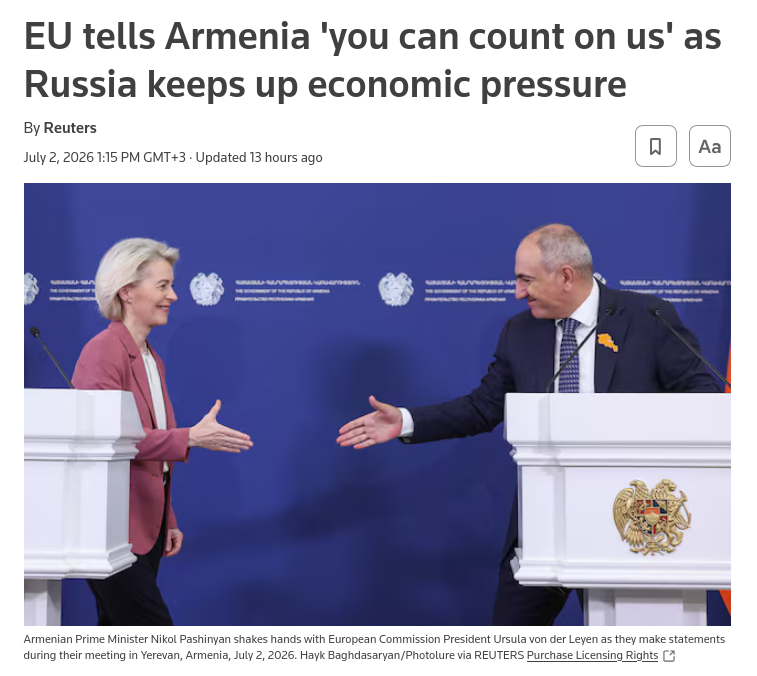
The EU has pledged €18 million in economic support to Armenia and liberalized export rules for its goods. This follows Russian trade restrictions on Armenian exports as the country seeks closer ties with Western institutions. #Russia #EU #Armenia
mastodon bot · about 2 months ago
China urges Asia-pacific unity as India hosts Japan talks China has called for a stable and united Asia-Pacific region, cautioning against division as India hosts Japanese Prime Minister Sanae Takaichi for high-level talks in New Delhi. The exchange highlights competing visions of regional cooperation amid growing geopolitical competition in the Indo-Pacific.
yenisafak · about 2 months ago
Türkiye launches AI action plan with grants and $10B target Türkiye has begun implementing its national AI strategy with new funding programmes, international research partnerships, and a target of mobilising at least $10 billion for data centres, cloud computing, and AI infrastructure. The plan aims to generate over 1 trillion liras in added economic value.
yenisafak · about 2 months ago
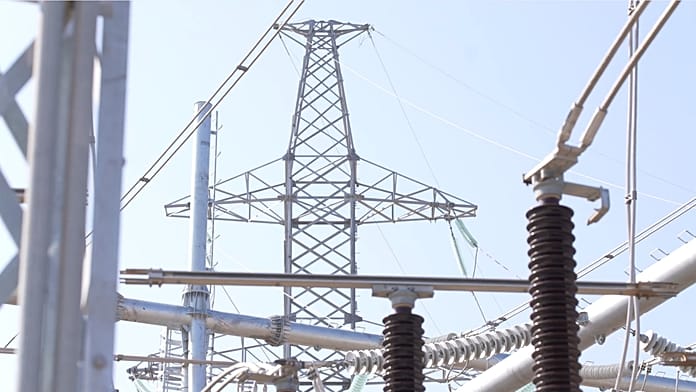
Central Asias power expansion becomes a major investment test In Uzbekistan, EBRD-backed solar and battery projects are helping finance rising electricity demand. Grid upgrades and a first nuclear plant are also reshaping the countrys future energy mix.
euronews · about 2 months ago
New car market on the decline in Latvia The European Automobile Manufacturers Association, which brings together virtually all automakers operating in our part of the world, recently published data on the new car market in Europe, showing that Latvia is one of nine countries in Europe where the new car market has declined, LSMs Māris Bergs reports on July 3.
lsm latvia · about 2 months ago

⚡ NEWSCanada secures pipeline deal to expand oil exports beyond USOttawa announces a new pipeline agreement with Mark Carney to expand oil exports beyond the United States. The deal aims to reduce Canadas economic dependence on the US amid ongoing trade tensions and a potential trade war under Donald Trump.📰 #OilEnergy #Geopolitics #GeoWire
mastodon bot · about 2 months ago
Estonian brands signal a new role for stablecoins in retail payments through CryptoProcessing by Coinspaid - The Baltic Times Electronics retailer ...
baltic times · about 2 months ago
Inclusive by Design: NEO-CYCLEs Commitment to Women in Deep Tech - The Baltic Times Gender equality as continuous practise of the project Despite making up over half of EU higher ......
baltic times · about 2 months ago
Latvias Prime Prometics surpasses 100-million-euro mark - The Baltic Times In an industry long focused on youth, Latvias Prime Prometics has achieved remarkable success by doing the opposite. The beauty brand, fo......
baltic times · about 2 months ago
5 Cross-Border Data Risks for Baltic Firms in London - The Baltic Times Opening a London office can unlock new markets, investors, and talent. But it can also quietly multiply your data protection exposure overnight.......
baltic times · about 2 months ago
MiCA in 2026: How the Baltics Became Europes Gateway for Crypto Licensing - The Baltic Times In 2026, the Baltic states have emerged as the strategic hub for international fintech companies seeking to secure a cryptocurrency exchange ...
baltic times · about 2 months ago
Lithuanias KRS Director Paulius Grigas: Construction is not about bricks or AI – it is still all about people - The Baltic Times Having experienced the largest growth surge in the companys history and doubled its revenues, KRS, one of Lithuanias fastest-growing......
baltic times · about 2 months ago
Vegvisir Secures Venture Backing to Become the Operating System for Allied Warfare - The Baltic Times Estonian defence tech company secures backing from the Baltic Sea regions most active defence-focused VC fund, as it accelerates de......
baltic times · about 2 months ago
AgroCredit Latvia expands its activities – financing is now also available to foresters throughout Latvia - The Baltic Times The financial service provider SIA "AgroCredit Latvia" is expanding its activities and in the future will offer financing solutions no......
baltic times · about 2 months ago
DIGMATIX Expands into Central Europe with the Acquisition of Czech and Romanian Technology Companies - The Baltic Times DIGMATIX, the Latvian technology company formerly known as Digital Mind, has acquired two leading Microsoft Business Applications partners in Ce......
baltic times · about 2 months ago
Cambridges Baltic Geopolitics Programme: strengthening understanding in a changing Europe - The Baltic Times The University of Cambridges Centre for Geopolitics is a leading research institution focused on international security and strategic affai......
baltic times · about 2 months ago
Post-Pandemic Tourism in the Baltics: What Has Changed? - The Baltic Times As some regions around the world grapple with declining tourism, the Baltics are experiencing a surge in tourist traffic. In fact, tourism now g......
baltic times · about 2 months ago
Baltic households hold tens of billions in bank deposits. The return: under 2 - The Baltic Times Households across the Baltic states hold tens of billions of euros in bank deposits — pools that are still growing, in some cases at doubl......
baltic times · about 2 months ago
A record year for Škoda Group: new orders worth almost € 1.8 billion - The Baltic Times Škoda Group has completed one of the most significant years in its modern history. The year 2025 confirmed the Groups retu......
baltic times · about 2 months ago
Worlds Best Sidecar and Quad Riders Set for Madona in One Month - The Baltic Times In just one months time – 25–26 July – the Smeceres Sils motocross track in Madona, Latvia, will welcome the wo......
baltic times · about 2 months ago
Latvijas Banka Publishes Its Climate-Related Financial Disclosures Report - The Baltic Times Latvijas Banka has released its annual report on Climate-Related Disclosures for its non-monetary policy portfolios, reaffirming its commitment ......
baltic times · about 2 months ago
Business Risk Strategies for Baltic Companies - The Baltic Times Baltic companies operate in a region shaped by trade links, digital growth, energy exposure, skilled labor constraints, and proximity to wider E......
baltic times · about 2 months ago
LMT and Latvijas dzelzceļš demonstrate private 5G network technologies in railway infrastructure management for the first time in the Baltic region - The Baltic Times SJSC Latvijas dzelzceļš will be the first railway company in the Baltics t......
baltic times · about 2 months ago
Presidents of Latvia and Estonia discuss progress on Rail Baltica project - The Baltic Times RIGA - Latvian President Edgars Rinkevics, during his state visit to Estonia, met with Estonian President Alar Karis on Ruhnu Island on Wednesda......
baltic times · about 2 months ago
Latvian-Estonian business forum to take place in Tallinn on Thursday - The Baltic Times RIGA - A Latvian-Estonian business forum will take place in Tallinn on Thursday, July 2, the Investment and Development Agency of Latvia (LIAA) ......
baltic times · about 2 months ago
Russia closes railway border crossings on its borders with Finland, Estonia, and Latvia - The Baltic Times KYIV/RIGA - The Russian government has decided to suspend traffic through several railway border crossings on the borders with Finland, Estonia,......
baltic times · about 2 months ago
Lithuanian lawmaker says China open to normalising relations - The Baltic Times VILNIUS - China appears inclined to negotiate on normalising relations with Lithuania, the chairman of the Seimas foreign affairs committee said......
baltic times · about 2 months ago
EU imposes customs duty on small postal items from third countries - The Baltic Times TALLINN - As of Wednesday, a customs duty is now in effect across the European Union for shipments valued up to 150 euros ordered from non-EU co......
baltic times · about 2 months ago