 Tuesday, June 23Tuesday, June 23
Two nests of the invasive Asian hornet (*Vespa velutina nigrithorax*) have been discovered and destroyed in Lustenau, Austria, marking the first confirmed sighting of the species in the country. On 20 June 2026, local authorities identified and eliminated both nests, one of which was still active, according to reporting by *Der Standard* and *Die Presse* . The discovery has triggered urgent monitoring by Austrian beekeeping associations, which warn that the hornet poses a direct threat to honeybee populations.
The Asian hornet, native to Southeast Asia, has been spreading across Europe in recent years, preying on honeybees and disrupting pollination-dependent ecosystems. Austrian beekeepers are now on high alert to prevent the species from establishing a permanent presence. “We are closely monitoring the situation to ensure this invasive species does not gain a foothold,” a spokesperson for the Austrian Beekeepers Association told *Die Presse* .
The nests were located in Lustenau, a municipality in the western state of Vorarlberg near the Swiss border. Authorities acted swiftly to destroy them, removing the immediate risk of further spread. However, experts caution that the discovery underscores the broader challenge of invasive species in Europe, where climate change and global trade facilitate the movement of non-native organisms.
Invasive species like the Asian hornet are not the only ecological concern in Europe this summer. Earlier this month, scientists in Australia announced the discovery of a previously unknown spider species that uses a silk “catapult” to ensnare prey, highlighting the ongoing expansion of biodiversity documentation worldwide . Meanwhile, Austrian conservationists continue to deploy drones to rescue young roe deer from agricultural machinery, a seasonal effort that has saved thousands of fawns annually .
The Asian hornet’s arrival in Austria follows similar detections in neighboring countries, including Germany and France, where the species has caused significant damage to apiaries. Austrian authorities are coordinating with European agencies to track and contain any further incursions. “The priority is to prevent the establishment of this species, which could have devastating effects on our bee populations and agriculture,” an official from the Austrian Federal Environment Agency said.
While the immediate threat has been neutralized, the discovery serves as a reminder of the growing pressures on Europe’s ecosystems from invasive species. Beekeepers and conservationists are calling for increased surveillance and public reporting to mitigate future risks.
1 further source not geolocated

800 tisíc úmrtí ročně. Vědci hledají nové způsoby, jak zastavit komáry pomocí genetiky a technologií Komáři se podle vědců stávají rostoucí globální hrozbou, protože jejich geografický výskyt se v důsledku klimatických změn i zásahů do krajiny rychle rozšiřuje. Každoročně jsou zodpovědní přibližně za 800 tisíc úmrtí a přenášejí zhruba 17 procent všech infekčních onemocnění u lidí. Vědci proto hledají způsoby, jak jejich populaci omezit bez použití pesticidů.
irozhlas.cz · about 2 hours ago
Nieuw ontdekte spin in Australië schiet web als katapult af om prooi te vangen In de regenwouden van Australië is een bijzondere nieuwe spinnensoort ontdekt. De spin schiet een soort zijden katapult af om een specifieke prooi te vangen.
nu.nl · about 2 hours ago

Une araignée jusque-là inconnue des scientifiques fabrique un piège ingénieux pour attraper ses proies Une nouvelle espèce darthropode découverte en Australie utilise une astucieuse technique pour catapulter sa proie au cœur de sa toile.
courrier international · about 2 hours ago
Gefahr für Honigbienen: Erstmals Nester der Asiatischen Hornisse in Österreich gefunden [premium] Am 20. Juni 2026 wurden zwei Nester der Asiatischen Hornisse in Lustenau entdeckt. Noch am selben Tag konnten beide zerstört werden. Imkervereine achten darauf, dass sich diese Hornissenart nicht in Österreich ansiedelt, weil sie als bevorzugte Beute Honigbienen frisst.
die presse · about 2 hours ago

The Vanished Rabbit-Rat That Triggered Australias Extinction Crisis
news.yahoo.com · about 2 hours ago
Soil-transmitted Helminthiases
telegraph · about 2 hours ago
PÖÖRANE AVASTUS! ⟩ 11-aastane poiss arvas, et leidis lihtsalt mõned vanad loomaluud: tegelikkus oli aga teine Corbin Bullard läks geoloogiaklubi väljasõidule teadmisega, et võib leida mõne huvitava fossiili. Ta ei osanud aga aimatagi, et teda ootab ees üks elu suurimaid avastusi.
postimees · about 2 hours ago
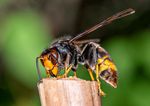
Erstmals Nester der Asiatischen Hornisse in Österreich nachgewiesen Zwei Nester wurden in Lustenau entdeckt, eines davon war noch bewohnt. Die aus Südostasien eingeschleppte Wespenart kann Bienenvölkern gefährlich werden
der standard · about 2 hours ago

Italienischer Tierschutzverein kritisiert Österreich nach Wolfstötung Das in Tirol erschossene Tier trug ein Senderhalsband eines italienischen Forschungsprojekts. Die Tierschutzorganisation will den Fall rechtlich prüfen lassen
der standard · about 2 hours ago
„Es zerriss mir jedes Mal das Herz: Wie kleine Rehe mit Drohnen gerettet werden [premium] Rehkitze verbringen ihre ersten Wochen in Frühsommerwiesen, und damit sie nicht den Mähwerken zum Opfer fallen, rettet eine Initiative in Ternitz die Tiere mithilfe von Drohnen. 25.000 junge Rehe fallen den Mäharbeiten Schätzungen zufolge jedes Jahr zum Opfer.
die presse · about 2 hours ago