 Thursday, June 18Thursday, June 18
11 hours · 2 summary articles
Major Oak, legendary Robin Hood hideout, collapses after centuries
Legendary Robin Hood Oak dies after centuries of environmental strain
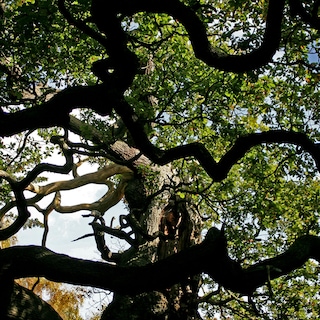
The Major Oak, the 800-to-1,200-year-old oak tree in Sherwood Forest famed as the hideout of Robin Hood, has died, forestry officials confirmed on Thursday. The tree, which had stood for centuries as a living monument to England’s most enduring folk legend, collapsed under the weight of over-tourism, climate change and well-intentioned but misguided conservation efforts, according to the *New York Times* .
Local media reported that the tree’s death was confirmed on 18 June 2026 after years of visible decline. The oak, located near the village of Edwinstowe in Nottinghamshire, had become a magnet for millions of visitors annually, drawn by its association with the outlaw hero who, according to legend, used its hollow trunk to stash looted riches. The sheer volume of foot traffic compacted the soil around its roots, while rising temperatures and erratic rainfall weakened its ancient structure. Conservationists’ attempts to prop up its sagging limbs with scaffolding and steel supports are now widely seen as having accelerated its demise by restricting natural root expansion and airflow.
“This is a tragedy not just for England’s natural heritage, but for the cultural imagination of generations,” said a spokesperson for Nottinghamshire County Council, which manages Sherwood Forest. The council has not yet announced plans for the oak’s remains, though experts are expected to conduct a full assessment before any decision on preservation or memorialisation.
The loss of the Major Oak comes amid growing concern across Europe about the vulnerability of ancient trees to human pressure and environmental stress. In Lithuania, fruit growers are this week beginning to clear orchards after an unprecedented winter killed up to 90% of the country’s apple trees, many of them traditional varieties that had survived for decades . The scale of destruction, described by industry figures as the worst since the late 1960s, threatens both biodiversity and local livelihoods.
Back in Sherwood, the death of the Major Oak has already sparked an outpouring of tributes. Social media posts from around the world mourned the loss of a tree that had symbolised both England’s green and literary landscapes. Conservationists, however, are urging reflection on how other iconic sites might be protected. “We must learn from this,” said a dendrologist at the University of Nottingham. “Ancient trees are not just relics; they are living ecosystems. Once they are gone, they are gone forever.”

V Plzeňském kraji se loni vytěžilo méně dřeva než předchozí rok. I tak je region druhý v republice Těžba dřeva v Plzeňském kraji loni dosáhla 2,2 milionů metrů krychlových. Oproti předchozímu roku to znamenalo mírný propad, konkrétně zhruba o dvě procenta. I tak patří region mezi kraje s největším objemem těžby. Vyplývá to z údajů, které ve středu zveřejnil Český statistický úřad (ČSÚ).
irozhlas.cz · about 2 hours ago
Eeuwenoude Robin Hood-boom in Engelse Sherwood Forest is dood
de morgen · about 2 hours ago
Vie et mort du Major Oak, chêne qui aurait servi de cachette à Robin des bois Le surtourisme lié à la légende anglaise du brigand justicier a eu raison de larbre millénaire de la forêt de Sherwood, annonce le «Nottingham Post» ce jeudi.
liberation · about 2 hours ago
Up to 90 of Lithuanian apple trees lost to unprecedented winter Instead of a bumper harvest, Lithuanian fruit growers are cutting down trees and counting catastrophic losses. Some in the industry say the country has not seen orchards damaged on this scale since the late 1960s, with the vast majority of trees bearing traditional Lithuanian varieties killed outright by the cold.
lrt · about 2 hours ago

The Major Oak, Ancient Tree of Robin Hood Legend, Has Died The Major Oak in the Sherwood Forest was between 800 and 1,200 years old. It succumbed to a combination of over-tourism, climate change and misguided efforts to save it.
new york times · about 2 hours ago
Sherwoodin metsä | Yli tuhatvuotias Robin Hoodin tammi kuoli Tarinoissa Robin Hood piilotti onttoon tammeen varastamiaan rikkauksia.
helsingin sanomat · about 3 hours ago
Eeuwenoude Robin Hood-boom in Engelse Sherwood Forest is dood
de volkskrant · about 3 hours ago