
UK challenges EU over 47 steel quota cuts as migration and sanctions dominate Brussels talks
The UK will challenge the European Union on Friday over its plan to slash tariff-free steel import quotas by 47% from 1 July, a move British industry leaders warn could devastate the sector. Business Secretary Peter Kyle is set to meet EU Trade Commissioner Maroš Šefčovič in Brussels to voice concerns that the cuts, based on 2024 levels, will trigger retaliatory measures and undermine the UK’s steel producers just as global trade tensions rise.
The EU’s proposal, part of a broader adjustment to non-EU import quotas, would reduce the volume of duty-free British steel entering the bloc by nearly half. The UK steel industry has already sounded the alarm, arguing that such a drastic reduction—effective in less than a month—could lead to job losses, factory closures, and a loss of competitiveness against EU rivals. “This is a hammer blow to a sector already under severe strain,” said a spokesperson for UK Steel, the industry’s trade body .
The confrontation comes as the EU also moves forward with contentious plans to establish deportation centres in third countries, a key component of its newly agreed Migration and Asylum Pact, which takes full effect on 12 June. While the locations of these “return hubs” remain undecided, the initiative has sparked debate over its feasibility and compatibility with fundamental rights .
Meanwhile, Europe’s migration landscape is shifting. New arrivals to the EU have fallen sharply, leading *The Economist* to declare that the bloc is “winning the easy half of its migration battle” . Yet political pressure persists: 11 EU countries, including Estonia, are pushing for tighter restrictions on Russian visas within the Schengen Area ahead of the summer travel season .
On the economic front, public sentiment in Germany has soured dramatically, with only 13% of citizens viewing the economy positively—a level of pessimism not seen since the Eurozone crisis . In contrast, the EU’s popularity has surged post-Brexit, including in the UK, according to a Pew Research survey .
As Brussels prepares its 21st sanctions package against Russia, EU envoy David O’Sullivan has warned that China’s continued support for Moscow’s war economy—by helping it evade sanctions—remains “a very big problem” for the bloc’s efforts to isolate the Kremlin .
From steel quotas to migration hubs, the EU faces a week of high-stakes negotiations that will shape its economic and geopolitical future.
- sueddeutsche
- new york times
- orf.at
- courrier international
- nltimes.nl
- south china morning post
- news.err
- lrt
- swissinfo
- digi24
- nrc
- financial times
Articles

Italië gaat asielzoekers terugnemen als ze na aankomst daar doorreizen naar Nederland Eind 2022 vroeg Italië aan lidstaten van de Europese Unie om mensen niet meer naar het land terug te sturen, omdat er te weinig opvangplaatsen waren. Op 12 juni beginnen Nederland en Italië met een „schone lei, waarna Italië asielzoekers zal terugnemen als ze na daar te zijn aangekomen naar Nederland gaan.
nrc · 3 days ago
Wien und Berlin gegen Aus von Kontrollen EU-Migrationskommissar Magnus Brunner hat am Donnerstag gefordert, dass die Kontrollen an den Schengen-Binnengrenzen beendet werden. Mit den jüngsten Schritten beim Migrationspakt sieht Brunner die Zeit dafür gekommen. Doch aus Österreich und Deutschland gab es dazu eine sehr deutliche Absage.
orf.at · 3 days ago
Bundespolitik: Wirtschaft löst laut neuer Umfrage Migration als zentrales Problem ab Nur 13 Prozent der Bürger sehen die Wirtschaftslage nach einer neuen Umfrage positiv. So kritisch waren sie seit der Eurokrise nicht mehr.
sueddeutsche · 3 days ago
Debate: EU to set up return hubs in third countries The European Union plans to establish deportation centres in non-EU countries. Representatives of the European Parliament and governments have now reached a deal, although it is not yet clear where the hubs would be located. The measure complements the EU Pact on Migration and Asylum, which will take full effect on June 12. The press assesses the plan in terms of feasibility and compatibility with fundamental rights.
eurotopics.net · 3 days ago
EU rule punishes UK for Brexit – devastating for British car industry
gdeltproject.org · 3 days ago

UK to challenge EU over devastating plans to almost halve tariff-free steel import quotas Business secretary to meet European counterpart on Friday as EU industry leaders worry about retaliatory measures by UKBusiness live – latest updatesThe UK business secretary, Peter Kyle, is to raise concerns about EU plans to dramatically reduce tariff-free imports of British steel with its trade commissioner, Maroš Šefčovič, in Brussels on Friday.The UK steel industry has previously warned of devastating consequences from the new quota system being planned by the EU, which will cut overall tariff-free imports from non-EU countries by 47 on 2024 levels from 1 July. Continue reading...
theguardian · 3 days ago

Travelers Bound for the U.K. Hit a Roadblock: Electronic Authorization System Is Down Some visitors from the U.S., Canada and most European countries cant get an electronic travel authorization and are being turned away from planes, trains and boats.
new york times · 3 days ago
Ireland, Seen as a Weak Link in Europes Defense, Is Trying to Bulk Up As concern rises in Europe over threats from an emboldened Russia, the Irish government says its working to plug gaps in its military, which reflect a tradition of neutrality.
new york times · 3 days ago

Entre Paris et Alger, le dialogue reprend, bon gré mal gré Après deux ans dintenses fâcheries et de soubresauts diplomatiques, Alger et Paris ont repris langue. Au menu, les questions sécuritaires, migratoires et économiques. Pour Le Matin dAlgérie, si les États peuvent se fâcher, il nen reste pas moins que les intérêts et le pragmatisme finissent toujours par primer.
courrier international · 3 days ago
Italy agrees to start taking asylum seekers back from the Netherlands from next week Asylum seekers traveling to the Netherlands via Italy will be sent back to that country starting next Friday, Minister Bart van den Brink of Asylum and Migration
nltimes.nl · 3 days ago
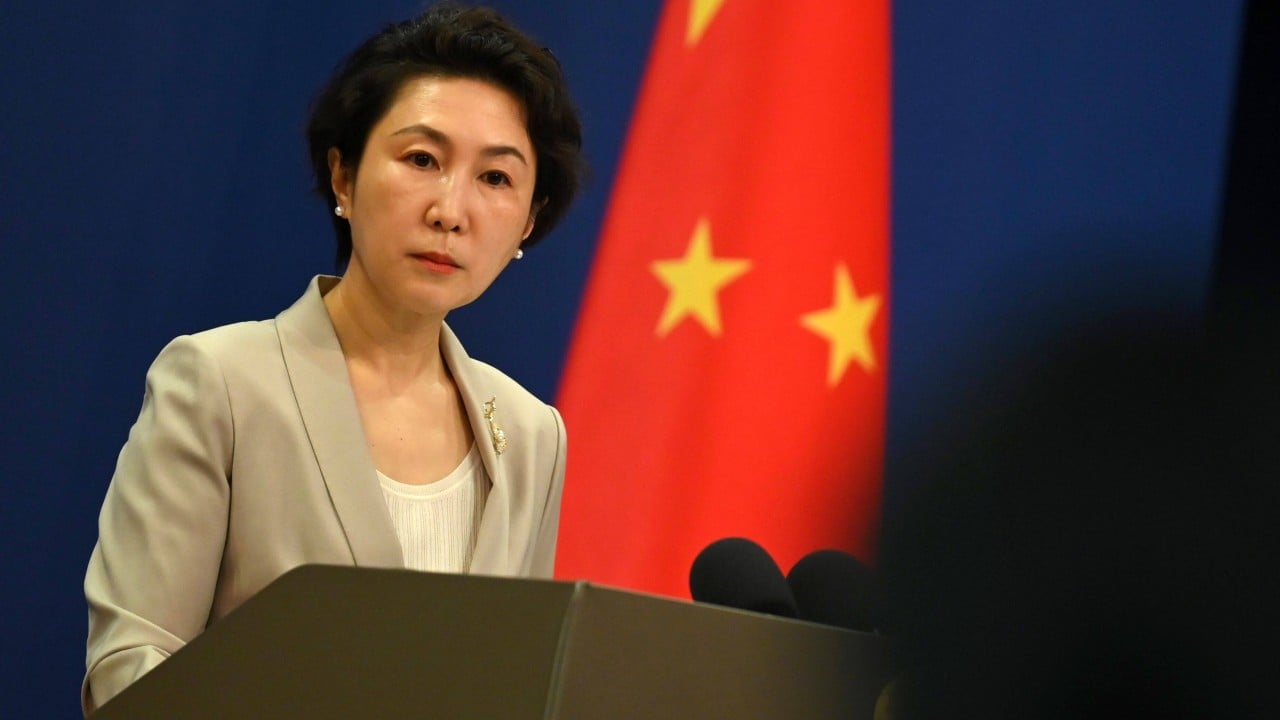
China rejects OECD report on industrial subsidies as one-sided amid EU trade tensions China has rejected a recent OECD report that said its firms receive far higher government subsidies than international peers, calling the findings one-sided and arbitrary at a time when EU concerns over Beijings industrial policy are intensifying. The reports definition of subsidies lacks a unified standard and statistical framework, and deviates from consensus under multilateral frameworks such as the World Trade Organization, the Ministry of Commerce said in a statement on...
south china morning post · 3 days ago
Darren Jones told Mandelson he was so sorry he was sacked as US envoy Chief secretary to PM discussed his own ambitions with the disgraced peer and sniped about colleagues, leaked messages show
financial times · 3 days ago
Submit your questions: Ten years on, whats next for Brexit? Take part in a live Ask an Expert Q&A with the FTs Europe editor Ben Hall and Peter Foster, the FTs World trade editor, today at 1pm BST
financial times · 3 days ago
Schengen door needs closing more tightly: 11 countries call for Russian visa restrictions Estonia and 10 European countries are pushing for the European Union to reduce Russian access to the Schengen Area ahead of the upcoming summer.
news.err · 3 days ago
Lithuanian minister dismisses Belarus potash transit debate as a waste of breath Lithuanias Transport Minister, Juras Taminskas, has dismissed discussion of resuming the transit of Belarusian potash fertilisers through the country as "a waste of breath," despite reports that the United States is encouraging regional governments to reconsider restrictions.
lrt · 3 days ago
Early school leavers down to 9.1 in 2025 In 2025, the share of early school leavers (young people aged 18-24 leaving early from education and training) in the EU was 9.1, almost meeting the EU-level target of 9.0 for 2030. This share has steadily decreased over the last 10 years (from 11.0 in 2015), bringing the EU closer to the tar...
eurostat · 3 days ago
EU green jobs: which activities employ the most people? Employment in the EU green economy has grown by an average of 6 per year since 2014, reaching 5.8 million full-time equivalents in 2023. But which economic activities employ the most people and have seen the highest growth? According to data on the European environmental goods and services sect...
eurostat · 3 days ago
🇪🇺❌🇮🇷– According to a Reuters-reviewed document dated May 26, the European Unions diplomatic arm has proposed that its Aspides naval mission take the lead in future mine-clearing operations in the Strait of Hormuz. ➡️ The European External Action Service suggested that, once conditions permit and a safe distance from belligerents is maintained, EUNAVFOR ASPIDES should serve as the EUs primary contribution to a French- and British-led ad hoc coalition aiming to secure the vital maritime route. @GeoPWatch
telegram bot · 3 days ago
How the largest community of Swiss descendants in Brazil became German In southern Brazil, thousands of Swiss immigrants were gradually absorbed into a broader German identity, highlighting how migration, language and state policies reshape belonging over generations. Located in Santa Catarina state in southern Brazil, the Vale do Itajaí is one of the countrys most emblematic regions of European immigration. Marked by river valleys and towns with half-timbered architecture, the region has built an identity strongly associated with German heritage, reflected in its music, cuisine and traditional festivals such as Oktoberfest, inspired by the famous beer celebration in Munich, Germany. Visitors to the region, however, rarely realise that this same area was also home to the largest community of Swiss descendants in the country – many of whom no longer recognise themselves as such. This presence dates back to the 19th century, when around 15,000 Swiss immigrants settled in southern Brazil with peaks in the 1810s, 1850s and 1880s. Over generations ...
swissinfo · 3 days ago
Comisia Europeană avertizează că sute de mii de locuri de muncă din UE sunt în pericol. Sectoarele cele mai expuse Comisia Europeană avertizează că țările UE riscă pierderi masive de locuri de muncă în următorii ani, deoarece costurile ridicate ale energiei, restructurarea industrială și tranziția verde afectează economia, relatează POLITICO.
digi24 · 3 days ago
Avertisment de la Bruxelles: China ajută Rusia să ocolească sancțiunile. David OSullivan: „Vom acționa când avem dovezi (Euronews) China continuă să ajute Rusia să ocolească sancțiunile occidentale și rămâne o „problemă foarte mare pentru eficiența măsurilor adoptate de Uniunea Europeană, a declarat David OSullivan, trimisul special al UE pentru sancțiuni, pentru Euronews. Declarația vine în contextul în care Bruxellesul pregătește al 21-lea pachet de sancțiuni împotriva Moscovei și promite noi măsuri împotriva companiilor și instituțiilor financiare implicate în sprijinirea economiei de război a Kremlinului.
digi24 · 3 days ago