 Sunday, June 7Sunday, June 7
Mirra Andreeva claimed her first Grand Slam title on Saturday, defeating Polish qualifier Maja Chwalinska 6-3, 6-2 in the French Open final to become the youngest women’s champion at Roland Garros since Monica Seles in 1990. The 19-year-old Russian, ranked eighth in the world, ended a remarkable fortnight in Paris with a composed performance that showcased her growing maturity on clay. Chwalinska, 21 and ranked 114th, had stunned the tournament by becoming the first qualifier to reach a Grand Slam final, but found herself overpowered by the higher-ranked Andreeva in just 73 minutes.
Andreeva’s victory marks the first major title for a Russian woman since the start of the Ukraine war, a milestone she acknowledged in her post-match remarks. “I want to thank myself,” she said, reflecting on the emotional weight of the achievement. “This is something I’ve worked for my whole life.” Her triumph adds to a breakthrough season that has already seen her win two other titles in 2026, elevating her from promising prospect to established contender.
The final unfolded as a study in contrast. Chwalinska, who had dropped just one set en route to the final, started strongly but could not sustain the momentum against Andreeva’s relentless baseline game. The Russian broke serve twice in the first set and maintained control thereafter, converting three of four break chances while saving all five she faced. Her victory makes her the third-youngest Grand Slam champion of the 21st century, behind only Naomi Osaka and Ashleigh Barty at the time of their first majors.
For Chwalinska, the run to the final—including a semifinal upset of Diana Shnaider—will be remembered as a career-defining breakthrough. “Years of hard work have paid off,” she said after the match, her voice steady despite the disappointment. Her journey from qualifying to the championship match captivated Polish fans and injected fresh energy into a tournament that had struggled to find a narrative beyond the dominance of established stars.
Andreeva’s rise reflects a generational shift in women’s tennis, where teenage talent is increasingly challenging the old guard. Her ability to handle pressure, honed during a clay-court swing that included a title in Rome, suggests she is not a one-Slam wonder. As she hoisted the Coupe Suzanne Lenglen, the question now is how quickly she can translate this success into sustained dominance.
With the 2026 season still young, Andreeva’s name is likely to feature prominently in the coming months. For now, she stands alone as the toast of Paris—a teenager who arrived as a contender and left as a champion.
Mirra Andreeva, 19, wins French Open title, becomes youngest champion since 1990

VIDEO ⟩ Poolatari muinasjutt lõppes: agressorriigi tennisist võitis esimest korda Prantsusmaa lahtised Venemaa tennisist Mirra Andrejeva (WTA 8.) alistas Prantsusmaa lahtiste finaalis 6:3, 6:2 maailma 114. reketi Maja Chwalinska (Poola).
postimees · about 8 hours ago
«Pidin tõestama, et saan hakkama» Vigade paranduse teinud Aktas võidutses kodusel MK-etapil Eesti judoka Emma-Melis Aktas võitis täna Kalevi Spordihallis peetud MK-etapil naiste 78+ kilogrammi kaalukategooria. Kodupubliku ees võidutsenud 18-aastane eestlanna tunnistas pärast turniiri, et mullune finaalikaotus andis tänavusele triumfile tähenduse.
postimees · about 8 hours ago

Andreeva says maiden major triumph surpassed expectations and she wants more reut.rs/3RVe29M
bluesky bot · about 8 hours ago

Tenista Henrique Rocha na final do challenger de Perugia O número três nacional e 119.º da hierarquia impôs-se ao 189.º colocado com os parciais de 6-4 e 6-2, em uma hora e 30 minutos. Garantiu a sétima final da carreira num challenger e terceira da época.
observador · about 8 hours ago
Ruska Andrejevová ovládla Roland Garros. Ve finále antukového grandslamu porazila Polku Chwaliňskou Ruská tenistka Mirra Andrejevová získala na Roland Garros v devatenácti letech premiérový grandslamový titul. V duelu nečekaných finálových debutantek porazila Polku Maju Chwaliňskou 6:3, 6:2 a ukončila její senzační tažení turnajem z kvalifikace. Turnajová osmička porazila na pařížské antuce 114. hráčku světového žebříčku za hodinu a 23 minut.
irozhlas.cz · about 9 hours ago
Andrejeva, pas 19, wint haar langverwachte grandslam in Parijs In de finale van Roland Garros was de Russische Mirra Andrejeva veel te sterk voor de Poolse Maja Chwalinska, een qualifier die tot ieders verrassing was doorgedrongen tot de eindstrijd in Parijs.
nrc · about 9 hours ago
Deense koningin Mary speelt, danst en loopt mee in polonaise bij handbalfinale De Deense koningin Mary (54) heeft zich zaterdag van haar sportieve en losse kant laten zien tijdens de LykkeCup. Dit is de traditionele afsluiter van het handbalseizoen voor kinderen en jongeren met een beperking. Mary ging onder meer los in de silent disco, speelde een potje handbal en liep mee in de polonaise.
rtl nieuws · about 9 hours ago
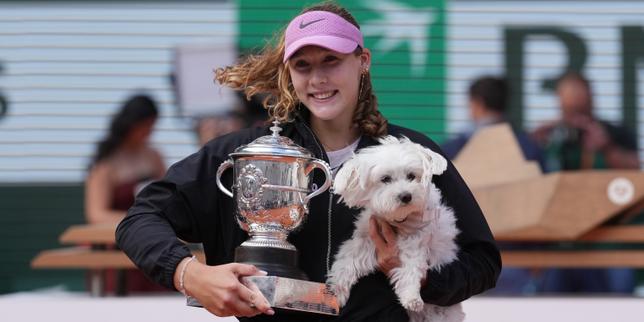
Roland-Garros 2026 : Mirra Andreeva a résisté à tous les vents contraires pour entrer dans le cercle des vainqueures en Grand Chelem La Russe de 19 ans sest imposée en finale, 6-3, 6-2, face à la surprise polonaise Maja Chwalinska, samedi. Laboutissement dune quinzaine durant laquelle la 8ᵉ joueuse mondiale a réussi à composer avec la pression, contrairement aux autres favorites.
le monde · about 9 hours ago

Chwalinska says years of hard work paid off in French Open run reut.rs/43SzuyU
bluesky bot · about 10 hours ago

Tyrrell Hatton still leads at LIV Golf Andalucia; local favorites lurking reut.rs/4eqFghc
bluesky bot · about 10 hours ago
Tiener Andreeva verslaat Roland Garros-sensatie en wint haar eerste Grand Slam Mirra Andreeva heeft zaterdag Roland Garros op haar naam geschreven. De Russische tennisster rekende in de finale in Parijs af met de Poolse sensatie Maja Chwalinska: 6-3 en 6-2.
nu.nl · about 10 hours ago
Qualifikantin Maja Chwalinska im Finale chancenlos: Mirra Andrejewa gewinnt die French Open Die Qualifikantin Maja Chwalinska hält anfangs mit der haushohen Favoritin Mirra Andrejewa mit, verliert dann aber doch klar das Finale in Paris. Für die Siegerin ist es eine Titel-Premiere.
tagesspiegel · about 10 hours ago
Tennis: „Möchte mir selbst danken: Andrejewa gewinnt French Open Die Qualifikantin Maja Chwalinska hält anfangs mit der haushohen Favoritin Mirra Andrejewa mit, verliert dann aber doch klar das Finale in Paris. Für die Siegerin ist es eine Titel-Premiere.
tagesspiegel · about 10 hours ago
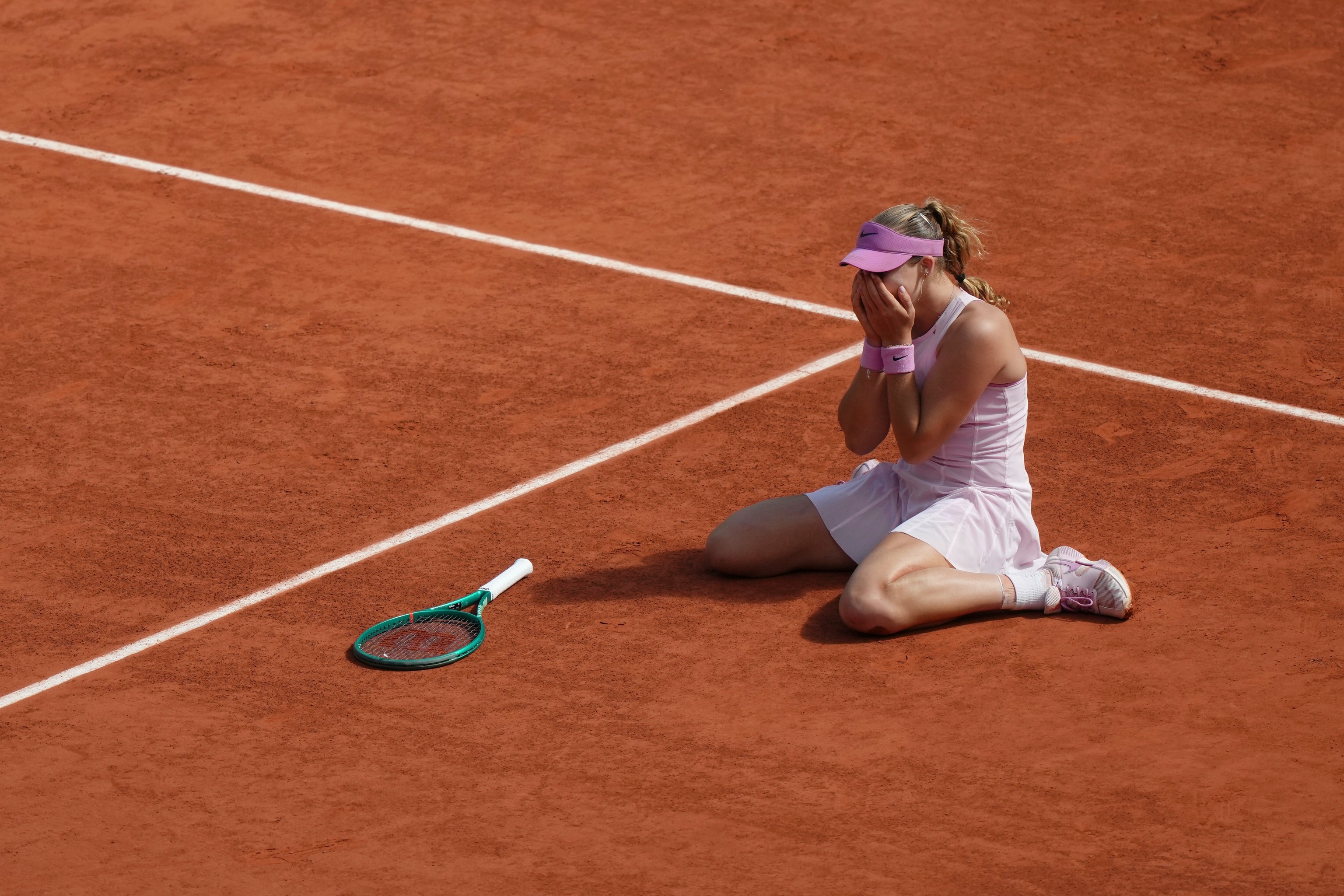
Andreeva pone fin a la intrépida aventura de Chwalinska y gana en Roland Garros su primer grande La rusa se impuso por 6-3 y 6-2 en una final donde su oponente sólo resistió los cinco primeros juegos. Es el sexto título de su carrera, tercero en 2026. Con 19 años y 39 días, es la tercera campeona del Grand Slam más joven de este siglo. Leer
elmundo · about 10 hours ago
Tennis: Mirra Andreeva wins womens Roland Garros final The world No. 8 duly brushed aside Polish qualifier Maja Chwalinska, winning in straight sets, 6-3 6-2. Mirra Andreeva - nineteen years old - is the youngest winner since Monica Seles
euronews · about 10 hours ago
Mirra Andreeva becomes first Russian major winner since Ukraine war
telegraph · about 10 hours ago
19-åriga Mirra Andreeva vinner Franska öppna
svenska dagbladet · about 10 hours ago
La prima volta di Mirra (e anche di Maja) La rubrica Mondays Net sul Roland Garros
corriere · about 10 hours ago
Russian teenager Mirra Andreeva wins French Open to claim first Grand Slam Eighth-ranked Mirra Andreeva ended the run of 114th-ranked Polish qualifier Maja Chwalinska in 6-3, 6-2 win in final.
aljazeera · about 10 hours ago