Loading…
 Saturday, September 26Saturday, September 26
3 months · 2 summary articles
US general who led Afghanistan exit retires amid Trump-era military purge
Top U.S. general in Europe retires amid Pentagon purge led by Hegseth
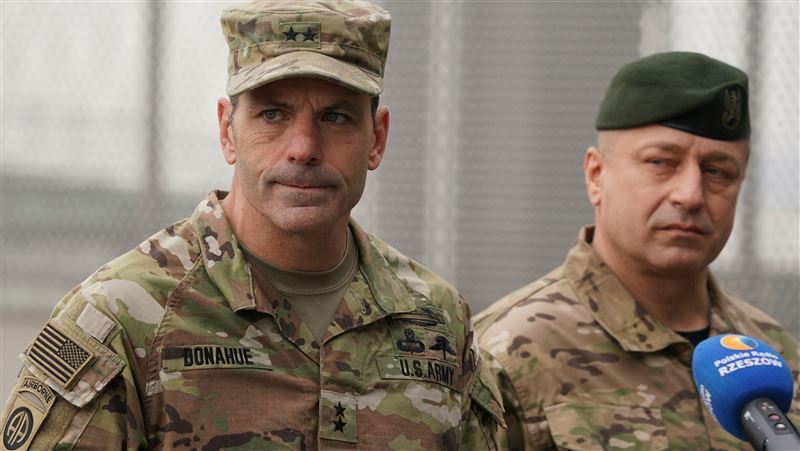
General Christopher Donahue, the last United States soldier to leave Afghanistan in August 2021, announced his retirement on Thursday, 25 June 2026, ending a four-decade military career that culminated in his role as commander of US Army forces in Europe and Africa. The abrupt departure follows a sweeping purge of senior officers under President Donald Trump’s second administration, with Donahue becoming the latest high-profile casualty in a reshuffle led by acting Secretary of Defense Pete Hegseth.
General Donahue, 58, confirmed his retirement in a statement released by the Pentagon, marking the end of a tenure that began with his historic withdrawal from Kabul five years ago. His exit coincides with a broader military restructuring under the Trump administration, which has seen more than 20 top commanders removed or reassigned in recent months. Sources close to the Pentagon told CBS News that Donahue’s retirement was not voluntary but part of a systematic overhaul of the armed forces’ leadership.
The shake-up reflects the administration’s stated goal of modernising the military and aligning it with new strategic priorities. Acting Secretary Hegseth, a former Fox News host and vocal advocate for military reform, has spearheaded the changes, which include accelerated retirements and reassignments of senior officers perceived as resistant to the administration’s vision. General Donahue’s departure is the latest in a series of high-profile exits, following the ousting of the Air Force chief of staff and the resignation of the Navy’s top admiral earlier this month.
Donahue’s legacy remains closely tied to the chaotic final days of America’s longest war. As commander of the 82nd Airborne Division, he oversaw the evacuation of US personnel and Afghan allies from Kabul in August 2021, a mission that ended in tragedy with the deaths of 13 US service members in a suicide bombing at Abbey Gate. His leadership during the withdrawal earned both praise and criticism, with some hailing his efforts to evacuate thousands of Afghans despite the collapse of the Afghan government, while others condemned the operation as a failure of strategic planning.
In a rare public statement, Donahue acknowledged the challenges of his final command but offered no further details on his retirement. Pentagon officials confirmed that a successor has not yet been named, leaving a leadership vacuum at a critical moment for US military operations in Europe and Africa. The administration has not indicated whether the position will be filled or restructured as part of the ongoing reforms.
With Donahue’s retirement, the Trump administration has now removed more than 20 senior military leaders in less than six months, a pace that has alarmed some defence analysts. Critics argue that the purge risks destabilising the chain of command and undermining institutional knowledge at a time of heightened global tensions. Supporters, however, contend that the changes are necessary to adapt the military to 21st-century threats. As the administration presses ahead with its reforms, the question remains: who will lead the US Army in Europe and Africa next?
Follow us for live European news
1 further source not geolocated

France calls for orderly US military drawdown – POLITICO
gdeltproject.org · 3 months ago
Top Army general who was last US soldier to leave Afghanistan is suddenly leaving his post
gdeltproject.org · 3 months ago
Gen. Chris Donahue set to retire as Army commander in Europe and Africa, in latest departure by top military official
gdeltproject.org · 3 months ago
Last US soldier to leave Afghanistan: Top US commander in Europe Christopher Donahue to step down amid Hegseths military revamp
gdeltproject.org · 3 months ago
美陸軍歐非司令突下台 ! 川普2 . 0逾20位高階將領遭清洗 | 國際 | 三立新聞網 SETN . COM
gdelt bot · 3 months ago
Vor Frankreichs Küste: Nach Havarie der „Erika 1999 - Marine stopft Risse am Wrack Ölverschmutzte Vögel an Frankreichs Stränden geben Anlass zur Sorge. Nun greift die Marine ein und sichert das Wrack der „Erika – Jahrzehnte nach der Katastrophe.
tagesspiegel · 3 months ago
Hegseth thwarted internal efforts to extend top Army generals career
gdeltproject.org · 3 months ago