
NATO leaders gather in Ankara as U.S. retrenchment tests alliance unity
Story Timeline
3 months · 13 summary articles
NATO leaders will gather in Ankara on Tuesday for a two-day summit overshadowed by transatlantic tensions, as European allies scramble to demonstrate unity and compensate for U.S. retrenchment ahead of President Donald Trump’s expected demands for greater burden-sharing. The gathering, described by NATO Secretary General Mark Rutte as an effort to “make a case for NATO,” comes as Washington prepares to unveil a series of defense initiatives aimed at easing concerns over its reduced military footprint in Europe.
Rutte, speaking in late June during a visit to Washington, showcased what he called “The Trump Trillion”—a display of €1 trillion in additional defense spending by European allies and Canada since Trump first took office in 2017 . The NATO chief’s strategy to keep the alliance intact hinges on flattery and economic incentives, with a focus on boosting defense production and procurement deals to appeal to Trump’s transactional approach. Rutte is expected to unveil a “defense industrial revolution,” including tens of billions in new contracts, in an attempt to frame NATO as an economic asset for the U.S. as much as a security one.
European leaders are acutely aware of the stakes. Swedish Prime Minister Ulf Kristersson warned that the summit convenes during a “turbulent time” for European security, with the war in Ukraine dominating the agenda . Sweden’s defense spending has more than doubled since 2021, and Kristersson reiterated the government’s ambition to reach a 5% GDP target by 2030. Foreign Minister Maria Malmer Stenergard stressed the need for alliance unity, stating that NATO must send “a strong signal of long-term support for Ukraine” and deter Russia.
The summit’s focus on defense industrial capacity reflects a broader shift in NATO’s structure, often referred to as “NATO 3.0,” as the U.S. reviews its military posture in Europe. Washington has already finalized plans to reduce its presence, including the withdrawal of 5,000 troops from Germany and the cancellation of planned relocations of long-range fires and air defense battalions . In response, European nations have accelerated their own military modernization, with a senior NATO commander noting that Europe has replaced most of the U.S. cuts within the alliance .
Yet the summit’s success is far from guaranteed. Trump has repeatedly criticized European allies for insufficient defense spending, calling NATO support “ridiculous” just days before the gathering . The alliance’s draft declaration, finalized by ambassadors on July 3, labels Russia a direct threat to Euro-Atlantic security and includes a €70 billion annual aid package for Ukraine for 2026 and 2027 . But lingering disputes—over Iran, Greenland, and tariffs—have strained relations, with the Atlantic Council’s Frederick Kempe describing transatlantic tensions as the greatest he has ever seen .
Türkiye, hosting the summit, stands to gain from the friction. President Recep Tayyip Erdoğan’s warm ties with Trump and Ankara’s burgeoning defense industry have positioned Türkiye as a key player in NATO’s evolving dynamics. Italian Prime Minister Giorgia Meloni, in a phone call with Erdoğan, expressed hope that the summit would strengthen allied unity, particularly in defense cooperation . Meanwhile, Poland’s foreign minister warned that the summit must signal unity to Moscow, cautioning against potential Russian provocations .
As leaders prepare to convene, the overriding question is whether NATO can bridge its divisions—or whether the alliance’s future will be defined by retreat, recrimination, and a Europe left to defend itself.
Follow us for live European news
Articles

South Korean president to attend NATO summit in Türkiye President Lee Jae Myung will attend the NATO summit in Ankara and deliver a keynote speech at the invitation of Secretary General Mark Rutte. He will also participate in a defence industry forum, marking South Koreas continued engagement with the alliance.
yenisafak · about 2 months ago
Swedish PM says NATO summit in Ankara comes at turbulent time Swedish Prime Minister Ulf Kristersson said NATOs upcoming summit in Ankara will convene during a "turbulent time" for European and global security, as allied leaders prepare to discuss boosting defense industrial capacity and maintaining long-term military assistance to Ukraine.
yenisafak · about 2 months ago
Bulgarian PM vows to defend national interest on EU Russia sanctions Bulgarian Prime Minister Rumen Radev said on Friday that Sofia will introduce reservations on the European Unions proposed 21st sanctions package against Russia, citing concerns over energy security and potential arbitration costs involving Russian oil major Lukoil.
yenisafak · about 2 months ago
Fidan meets KRG deputy PM in Ankara for talks Turkish Foreign Minister Hakan Fidan held talks with Qubad Talabani, deputy prime minister of Iraqs Kurdish Regional Government, in Ankara. Talabani expressed satisfaction with Türkiyes commitment to the peace process with the PKK and reaffirmed the PUKs full support for its success.
yenisafak · about 2 months ago
Canada, Europe to vow major support for Ukraine at NATO summit
gdeltproject.org · about 2 months ago
Europe has replaced most US cuts within NATO, top commander says
gdeltproject.org · about 2 months ago

What Türkiye should not do for NATO #Europa #Europe #NATO #OTAN
mastodon bot · about 2 months ago
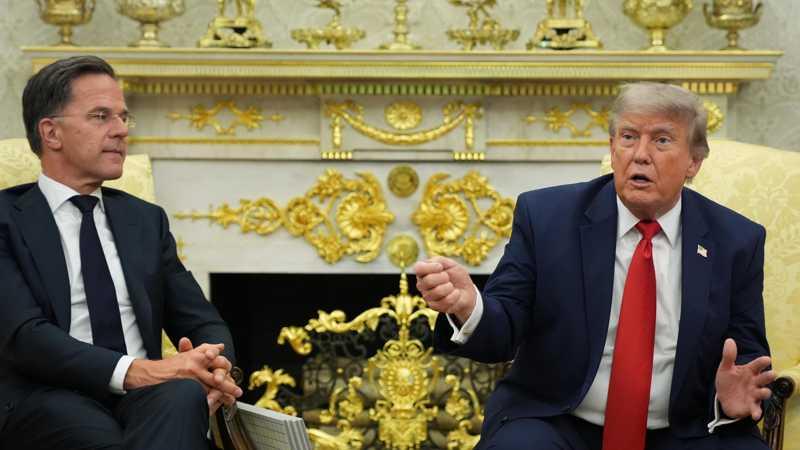
Trump Says Its Ridiculous for U.S. to Maintain Current NATO Support as Rift Widens Ahead of SummitSince his first term, Trump has accused European allies of not investing enough in their own militaries and relying too heavily on U.S. contributions. #News #NATO #US #Trump
mastodon bot · about 2 months ago
NAVO-top in Ankara onder druk: Rutte moet grote ongelukken voorkomen Komende week vindt de jaarlijkse NAVO-top plaats in de Turkse hoofdstad Ankara. Het militaire bondgenootschap is razendsnel aan het veranderen nu de Amerikanen zich terugtrekken uit Europa. Recente gebeurtenissen in het Midden-Oosten zetten de onderlinge relatie verder onder druk. En landen die te weinig investeren in defensie kunnen rekenen op de toorn van de Amerikanen.
rtl nieuws · about 2 months ago
Erdoğan, Meloni discuss defense ties and NATO summit President Recep Tayyip Erdoğan and Italian Prime Minister Giorgia Meloni held a phone call to discuss bilateral relations and regional issues. Erdoğan said Ankara seeks closer cooperation with Italy, particularly in the defense industry, and expressed hope that next weeks NATO summit in Ankara will strengthen allied unity.
yenisafak · about 2 months ago
NATO leaders to gather in Ankara, aiming to smooth over tensions with Trump
gdeltproject.org · about 2 months ago
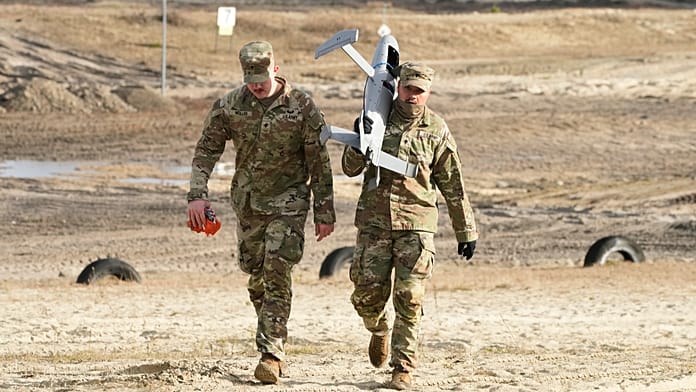
NATOs drone problem: Can European industry close the gap? At NATO AIRCOMs Industry Day in Ramstein, Euronews had exclusive access, speaking to military leaders and defence companies about the race to develop cheaper, faster and more effective ways to counter drones.
euronews · about 2 months ago

„Du kannst niemals den Trump-Faktor ausschalten – Die Nato setzt auf einen historischen Schritt Vor dem Nato-Gipfel in Ankara fürchten europäische Diplomaten die Launen des US-Präsidenten. Damit die unabhängiger von den USA wird, sind bereits konkete Schritte geplant. Vor allem auf Deutschland kommt eine Menge zu.
welt.de · about 2 months ago
Ankara tightens security, air traffic for NATO summit Türkiye has ramped up security in Ankara ahead of the July 7-8 NATO summit, deploying more than 56,000 police and gendarmerie personnel. Temporary flight restrictions will be in place at Esenboğa Airport, with exemptions for aircraft carrying foreign leaders and official delegations.
yenisafak · about 2 months ago
Tranziția spre NATO 3.0: SUA vor prezenta la Ankara mai multe măsuri care să atenueze impactul reducerii forțelor din Europa Întrucât se ridică din ce în ce mai multe întrebări despre viitorul NATO, înaintea summitului cheie de la Ankara, de pe 7-8 iulie, e de așteptat ca Washingtonul să folosească evenimentul pentru a prezenta o serie de inițiative menite să atenueze impactul politic al unei amprente reduse a SUA în Europa, transmite Euractiv.
digi24 · about 2 months ago

Comment of the Embassy of #Russia in the Netherlands to Izvestia newspaper (3 July 2026) Military infrastructure deployment in the Netherlands in the interests of #Ukraine and #NATO • We note the ongoing modernisation of local air bases, military logistics facilities and transport network. • Capacities for hosting allied forces and conducting joint exercises are being expanded.
mastodon bot · about 2 months ago

Prezydent Litwy ostrzega: NATO może się podzielić. Podał powód - Jeśli europejskie kraje nie zdołają osiągnąć celu wydatków obronnych na poziomie 5 proc. PKB, NATO podzieli się na dwie lub trzy części - ostrzegł w piątek prezydent Litwy Gitanas Nauseda.
gazeta.pl · about 2 months ago
Trump set to put NATO unity to the test at Turkey summit
gdeltproject.org · about 2 months ago
Outgoing UK PM Starmer says successor cannot spend less time on foreign affairs Outgoing Prime Minister Keir Starmer said whoever succeeds him would have to devote as much time to international crises and diplomacy as he did, rejecting suggestions Britains next leader could focus more heavily on domestic issues. Starmer, who announced last month that he would step down after two years in office, said in a BBC […]
cyprus mail · about 2 months ago
Turkish defense products to be showcased at NATO summit Türkiyes Defense Industries Secretariat will host a high-level reception at Turkish Aerospace Industries as part of the NATO Defense Industry Forum. Indigenous air platforms will perform demonstration flights, and senior allied officials will attend.
yenisafak · about 2 months ago
Belarusian president calls for new stage in Myanmar ties Belarusian President Alexander Lukashenko called for launching a "new stage" in relations with Myanmar during talks with his counterpart Min Aung Hlaing in Naypyidaw, saying the well-being of their peoples would anchor bilateral cooperation and that the two countries should build ties serving as a regional example.
yenisafak · about 2 months ago
Erdogan, Trump share strong will to lift CAATSA sanctions: Fidan Turkish Foreign Minister Hakan Fidan said on Thursday that President Recep Tayyip Erdogan and US President Donald Trump share a "strong will" to lift sanctions imposed on Türkiye under the Countering Americas Adversaries Through Sanctions Act (CAATSA), adding that both governments are taking steps to resolve the issue.
yenisafak · about 2 months ago
Former NATO chief proudest of Sweden, Finland accession Former NATO Secretary General Jens Stoltenberg has told Anadolu that Sweden and Finlands entry into the alliance was the decision he is most proud of during his decade‑long tenure. He thanked President Erdoğan for his cooperation and said his main expectation for the Ankara summit is to demonstrate unity.
yenisafak · about 2 months ago
Belgian defense minister: NATO needs Türkiye, praises Turkish tech Belgian Defense Minister Theo Francken has told Anadolu that Türkiye is a very important ally and should be included in Europes defense programs. He praised Turkish technology, said Europe can learn a lot from Ankara, and stressed that unity is essential ahead of the NATO summit.
yenisafak · about 2 months ago
Danish FM stresses dialogue with China in Copenhagen talks Danish Foreign Minister Lars Lokke Rasmussen hosted his Chinese counterpart Wang Yi in Copenhagen on Thursday, stressing that dialogue with Beijing remains indispensable despite policy disagreements as the two diplomats discussed bilateral trade and the Russia-Ukraine war.
yenisafak · about 2 months ago
Germanys Merz rejects Trumps NATO burden-sharing criticism Chancellor Friedrich Merz has pushed back against President Trumps claims that Germany is not contributing enough to NATO defense. Merz said Germany is doubling its defense budget within four years and making its largest-ever military investment, insisting we have nothing to be ashamed of.
yenisafak · about 2 months ago
Dutch Advisory Council calls for long-term support for Ukraine The Dutch Advisory Council on International Affairs has called on Europe to prepare now for the creation of security assurance forces for Ukraine and for strengthening Ukrainian and European defense capabilities.
ukrinform · about 2 months ago
Ukraine backers to vow major support at NATO summit
gdeltproject.org · about 2 months ago
Fidan, Syrian counterpart discuss regional developments Turkish Foreign Minister Hakan Fidan held a phone call with Syrian Foreign Minister Asaad Hassan al‑Shaibani to exchange views on recent developments in the region, Turkish diplomatic sources said. No further details were provided.
yenisafak · about 2 months ago
Merz tells Trump Germany ready for more NATO responsibility Chancellor Friedrich Merz told President Donald Trump that Germany is prepared to take on greater responsibility for European security, as NATO becomes more European to remain transatlantic. The two leaders agreed to continue discussions at next weeks Ankara summit.
yenisafak · about 2 months ago