 Thursday, June 18Thursday, June 18
Astronomers have named an asteroid after Hungarian astronomer Orsolya Karafiáth, marking a rare international honour in celestial nomenclature. The 2007 RR Karafiáth, located roughly 280 million kilometres from Earth, was officially designated on 18 June 2026 .
The honour reflects Karafiáth’s contributions to astronomy, particularly in the study of exoplanets and stellar phenomena. The asteroid, first observed in 2007, orbits the Sun in the main belt between Mars and Jupiter. Its naming follows the International Astronomical Union’s guidelines, which require a demonstrated record of scientific achievement for celestial objects to bear an individual’s name.
The announcement coincides with a flurry of cosmic discoveries reported this week. On the same day, astronauts aboard the International Space Station captured a vivid display of the southern lights, an aurora australis that painted the Earth’s atmosphere in deep green hues. The phenomenon, described as “dancing and slipping just beneath us,” offered a rare visual treat for the crew .
Meanwhile, the James Webb Space Telescope has shed new light on GJ504, a pink-hued exoplanet discovered 15 years ago. Recent observations reveal that its atmosphere is shrouded in salt clouds, resolving long-standing questions about the planet’s unusual colour and composition .
In a separate development, researchers traced an ultra-high-energy particle to a galaxy 11 billion light-years away, a finding that could reshape understanding of cosmic ray origins .
The naming of asteroid Karafiáth stands out for its symbolic weight. It joins a select group of celestial bodies bearing personal names, a tradition that bridges scientific achievement with public recognition. Karafiáth, whose work spans both observational and theoretical astronomy, becomes only the second Hungarian astronomer to receive such an honour, following the precedent set by earlier designees.
The designation also underscores the global nature of modern astronomy, where collaboration across borders and disciplines drives discovery. As space agencies and observatories continue to push the boundaries of knowledge, such honours serve as milestones in the ongoing narrative of human exploration beyond Earth.

Tässä tukikohdassa ei saa kuvata, eikä sen paikkaa saa paljastaa – Monille tuttu todella arkisesta asiasta
iltalehti · about 2 hours ago

Kisbolygót neveztek el Karafiáth Orsolyáról A 2007 RR Karafiáth mintegy 280 millió kilométerre kering a Földtől.
hvg.hu · about 2 hours ago
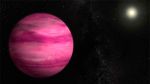
Auf dem rosafarbenen Planeten GJ504 bedecken Salzwolken den Himmel Der vor 15 Jahren entdeckte ungewöhnliche Sternbegleiter gab der Wissenschaft bisher Rätsel auf. Einige konnte das Webb-Teleskop nun lösen
der standard · about 2 hours ago

Rare Mosaic of Greek River God Discovered in Ancient Aspendos Archaeologists in Turkey have uncovered a rare Roman-era mosaic depicting the Greek river god Eurymedon as a youthful deity in the ancient Greek city of Aspendos (Greek: Ἄσπενδος), offering new insight into local art, urban life, and the citys relationship with water. The mosaic was found during excavations on Theatre Street, the ancient road linking […]
greek reporter · about 2 hours ago
Ancient Monolith in Mexico Shows Maya-Like Figure Receiving Offering From Divine Being Archaeologists in Mexico have uncovered an ancient monolith with engravings showing elite figures, one of which carries possible Maya-like characteristics, at a salvage site in Coatepec, Veracruz. The National Institute of Anthropology and History, known as INAH, dated the find to the Early Classic period, between 200 and 600 AD. The carved stone stands 1.88 […]
greek reporter · about 2 hours ago
Speurtocht naar herkomst extreem energierijk deeltje leidt naar sterrenstelsel 11 miljard lichtjaar verderop
de morgen · about 3 hours ago
Rare Mother-of-Pearl Seal Found in Israel Reveals Assyrian-Era Trade and Cultural Links A rare stamp seal carved from mother-of-pearl is offering new insight into life in the ancient Land of Israel during the Assyrian period, according to a study published in the journal Levant. Archaeologists discovered the artifact at Tel Hadid in central Israel. This site became part of the Neo-Assyrian Empire after the kingdoms conquest of […]
greek reporter · about 3 hours ago
Spectacolul verde care i-a lăsat fără cuvinte pe astronauții de pe Stația Spațială Internațională: „A dansat și s-a strecurat chiar sub noi Astronauții aflați pe Stația Spațială Internațională au surprins un fenomen spectaculos: o auroră sudică intensă, care a luminat atmosfera Pământului cu nuanțe puternice de verde.
adevarul · about 3 hours ago

Keeping up appearances: Greece reveals Parthenon façade after 220 years For the first time in about 220 years, the west façade of the Parthenon in Greece can be see in its fullest possible form. External scaffolding has now been permanently removed from the monument, marking a key step in its long restoration.
euronews · about 3 hours ago
ASTEROID ATLANTIS ⟩ See taevakivi võib näidata sidet kadunud tsivilisatsioonidega Kas oled tundnud, et sa ei kuulu täielikult end ümbritsevasse ühiskonda ja tsivilisatsiooni ning hing mäletab hoopis targemat maailma? Kas tunned huvi teadmiste vastu, mida tänapäevane teadus ei suuda seletada? Asteroid Atlantise asetus sünnikaardis võib seletada nii mõndagi.
postimees · about 3 hours ago