
Canada shifts Arctic defence to Sweden, snubs U.S. with Saab GlobalEye deal
Canada pivots sharply from U.S. defence ties, announcing a deal to acquire Swedish early-warning aircraft for Arctic surveillance. Prime Minister Mark Carney confirmed on Wednesday that Ottawa will purchase Saab’s GlobalEye fleet—based on Bombardier’s Global 6500 jet—over Boeing’s delayed E-7 Wedgetail, a move he framed as a deliberate diversification of Canada’s security partnerships. "Our historically close relationship with the United States has been permanently altered," Carney said at an Ottawa defence conference, citing unspecified U.S. threats to annex Canadian territory as a catalyst for the shift. The GlobalEye aircraft, designed to detect threats across the Arctic, will replace aging surveillance systems and reduce reliance on American suppliers, according to officials .
In a parallel economic realignment, Canada signed a landmark liquefied natural gas (LNG) export deal with Germany, positioning itself as a key energy supplier to Europe. Under the agreement, Canada will ship one million tonnes of LNG annually to Germany starting in the 2030s, with exports likely sourced from British Columbia. German Economy Minister Reiche hailed the deal as a "strategic partnership" to bolster energy security, while Carney described it as a milestone in Canada’s ambition to become an "energy superpower" . The accord follows years of European efforts to reduce dependence on Russian gas, accelerated by the 2022 Ukraine war.
The twin announcements underscore Carney’s broader strategy to recalibrate Canada’s foreign policy, balancing traditional alliances with new partnerships. While the LNG deal aligns with Canada’s push to monetize its oil-and-gas reserves, the defence procurement signals a rare break from Washington’s dominance in North American security. Analysts note the timing—amid rising U.S.-China tensions and Arctic militarization—may reflect Ottawa’s desire to assert sovereignty over its northern territories, where melting ice has heightened geopolitical competition. The Saab deal, valued in the billions, is expected to face scrutiny in Parliament, particularly from opposition parties questioning the cost and operational readiness of the GlobalEye system .
Articles

Canada signs landmark LNG energy deal with Germany
news.yahoo.com · about 23 hours ago
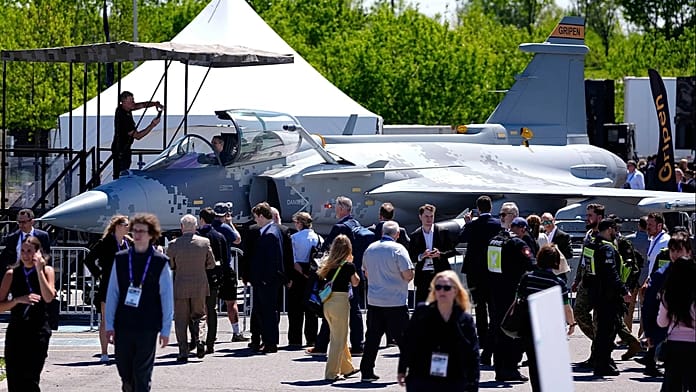
Canada chooses Swedens Saab in defence deal over US rivals, PM Mark Carney says Carney says Canadas historically close relationship with the United States has been permanently altered and Ottawa needs to diversify its economic and security relationships.
euronews · about 24 hours ago

Canada chooses Swedish early warning planes rather than US model Canadian Prime Minister Carney has said he wants to diversify from the US which has threatened to annex Canada.
aljazeera · 1 day ago

Canada in Talks to Acquire Saab Spy Planes, PM Carney Says At a defense conference in Ottawa, Canadian Prime Minister Mark Carney said Saabs GlobalEye aircraft would help detect and deter threats across the Arctic.
wsj · 1 day ago

Canada Moves Toward Energy Superpower Goal With German LNG Deal Canada unveiled a deal to sell liquefied natural gas to Germany, marking a significant step in Prime Minister Carneys effort to capitalize on its oil-and-gas reserves and position the country as an energy superpower.
wsj · 1 day ago
Canada Clinches First European LNG Deal
gdeltproject.org · 1 day ago
Canada cumpără avioane de alertă timpurie din Suedia. Statul nord-american își reduce dependența de SUA Canada, care susţine că vrea să-şi reducă dependenţa de firmele americane de apărare, a anunţat miercuri planuri de a achiziţiona o flotă de avioane de alertă timpurie de la grupul suedez Saab şi nu de la competitorul american Boeing, relatează Reuters.
digi24 · 1 day ago

Canada to buy Swedish early warning planes rather than US model reut.rs/4aclHXo
bluesky bot · 1 day ago
LNG: Deutschland einigt sich mit Kanada auf Import von Flüssigerdgas Ab den 2030ern will Deutschland jährlich eine Million Tonnen LNG aus Kanada importieren. Bundeswirtschaftsministerin Reiche spricht von »strategischer Partnerschaft«.
die zeit · 1 day ago
Canada, Germany poised to announce landmark LNG export deal from B.C.
gdeltproject.org · 1 day ago
Energiewirtschaft: Kanada soll Flüssiggas nach Deutschland liefern Die Bundesregierung will die Deutschlands Versorgung mit Flüssiggas breiter aufstellen, um besser gegen Krisen gewappnet zu sein.
sueddeutsche · 1 day ago
Canada to order military plane fleet from Sweden in shift from US suppliers Mark Carney announces purchase of Saabs GlobalEye early warning aircraft to patrol Arctic territoryCanada has announced plans to buy a fleet of early warning planes from Swedens Saab rather than a competing option from Boeing, as the country seeks to reduce reliance on US defence firms.Mark Carney, the prime minister, said on Wednesday that Canada would opt for Saabs GlobalEye, which is based on Bombardiers Global 6500 jet. Boeings E-7 Wedgetail plane – which has suffered from delays and cost overruns – had also been in contention. Continue reading...
theguardian · 1 day ago