 Thursday, May 21Thursday, May 21
Eric Schmidt, former CEO of Google, was booed by students during a commencement speech at the University of Arizona after addressing the impact of artificial intelligence (AI). The reaction followed remarks that appeared to downplay concerns about AI’s societal effects, despite growing public anxiety over job displacement and technological disruption. Pew Research data cited in the article indicates that Americans are more worried than excited about AI, reflecting broader unease among graduates .
Schmidt’s tenure at Google, where he led the company for over a decade, contributed to his accumulation of a multi-billion-dollar fortune, positioning him as a prominent figure in the tech oligarchy. His remarks at the commencement underscore the tension between tech leaders and the public over AI’s role in reshaping industries and labor markets .
The broader context of tech oligarchs and their influence is explored in a separate article discussing Stanford economist Mordecai Kurz’s book, *Private Power and Democracy’s Decline*. Kurz argues that modern tech billionaires, including figures like Schmidt, hoard cultural and technological power, eroding democratic institutions. He draws parallels to the first Gilded Age, when industrialists like Andrew Carnegie and John D. Rockefeller justified their dominance through social Darwinism. Today, tech leaders such as Anthropic CEO Dario Amodei similarly frame their work as a transcendent force, even as it risks mass unemployment and further concentration of power .

Neuer ZVEI-Chef: „So kann es nicht mehr weitergehen Einer der größten Industrieverbände des Landes bekommt mit dem Familienunternehmer Daniel Hager einen neuen Präsidenten. Der künftige Mann an der Spitze der Elektro- und Digitalindustrie legt gleich mal den Finger in die Wunde.
faz · 2 days ago

401(k) charitable donations take center stage in Charity Parity Act Jose Luis Pelaez Inc | Digitalvision | Getty Images Older Americans could get another way to make tax-free…
europesays.com · 2 days ago
WellSpan Health has a robot making hospital food Beep, bop, boop? More like beep, bop, food! Clinical staffing shortages have long been a well-publicized challenge for…
europesays.com · 2 days ago
Corporate exodus from California to Texas reshapes Americas economy NEWYou can now listen to Fox News articles! A corporate exodus is reshaping Americas business landscape — and…
europesays.com · 2 days ago
Tech firms face tougher UK rules on intimate image abuse | AI (artificial intelligence) Social media, messaging platforms and online forums that publish intimate image abuse – often intended to humiliate women…
europesays.com · 2 days ago

Behind the LinkedInferno: How tech workers are navigating Silicon Valley layoffs Tech workers are reeling as AI and mass layoffs upend their formerly dependable and lucrative career path, Josh Marcus reports
independent · 2 days ago
Salesforces Vala Afshar says AI impact could be 10 times bigger than the Industrial Revolution Artificial intelligence could have an impact 10 times bigger than the Industrial Revolution in one-tenth of the time,…
europesays.com · 2 days ago
Lets Celebrate Our Grads: Commencement May 2026 | John Chambers College of Business and Economics On Saturday, May 16, 668 Chambers students received their diplomas at the WVU Hope Coliseum. Each student faced…
europesays.com · 2 days ago

John Oliver on factoring companies: This industry is full of predators Last Week Tonight host spoke about structured settlements and the problematic industry surrounding themJohn Oliver took aim at factoring companies on his HBO show and the industry that takes advantage of people with structured settlements.On Last Week Tonight, he explained that the story grew out of the JG fucking Wentworth ads which have been a pop culture staple due to the infuriatingly catchy jingle that was even part of a Curb Your Enthusiasm storyline. Continue reading...
theguardian · 2 days ago

Ex-Google CEO Eric Schmidt booed after AI remarks at Arizona commencement Pew research shows Americans are more worried than excited about AI as graduates voiced fears over jobsA former Google CEO, Eric Schmidt, was met with students boos at a university commencement address in Arizona on Sunday when he raised the topic of artificial intelligence (AI) and its effects.Schmidt – who led the tech giant for more than a decade, acquiring a multi-billion dollar fortune in the process – was speaking to as many as 10,000 graduating University of Arizona students when he addressed the impact of modern technology on society. Continue reading...
theguardian · 3 days ago

Capitalism has to become more humane: a Stanford economist on big tech, power hoarding and democracy Mordecai Kurz argues tech oligarchs erode democracy through monopolies – and predicts how the trend may endThe billionaires of today are unusually aggressive in their hoarding of cultural and technological influence, according to Mordecai Kurz, a Stanford economist whose research connects monopoly power with political and economic inequality. In his new book, Private Power and Democracys Decline, publishing 19 May, he argues the US is living through an extreme version of a pattern that has repeated itself since industrialization: technological power concentrating in the hands of a few, which is eroding democracy.According to Kurz, technological moguls have long seen themselves as superior beings whose natural role is to shape society – so they have no problem disrupting the institution of democracy. During the first Gilded Age, in the late 19th century, as the US was enjoying its first ascent as an industrial powerhouse, wealthy industrialists like Andrew Carnegie and John D Rockefeller invented all kinds of theories about human evolution, twisting the logic of social Darwinism to convince themselves that their success was a sign they had been selected by nature to influence society, Kurz explained. Now, Anthropic CEO Dario Amodei has suggested his technology has a mystical potential to become a transcendent good. Hes also openly acknowledged it could lead to mass unemployment. Continue reading...
theguardian · 3 days ago
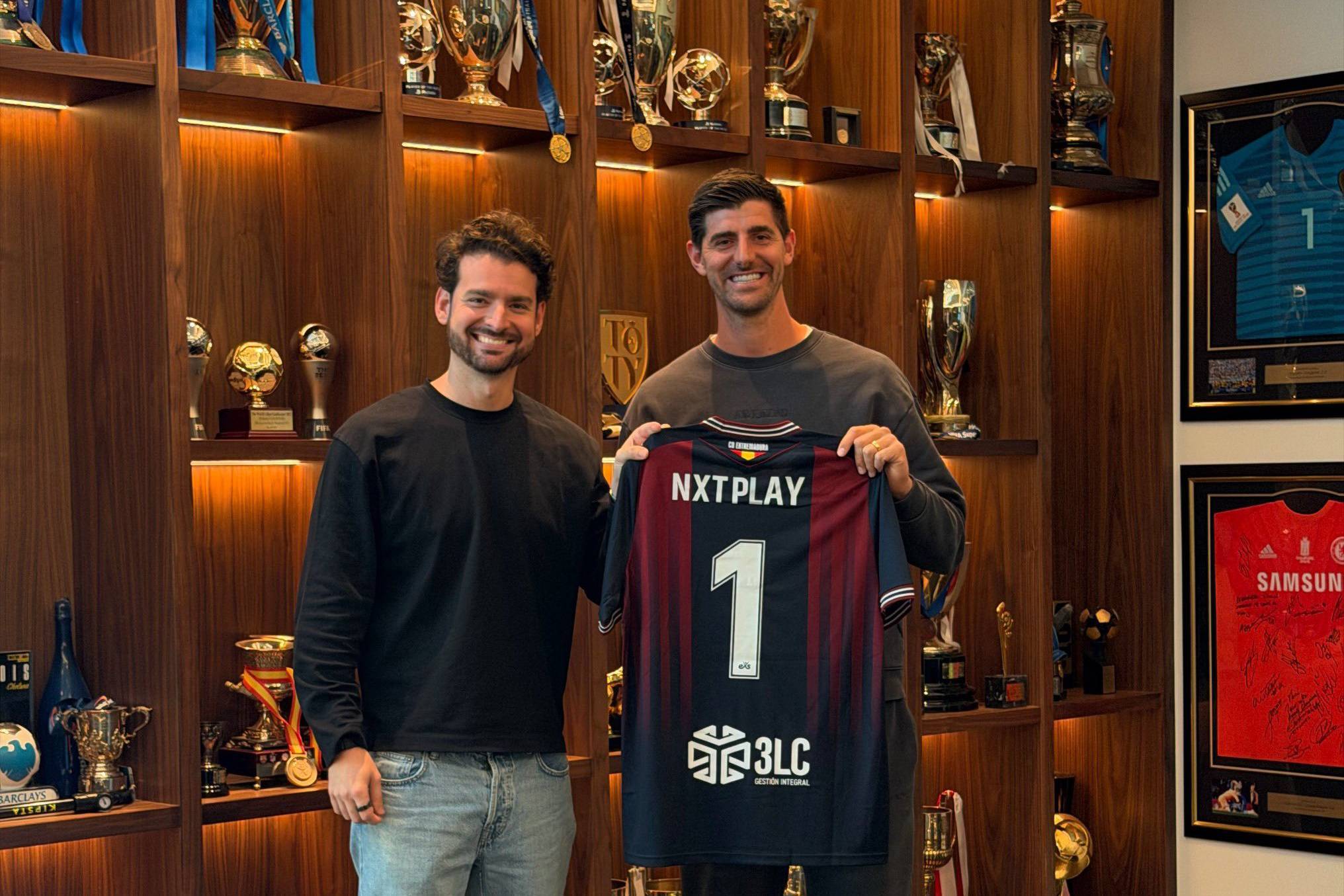
Courtois, nuevo copropietario del Extremadura, que acaba de ascender a Primera RFEF La operación, en la que se ha estado trabajando durante casi un año, se convierte en el segundo proyecto de inversión de NXTPLAY (copropiedad del portero) en un club de fútbol, tras la entrada de la plataforma en el capital del Le Mans FC Leer
elmundo · 3 days ago