
David Hockney, pioneering artist, dies at 90
Story Timeline
4 days · 2 summary articles
David Hockney, pioneering artist, dies at 90
David Hockney dies at 88, defies Paris Metro smoking ban
Continuation
David Hockney, the British artist whose vibrant canvases and playful spirit redefined modern art, died on Wednesday at the age of 90, according to cultural reports published today. The news, confirmed across multiple outlets, marks the end of an era for an artist whose work spanned seven decades and whose influence stretched from London’s swinging sixties to the digital studios of the 21st century. Hockney’s death was first reported in the *New Statesman*’s cultural section, which described him as “as serious as he was fun,” a man whose uncomplicated joy masked a relentless drive to push artistic boundaries .
Born in Bradford in 1937, Hockney rose to prominence in the 1960s as part of the Pop Art movement, though his work defied easy categorisation. His iconic swimming pool paintings, rendered in electric blues and greens, captured the sun-drenched optimism of California, where he lived for years. Yet his oeuvre was far broader: from photorealistic portraits to experimental iPad drawings, from stage designs for the Royal Opera House to vast multi-canvas landscapes like *A Bigger Picture*, which reimagined the Yorkshire countryside. The *New Statesman* noted that behind his playful public persona lay a “rigorous intellect” and an unyielding curiosity about how art could reflect and refract reality .
Tributes poured in swiftly. Wim T. Schippers, the Dutch artist and provocateur, was among those reflecting on Hockney’s legacy. In an interview with *Het Parool*, Schippers—known for his own boundary-pushing work—suggested that Hockney’s genius lay in his ability to make the extraordinary feel accessible. “He did the craziest things because life is a bit crazy,” Schippers remarked, drawing a parallel between Hockney’s fearless experimentation and his own irreverent approach to art .
Hockney’s final years were marked by both acclaim and controversy. His 2021 exhibition *Hockney — Drawing from Life* at the National Portrait Gallery in London drew record crowds, while his later works, including digital compositions created on an iPad, sparked debates about the role of technology in art. Critics praised his ability to evolve without losing his signature vibrancy. “His portraits are transcendent,” wrote *The Guardian* in a photo essay featuring Hockney’s subjects, from Quincy Jones to Sam Smith, alongside other luminaries captured at the Montreux Jazz Festival. The series underscored Hockney’s knack for distilling the essence of his sitters, whether through paint or pixels .
The art world now faces the task of reckoning with Hockney’s absence. His influence is evident in the work of contemporary artists who blend figuration with digital tools, as well as in the enduring popularity of his early Pop Art pieces. Funerary details have not been announced, but memorials are expected in London, Los Angeles, and his beloved Yorkshire. For now, the tributes serve as a reminder of an artist who, in his own words, sought to “paint what you see, not what you know.”
- 2
- 1
- 1
1 further source not geolocated
Articles

David Hockney was as serious as he was fun Behind the uncomplicated joy was an artist who always pushed boundaries
new statesman · about 3 hours ago
Tom Holland ziet in Owen Cooper de nieuwe Spider-Man: Zou fantastisch zijn Tom Holland (30) denkt dat tieneracteur Owen Cooper (16) een mogelijke opvolger zou kunnen zijn als Spider-Man. Dat vertelde de Britse acteur in een interview met het blad Esquire.
rtl nieuws · about 3 hours ago
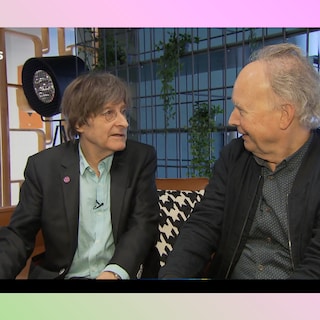
Wim T. Schippers maakte volgens het Jeugdjournaal de gekste dingen, omdat hij het leven ook gewoon een beetje gek vond
parool · about 3 hours ago

Its stronger than a drug! Transcendent portraits from Montreux jazz festival – in pictures From Quincy Jones to Sam Smith, Raye to Santana, Anoush Abrar has been taking mesmerising photographs of the festivals stars for years Continue reading...
theguardian · about 3 hours ago
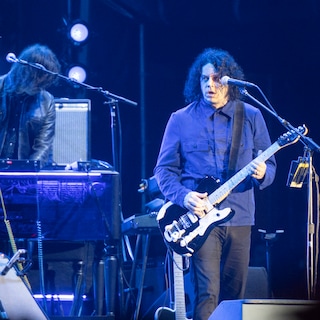
Jack White kiest met AB voor kleine zaal en grote klasse: waarom deze rockgod van dichtbij nóg indrukwekkender is ★★★★☆
de morgen · about 3 hours ago
Tom Holland ziet Owen Cooper als potentiële opvolger Spider-Man Tom Holland denkt dat tieneracteur Owen Cooper een mogelijke opvolger zou kunnen zijn als Spider-Man. Dat vertelde de 30-jarige Britse acteur in een interview met het blad Esquire.
rtl nieuws · about 3 hours ago