 Wednesday, June 10Wednesday, June 10
Jean Ziegler, the Swiss sociologist, politician, and relentless advocate for global justice, died on Wednesday at the age of 92 in Geneva, his family announced. A towering figure in left-wing humanism, Ziegler spent seven decades campaigning against hunger, inequality, and what he termed the “predatory capitalism” of multinational corporations and Western banks. His death, attributed to Parkinson’s disease, marks the end of a life devoted to exposing structural injustice and amplifying the voices of the oppressed.
Born in Thun in 1934, Ziegler studied sociology and law before becoming a professor at the University of Geneva. He later served as Switzerland’s vice president of the National Council (1981–1999) and as the United Nations Special Rapporteur on the Right to Food (2000–2008). In that role, he documented how financial speculation, land grabs, and geopolitical power imbalances perpetuated famine in the Global South. His 2005 report to the UN Human Rights Council famously declared that “one child dies of hunger every five seconds,” a statistic that galvanized activists worldwide.
Ziegler’s intellectual and political commitments were forged in dialogue with some of the 20th century’s most radical thinkers. He counted Simone de Beauvoir, Jean-Paul Sartre, and Che Guevara among his close friends; in the 1960s, he even worked as Guevara’s chauffeur during the Cuban revolutionary’s brief stay in Switzerland. His 1964 book *Sociologie de la nouvelle Afrique* critiqued neocolonialism, while *Les Nouveaux Maîtres du monde* (2002) excoriated the “dictatorship of the financial markets.” His 2011 memoir *Le Schisme occidental* revisited his controversial 1997 accusation that Switzerland had “collaborated with Nazi Germany” by accepting looted gold and blocking refugee admissions.
Critics accused Ziegler of utopianism and rhetorical excess, yet his influence on social movements was undeniable. He inspired groups like ATTAC, the global justice network that campaigns for financial transaction taxes, and his slogan “The world is not a commodity” became a rallying cry for alter-globalization activists. In 2020, at the age of 86, he co-founded the Swiss chapter of the *Dîners en blanc* protests against wealth inequality, demonstrating that his militancy remained undimmed.
Tributes poured in on Wednesday. The Swiss Broadcasting Corporation noted that Ziegler “never shied away from controversy,” while the Austrian daily *Der Standard* described him as a “banker’s bête noire” whose books sold millions despite being blacklisted by conservative Swiss publishers. His family requested privacy, but his longtime collaborator, the economist Susan George, told *Le Monde* that Ziegler’s final years were marked by “a quiet fury” at the accelerating climate crisis and the resurgence of far-right politics across Europe.
Ziegler’s legacy endures in the institutions he helped build: the UN’s right-to-food mandate, now led by successors like Hilal Elver, continues to cite his reports, and his critiques of tax havens inform today’s debates on global fiscal justice. As the world grapples with record food-price inflation and widening inequality, his warning—that “a world where 1% own half the wealth is not sustainable”—feels more urgent than ever. He leaves behind a daughter, two grandchildren, and a generation of scholars and activists who will carry forward his uncompromising vision of a just society.

Leitfigur sozialer Bewegungen, Bankenfeind, manischer Autor: Jean Ziegler 92-jährig gestorben Er war einst Chauffeur von Che Guevara, vielkritisierter und gefeierter Buchautor. Jetzt erlag Jean Ziegler einer Parkinson-Erkrankung. Ein persönlicher Nachruf eines Weggefährten
der standard · about 5 hours ago

Soziologe Jean Ziegler ist tot
orf.at · about 5 hours ago
Jean Ziegler ist tot Der Schweizer Soziologe, Politiker, Sachbuch- und Romanautor Jean Ziegler, der jahrzehntelang gegen Ungerechtigkeit angekämpft hat, ist mit 92 Jahren gestorben. Ziegler, der unter anderen mit Simone de Beauvoir, Jean-Paul Sartre und Che Guevara befreundet war, stellte auch die Schweiz wegen ihrer Teilkooperation mit den Nazis an den Pranger.
orf.at · about 5 hours ago

Frankfurter Zeitzeugin: Holocaustüberlebende Aviva Goldschmidt gestorben Sie berichtete jungen Menschen von ihrem Schicksal und brachte Facebook dazu, Holocaustleugnung zu bannen: Die Zeitzeugin Aviva Goldschmidt ist im Alter von 87 Jahren gestorben.
faz · about 5 hours ago
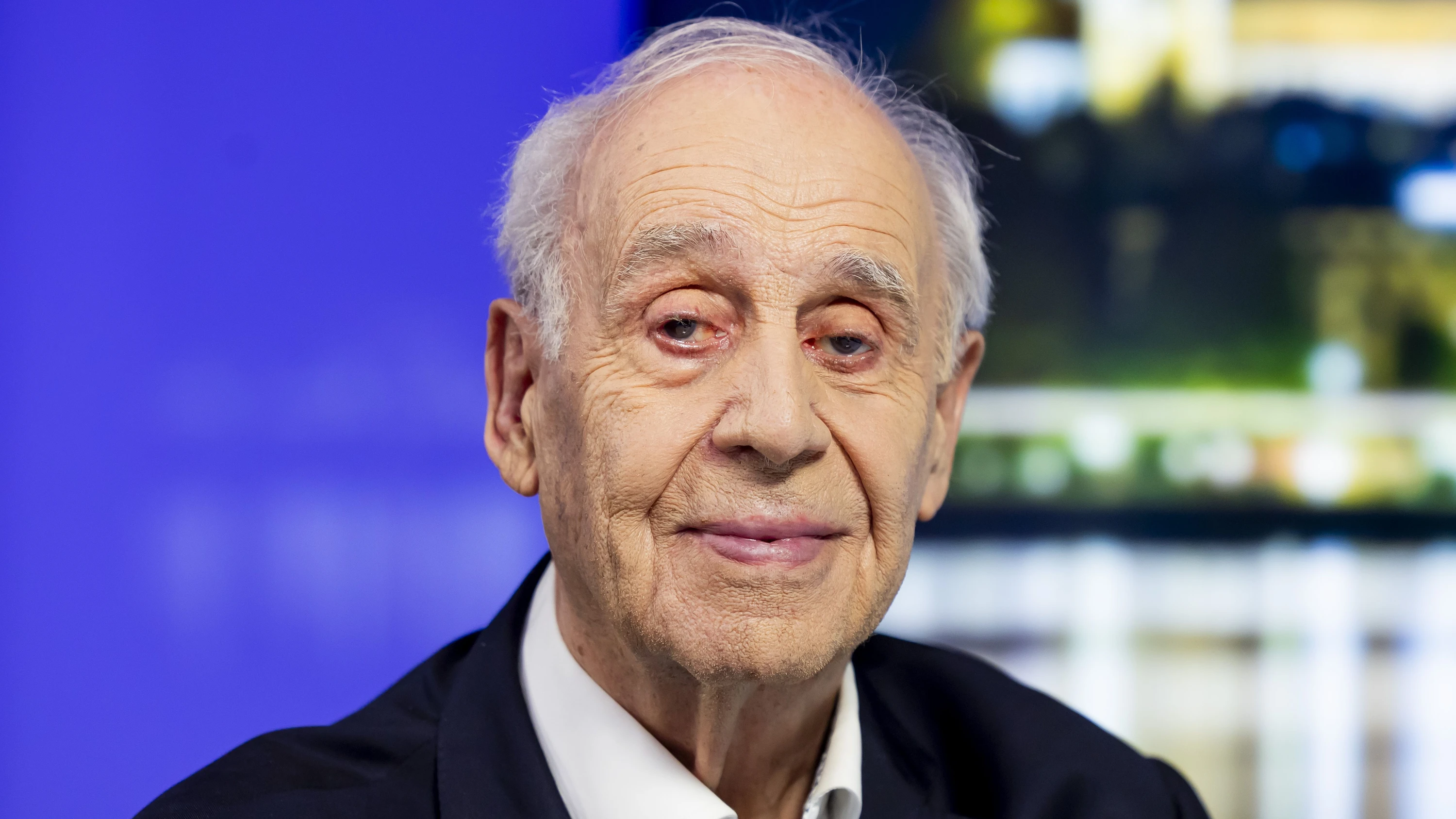
Jean Ziegler gestorben: Ein streitbarer linker Humanist Er kämpfte als Sachbuchautor und Politiker für Menschenrechte, globale Gerechtigkeit und die Beseitigung des Hungers in unterentwickelten Ländern. Jetzt ist der Schweizer Soziologe Jean Ziegler mit 92 Jahren gestorben.
faz · about 5 hours ago
Systemkritiker und Soziologe – Jean Ziegler ist tot Der frühere Soziologieprofessor, UNO-Sonderberichterstatter und Politiker ist mit 92 Jahren gestorben.
srf.ch · about 5 hours ago

Le sociologue suisse et ancien rapporteur de lOnu Jean Ziegler est décédé Le sociologue suisse et ancien rapporteur spécial de lOnu Jean Ziegler est décédé mercredi à lâge de 92 ans, a annoncé sa famille à Keystone-ATS. ...
la libre · about 5 hours ago