 Sunday, June 7Sunday, June 7
The Finnish actor Petteri Summanen has been nominated as the deputy leader of Finland’s right-wing Liike Nyt party ahead of its party congress on Saturday, marking a bold move to broaden the party’s appeal ahead of the 2027 elections. The announcement, confirmed by multiple Finnish media outlets, comes as Liike Nyt seeks to consolidate its position in a fragmented political landscape. Summanen, known for his roles in television and film, brings a high-profile public figure to the party’s leadership, signaling a strategy to attract younger and more diverse voters.
In Slovakia, entrepreneur and lawmaker Táňa Šufliarská has declared her candidacy for mayor of Liptovský Mikuláš, backed by a coalition of opposition parties including Progresívne Slovensko, SaS, Demokrati, Hnutie Slovensko, and OKS. Šufliarská, who has pledged to end stagnation and modernize the town, represents a growing trend of non-traditional candidates challenging established political structures in local elections. Her campaign highlights frustration with traditional governance and a demand for fresh leadership.
Meanwhile, Austria’s ORF public broadcaster is embroiled in a political storm as the nomination process for its board intensifies ahead of the upcoming election. Stiftungsratsvorsitzender Lederer has put forward several candidates, including Totzauer, Pig, Larcher, and Breitenecker, while further nominations are expected by Monday. The Greens have criticized the process as a “pure farce,” accusing parties of entrenching political control over the broadcaster. The Greens’ proposal to “depoliticize” ORF by reducing the size of governing bodies, introducing shared leadership, and enhancing transparency has gained traction as a reformist alternative.
In Germany, the CDU has canceled its presidium meeting in Magdeburg, originally scheduled for this weekend, amid growing unpopularity of Chancellor Friedrich Merz. The decision, reportedly requested by Saxony-Anhalt’s Prime Minister Schulze, underscores internal party tensions and strategic recalibration ahead of regional elections. The move reflects broader unease within the CDU over Merz’s leadership and its electoral prospects.
In Romania, political analyst Florin Negruțiu has suggested that Ilie Bolojan’s political future may hinge on his ability to distance himself from the PSD, whose association has historically damaged opposition figures. Bolojan’s recent rise in polls, despite attacks from the PSD, highlights the paradoxical nature of Romanian politics, where proximity to the dominant party can spell electoral doom.
Across Europe, these developments underscore a volatile political climate, with parties and candidates navigating shifting public sentiment, internal divisions, and calls for institutional reform.

Voľby 2026: Táňa Šufliarská ohlásila kandidatúru na primátorku Liptovského Mikuláša Podnikateľka a poslankyňa Táňa Šufliarská vstupuje do boja o Liptovský Mikuláš s podporou viacerých strán. Sľubuje skončiť stagnáciu a priniesť moderné mesto.
aktuality.sk · 1 day ago
Puolueet | Näyttelijä Petteri Summanen ehdolla Liike Nytin varapuheenjohtajaksi Liike Nytin puoluekokous järjestetään lauantaina.
helsingin sanomat · 1 day ago
Primaire : au PS, cétait moins flou avant Les roses, qui sécharpent encore sur le mode de désignation dun ou une candidate de la gauche pour 2027, sétaient mis daccord sur une primaire trois ans avant léchéance en 2012.
liberation · 1 day ago

ORF-Wahl: Stiftungsratsvorsitzender Lederer nominierte Totzauer, Pig, Larcher, Breitenecker Auch Zierhut-Kunz, Schütz und Altenburger nominiert – Weitere Nominierungen bis Montagmittag erwartet
der standard · 1 day ago
Landtagswahl: CDU sagt Präsidiumsklausur in Magdeburg ab
die zeit · 1 day ago
Sondaggi politici, problema Vannacci per il centrodestra: lex generale gli porta via quasi un punto Secondo la Supermedia Youtrend/Agi, la coalizione di maggioranza perde lo 0,8 mentre Futuro Nazionale guadagna lo 0,7
corriere · 1 day ago
Allemagne: le parti dextrême droite AfD veut faire de la Saxe-Anhalt un laboratoire idéologique Parmi les invités au forum économique de Saint-Pétersbourg cette semaine figurait aussi une délégation du parti allemand dextrême Alternative für Deutschland (AfD). Une participation qui a suscité beaucoup de critiques en Allemagne où ce parti pro-russe pourrait bientôt gouverner un Land, la Saxe-Anhalt.
rfi.fr · 1 day ago
Wegen Unbeliebtheit von Kanzler Merz: CDU sagt Präsidiumsklausur in Magdeburg ab Kurz vor der Wahl in Sachsen-Anhalt wollte sich die Spitze der Bundes-CDU in Magdeburg treffen. Daraus wird nichts – auf Wunsch von Ministerpräsident Schulze. mehr...
taz.de · 1 day ago
Voľby2026: Na primátorku Liptovského Mikuláša kandiduje Táňa Šufliarská, podporila ju opozícia Podnikateľka a poslankyňa Táňa Šufliarská vstupuje do boja o Liptovský Mikuláš s podporou viacerých strán. Sľubuje skončiť stagnáciu a priniesť moderné mesto.
aktuality.sk · 1 day ago
Voľby2026: Na primátora Bánoviec nad Bebravou za Progresívne Slovensko kandiduje Milan Ďuračka Progresívne Slovensko postaví v Bánovciach nad Bebravou na primátora manažéra Milana Ďuračku. Podporia ho aj SaS, Demokrati, Hnutie Slovensko a OKS.
aktuality.sk · 1 day ago
ORF-Wahl: Nominierungsprozess im Gange
orf.at · 1 day ago
ÎNTREBAREA SĂPTĂMÂNII: Ce viitor politic mai are Ilie Bolojan după căderea Guvernului? „Paradoxal, Ilie Bolojan a început să crească în sondaje exact în momentul în care a fost atacat de PSD. În România, cea mai sigură metodă de a-ți distruge viitorul politic este să apari în aceeași fotografie cu PSD", spune Florin Negruțiu. Claudiu Pândaru adaugă: „Problema lui Bolojan este că fotografia cu PSD există deja. Iar dacă vrea să aibă un viitor politic, trebuie să reformeze și Partidul Național Liberal."
digi24 · 2 days ago
Eduskunta | Oppositio ja Päivi Räsänen yrittävät yhdessä estää alkoholin kotiinkuljetuksen Sosiaali- ja terveysvaliokunta istuu tyhjyyttään kumisevassa eduskunnassa.
helsingin sanomat · 2 days ago
ORF-Stifungsrat Ginthör: „Der Stiftungsrat muss in seiner jetzigen Form abgeschafft werden [premium] Einige Stiftungsräte stehen ihrem Gremium durchaus kritisch gegenüber, Philip Ginthör etwa empfiehlt eine Neukonzeption. Clemens Pig, Favorit für den ORF-Chefsessel, sei „völlig ohne Not beschädigt worden.
die presse · 2 days ago
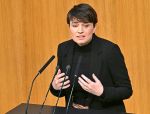
Weniger Stiftungsräte, mehr Publikumsrechte: Grünen wollen ORF "entparteipolitisieren" Konzept sieht kleinere Gremien, geteilte Führung, mehr Transparenz vor. Bevorstehende ORF-Wahl ist "reinste Farce", sagt die stellvertretende Grünen-Klubchefin Sigi Maurer
der standard · 2 days ago
Puolueet | Keskustanuoret: Timo Soinin tuoma rasismi ja populistiset heitot eivät mahdu keskustaan Perussuomalaisten entinen puheenjohtaja Timo Soini on harkinnut ehdokkuutta eduskuntavaaleissa keskustan riveissä.
helsingin sanomat · 2 days ago
Landtagswahl in MV: 29 Parteien wollen zur Landtagswahl in MV antreten
die zeit · 2 days ago