 Sunday, June 7Sunday, June 7
Armenia votes Sunday in a parliamentary election that will determine whether Prime Minister Nikol Pashinyan’s pro-Western course survives Russian pressure or whether the country returns to Moscow’s orbit. Polls show Pashinyan’s Civil Contract party on track for a landslide, with 57 per cent support, but the Kremlin has responded with escalating threats: higher gas prices, tighter trade controls, and warnings of a “Ukrainian scenario” if Armenia deepens ties with the European Union. On Thursday, Russia restricted imports of Armenian goods and signalled it could suspend the country’s access to subsidised energy, moves analysts call a last-ditch effort to sway voters ahead of the ballot.
The election is the most consequential since Armenia’s independence in 1991, pitting Pashinyan’s push for EU integration against opposition parties that advocate closer alignment with Russia. The prime minister has framed the vote as a choice between “decolonisation” and renewed dependence, while Kremlin-aligned outlets and social media campaigns have amplified disinformation targeting the diaspora and domestic critics. “This is a civilisational choice,” said Arsen Kharatyan, a Yerevan-based journalist, “between sovereignty and a return to Moscow’s sphere.”
International observers note that Armenia’s strategic location—sandwiched between Turkey, Iran, and Russia—makes the outcome critical for regional stability. The EU has pledged support, while Russia has framed the election as a test of loyalty, with President Vladimir Putin warning that any shift away from Moscow could trigger instability. Analysts caution that even a Pashinyan victory may not end the pressure, as Russia retains leverage through energy supplies and economic ties.
Domestically, the vote is also a referendum on Pashinyan’s handling of last year’s Nagorno-Karabakh conflict and his crackdown on corruption. The opposition Armenia Alliance, led by former president Robert Kocharyan, has accused the government of rigging the playing field, citing reports of voter bribery and irregularities in diaspora voting. Yet with turnout expected to exceed 60 per cent, the prime minister’s mandate appears secure—unless Russia’s interference sways enough undecided voters to deny Civil Contract an outright majority.
As polling stations open Sunday, the world will watch whether Armenia charts a new course or reaffirms its historic ties to Russia. The stakes are clear: a Western-leaning Armenia could reshape the South Caucasus, while a Kremlin-backed reversal risks deeper isolation and conflict. For now, Pashinyan’s gamble on Europe appears to be paying off—but the Kremlin’s warnings suggest the battle for Armenia’s future is far from over.
Armenia votes in pivotal election as Pashinyan defies Russias pressure to pivot West

Ahead of tomorrows snap parliamentary elections in Kosovo, the countrys ex-president is warning that the results could determine whether Pristina will remain on course to join NATO and the EU.
bluesky bot · about 18 hours ago

ENNE VALIMISI ⟩ Moskva viimased mõjuhoovad Armeenias: sõjaline sekkumine või atentaat Pašinjanile? Pühapäeval Armeenias toimuvate valimiste suursoosik on euroopameelne peaminister Nikol Pašinjan. Venemaa mõjutustegevus on olnud massiivne, kuid edutu. Just see seletab, miks nüüd on käiku läinud ähvardused ja kaubanduspiirangud. Kui kaugele on Venemaa valmis võitluses Armeenia pärast minema ja millised võimalused tal veel on?
postimees · about 18 hours ago
‚Návrat je vyloučený. Arménii čekají parlamentní volby, rozhodnou i o osudu ruských uprchlíků Arménii čekají v neděli parlamentní volby. Ty rozhodnou, jestli bude pokračovat v prozápadním kurzu, nebo spadne opět do zájmové sféry Ruska. Volební průzkumy naznačují, že vítězně by z voleb mohla vyjít současná vládní koalice. Šanci mají ale i opoziční prokremelské strany, které podporuje masivní dezinformační kampaň na sociálních sítích.
irozhlas.cz · about 18 hours ago
Parlamentswahl unter Putins Argusaugen Armenien wählt am Sonntag ein neues Parlament. Die Wahl gilt als entscheidender Test für die Unterstützung der Bevölkerung für den geopolitischen Kurswechsel von Premierminister Nikol Paschinjan, der sich vom historischen Verbündeten Russland distanziert und sich der EU und den USA zuwendet. Kreml-Chef Präsident Wladimir Putin gefällt das nicht: Moskau schränkte kurz vor der Wahl armenische Exporte ein und drohte mit dem Stopp günstiger Gas- und Öllieferungen. Unverhohlen warnte Putin zudem vor einem neuen „ukrainischen Szenario – also einer Kriegsgefahr für ein Land, das sich aus Russlands Einflusssphäre lösen möchte.
orf.at · about 18 hours ago
Armenia prepares for vote amid shifting relations with Russia and the West Armenias parliamentary elections Sunday will be a vote on its geopolitical future as incumbent Prime Minister Nikol Pashinyan seeks closer relations with the European Union and the United States despite longstanding ties with Russia that have been championed by his critics. FRANCE 24s Olivia Bizot reports.
france24 · about 18 hours ago
EU Delegation to Azerbaijan announces holding education fair in Baku in October 2026
gdeltproject.org · about 18 hours ago
EU ambassador to Azerbaijan highlights youths role in bridging societies
gdeltproject.org · about 18 hours ago
Factbox-Whats at stake in Armenias election on Sunday?
gdeltproject.org · about 18 hours ago
En pleine crise institutionnelle, le Kosovo doit élire un nouveau Parlement pour la troisième fois Les Kosovares sont appelés aux urnes dimanche 7 juin pour le troisième scrutin législatif en 16 mois et rien ne garantit que cette élection fasse sortir le pays dune crise constitutionnelle inédite, 18 ans après lindépendance du plus jeune pays dEurope. Quoique très populaire, lactuel Premier ministre populiste et souverainiste Albin Kurti pourrait perdre sa majorité absolue, voire être relégué à lopposition.
rfi.fr · about 19 hours ago
22 May 2026 - Armenia Election Monitor - The upcoming Armenian election will decide the future direction of the country
commonspace · about 19 hours ago
27 May 2026 - Armenia Election Monitor - Armenia at a crossroads: Elections, peace, and the limits of international guarantees
commonspace · about 19 hours ago
29 May 2026 - Armenia Election Monitor - Upcoming elections in Armenia: why is it important? - a view from Azerbaijan
commonspace · about 19 hours ago
3 June 2026 - Armenia Election Monitor - A strategic choice: Armenian voters between diversification and dependency
commonspace · about 19 hours ago
5 June 2026 - Armenia Election Monitor - Armenia goes to the polls, searching for a way forward
commonspace · about 19 hours ago
Caucasian Knot | Analysts assess the European Unions statement of support for Armenia
gdeltproject.org · about 19 hours ago
Armenia prepares for an election that could reshape ties with Moscow and the West
gdeltproject.org · about 19 hours ago
Pre-election period starts in Latvia with a wary eye on AI influence On Saturday, June 6th, the official pre-election campaign period for the 15th Saeima elections begins in Latvia, which will last until election day itself – October 3rd. The pre-election period runs for 120 days.
lsm.lv · about 19 hours ago

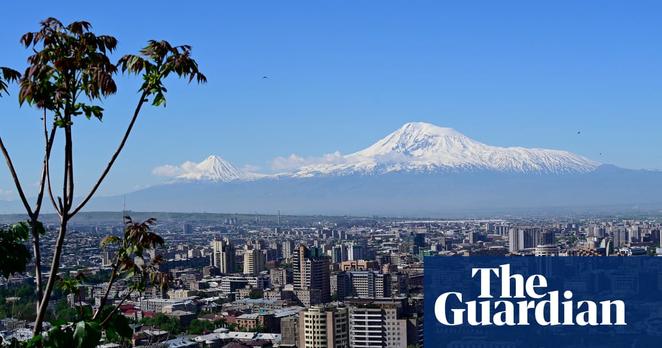
Armenia heads to polls amid Russian pressure and threat of Ukrainian scenario Relationship between Vladimir Putin and traditional ally has slowly unravelled under current PM Nikol PashinyanThe bottling line at the Abovyan cognac factory in Armenia is running at full tilt.Women in white coats and hairnets work the conveyor with practised speed – labelling, stacking, loading pallets – racing to fill a truck. Continue reading...
theguardian · about 19 hours ago
🔴 BREAKINGArmenia Heads to Polls Amid Russian Pressure and Threat of Ukrainian ScenarioArmenia prepares for elections under intense pressure from Russia, with Prime Minister Nikol Pashinyan warning that the country faces a potential Ukrainian scenario if it does not align with Moscows demands.📰 #EU #Diplomacy #Geopolitics #GeoWire
mastodon bot · about 19 hours ago
Arménie je pro Rusko bitevním polem pro vliv v regionu. Snaží se podplácet voliče, líčí novinář Každý den se v arménských médiích objevují zprávy o podplácení voličů nebo o tom, kolik Arménů žijících v Rusku přijede k volbám. Ty Arménii čekají už v neděli a mohou rozhodnout o dalším směřování země. „Začínáme se bavit o civilizační volbě, volíme si další dekolonizaci od Ruska, říká pro iROZHLAS.cz arménský novinář Arsen Charatjan z platformy Aliq Media. Do Prahy přijel v rámci konference Unlock, kterou pořádá Prague Civil Society Centre.
irozhlas.cz · about 19 hours ago