
China and Canada expand trade ties with Central and Eastern Europe as Beijing strengthens global economic influence
China and Canada deepen trade ties with Central and Eastern Europe as Beijing cements its role as a global economic rule-setter.
Delegates from China and the 17+1 group of Central and Eastern European Countries (CEEC) concluded the *2026 China-CEEC Local Leaders Meeting* in Shandong this week, positioning the region as a key node in Beijing’s expanding trade and technology networks. The event, held alongside the *Shandong International Friendship Cities Cooperation and Exchange Week*, saw provincial and municipal leaders pledge to accelerate infrastructure projects, green energy collaborations, and supply chain integration—particularly in electric vehicles and critical minerals, sectors where China holds dominant market share .
Canada’s trade strategy is increasingly intertwined with these developments. Prime Minister Mark Carney, addressing U.S. business leaders in New York, framed Canada as a "true partner" to Washington, emphasizing Ottawa’s intent to diversify trade beyond North America—with Central and Eastern Europe emerging as a priority. Carney’s remarks come as Canada negotiates a new trilateral trade deal with the U.S. and Mexico, while simultaneously exploring deeper ties with the CEEC bloc to reduce reliance on traditional markets . British Columbia, in particular, has launched consultations on expanding trade with the region, citing opportunities in clean tech and agri-food .
China’s influence in the CEEC has grown rapidly since the 17+1 format’s launch in 2012, with Shandong—a province central to Beijing’s industrial and maritime ambitions—now serving as a hub for subnational cooperation. Analysts note that China’s role as a "rule-setter" in digital and green technologies, from 5G standards to battery supply chains, gives it leverage to shape trade terms in its favor. This dynamic is particularly acute in Central and Eastern Europe, where Chinese investments in ports, rail, and renewable energy projects have outpaced those from the EU or U.S. in recent years .
The Shandong meeting also underscored Beijing’s focus on local-level diplomacy, bypassing traditional state-to-state channels to secure long-term economic footholds. While the EU has expressed concerns over China’s growing influence in the region—citing debt risks and market distortions—CEEC leaders have largely welcomed the investments, viewing them as a counterbalance to Western dominance in global trade.
Background: The China-CEEC framework, often dubbed "17+1," includes EU members like Hungary and Poland alongside non-EU states such as Serbia and Bosnia. Canada’s interest in the region reflects broader efforts to hedge against U.S.-China tensions, with Ottawa seeking to position itself as a bridge between Western allies and emerging markets. Meanwhile, China’s push into Central and Eastern Europe aligns with its *Belt and Road Initiative*, which has prioritized the region as a gateway to European markets. The next China-CEEC summit is slated for late 2026 in Budapest.
China and Canada expand trade ties with Central and Eastern Europe as Beijing strengthens global economic influence
- der standard
- euroweeklynews
- faz
Articles
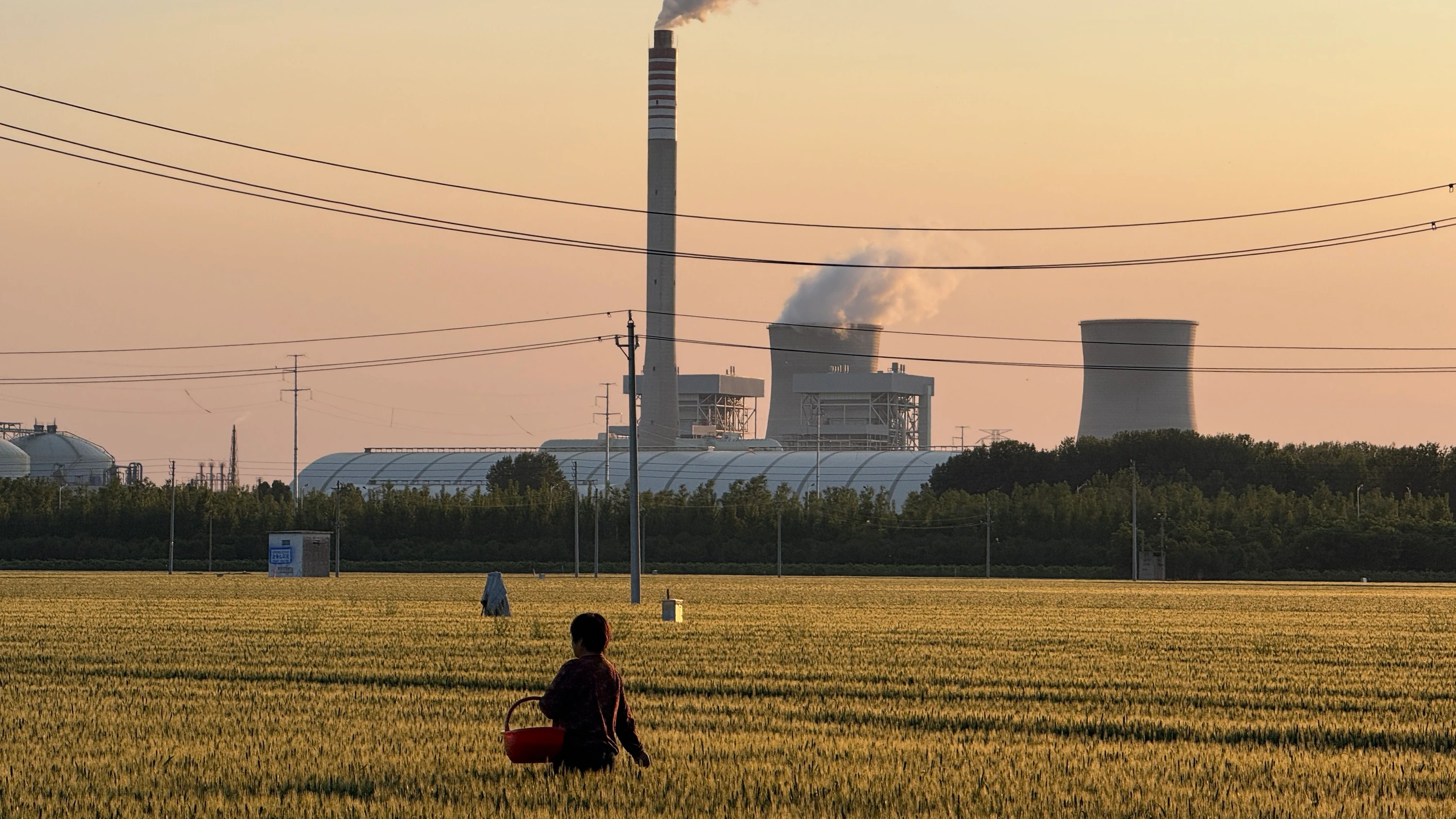
Bauern in China: Als Beamter bekäme er vierzigmal mehr 22 Euro für ein Leben auf dem Acker: Chinesische Bauern bekommen kaum Rente, Peking hat andere Prioritäten. Ein Besuch in Henan.
faz · 7 days ago
![Brussels approves €9bn anti-blackout plan to bolster Spains electricity supply The European Commission has approved a €9 billion Spanish electricity capacity market designed to reinforce the countrys power system and […]](https://euroweeklynews.com/wp-content/uploads/2026/05/shutterstock_1128150038-1024x683.jpg?type=local)
Brussels approves €9bn anti-blackout plan to bolster Spains electricity supply The European Commission has approved a €9 billion Spanish electricity capacity market designed to reinforce the countrys power system and […]
euroweeklynews · 7 days ago

Canada can help make America great again, PM tells US business leaders Canadian Prime Minister Mark Carney told leading American industrialists in New York that a strong and independent Canada would benefit the United States through a "true partnership," as Ottawa prepares to negotiate a new trade treaty with Washington and Mexico City amid ongoing tariff tensions.
yenisafak · 7 days ago
Is Beijing the new center of the world? China is on the agenda not only with its cheap labor force in the world economy, but also with its technology, its competitiveness, its monopoly power over critical raw materials, and its motivation to become the largest economy in the world. CHINA IS NOW IN THE POSITION OF RULE-SETTER IN TECHNOLOGY China is now setting the standards in digital and green technologies that are profoundly changing the world economy. This transformation affects many sectors, from electric vehicles to the defense industry.
yenisafak · 7 days ago
2026 Shandong International Friendship Cities Cooperation and Exchange Week: Shaping the Future Together! What Global Guests Said at the 2026 China-CEEC Local Leaders Meeting and Shandong Friendship Cities Week
gdeltproject.org · 7 days ago
Should B.C. look to Central and Eastern Europe for new trading partners?
gdeltproject.org · 7 days ago
Shaping the Future Together! What Global Guests Said at the 2026 China-CEEC Local Leaders Meeting and Shandong Friendship Cities Week
gdeltproject.org · 7 days ago

Wie ein Linzer Start-up die KI-Branche aufmischt Das Linzer Unternehmen Emmi AI macht vor, wie sich Europa bei KI-Innovationen gegen Konkurrenz aus USA und China durchsetzen kann
der standard · 8 days ago