
Iran begins repairs at Parchin military complex amid US-Iran talks on Strait of Hormuz security
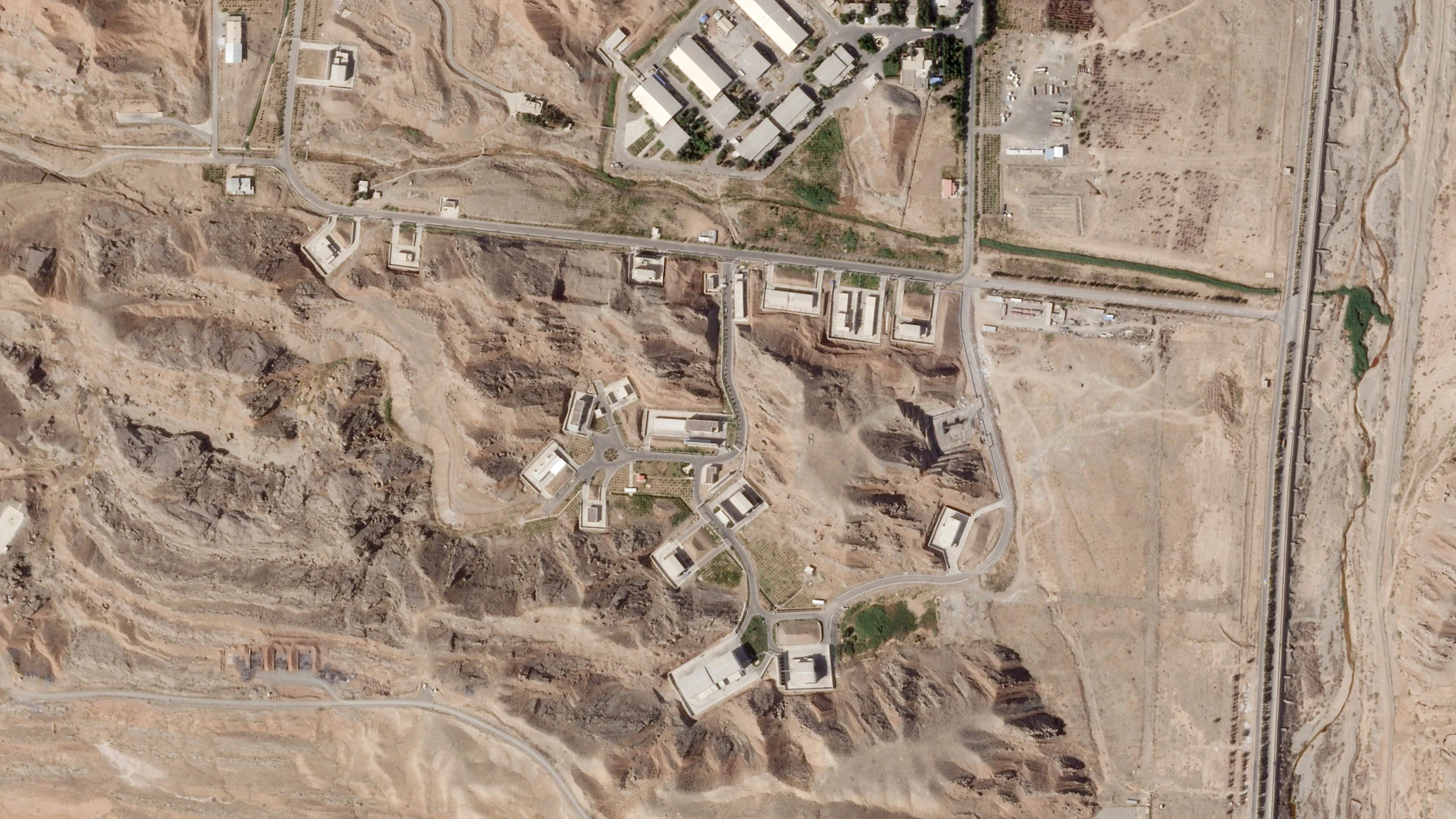
Satellite images analyzed by CNN and the Institute for Science and International Security indicate that Iran has begun permanent repairs at the Parchin military complex, a site long suspected of hosting nuclear weapons-related research, in apparent violation of a recent US-Iran framework agreement. The facility, part of the Taleghan complex near Tehran, was struck multiple times at the outbreak of the current conflict, but recent imagery shows the deployment of concrete mixers and sealing equipment to fill impact craters, suggesting a shift from cleanup to structural restoration.
The revelations come as the US State Department confirmed that technical talks with Iran are ongoing, with Washington now demanding explicit security guarantees for commercial shipping in the Strait of Hormuz. The demand follows a sharp escalation in regional tensions that has nearly halted oil tanker traffic through the strategic waterway, pushing global crude prices higher. According to shipping monitors cited by Bloomberg, vessel transits have fallen by more than 80% since renewed clashes began in late June.
Satellite imagery provided exclusively to CNN by the Washington-based think tank shows similar repair activity at the underground “Pickaxe Mountain” facility near Kuh-e Kolang Gas La, where trucks have been observed entering and exiting deep tunnels in recent weeks. Neither the Parchin nor Pickaxe Mountain sites were among the three Iranian nuclear facilities—Isfahan, Natanz, and Fordo—bombarded by the US in summer 2025, but both have long been monitored by the International Atomic Energy Agency (IAEA) for possible military dimensions to Iran’s nuclear program.
Under the April 2026 framework, Tehran pledged to maintain the “status quo” in its nuclear activities and forswore the development of nuclear weapons. Iranian officials have repeatedly denied any intention to build atomic arms, and the IAEA reported no suspicious activity at Isfahan, Natanz, or Fordo in its most recent quarterly update. However, the Parchin complex was central to the IAEA’s investigation of Iran’s past weaponization work under the so-called Amad program, which ran until 2003. Agency inspectors documented experiments there involving high explosives designed to trigger a nuclear implosion, though Iran has consistently dismissed the allegations as fabricated.
US President Donald Trump, speaking on Friday, warned that any Iranian attack on American interests would trigger a “complete” military response. “One thousand missiles are already armed and pointed at the Islamic Republic,” Trump stated, echoing earlier threats made during the 2024 election campaign. The White House has not publicly linked the Parchin repairs to the ongoing diplomatic talks, but State Department spokesman Mark Miller told reporters that Washington was “closely tracking all Iranian nuclear-related sites” and would “respond appropriately” if violations were confirmed.
Regional analysts caution that the repairs do not necessarily indicate an imminent dash for a nuclear weapon, but they do suggest Iran is preparing to resume prohibited activities once the current conflict subsides. “These are dual-use facilities,” said a senior European diplomat who requested anonymity. “The equipment could be for civilian purposes, but the timing and the history of the sites make that highly unlikely.” The diplomat added that the EU was urging both sides to return to the negotiating table before the situation spiraled further.
With oil markets already jittery and commercial shipping under threat, the combination of repaired nuclear sites and escalating maritime tensions has raised the stakes for the next round of US-Iran talks, scheduled to resume in Geneva next week.
Follow us for live European news
- 4
- 2
- 1
- 1
4 further sources not geolocated
Articles
Liveblog Irankrieg: Forscher vermuten Reparaturen an Irans Atomwaffen-Anlagen USA: Iran muss Öffnung der Straße von Hormus zusichern +++ Iran weist Trumps Darstellung über Bitte um Gespräche zurück +++ US-Medien: Israel warnte Trump vor iranischem Mordkomplott +++ alle Entwicklungen im Liveblog
faz · about 3 hours ago

Forscher sehen Hinweise auf Wiederaufbau von Militärforschungsanlage im Iran Verdeckte Nuklearforschung? Forscher haben Satellitenbilder ausgewertet, wonach beim Militärkomplex in Parchin dauerhaft Reparaturarbeiten stattfinden sollen. Damit würde der Iran gegen das Abkommen mit den USA verstoßen.
welt.de · about 5 hours ago

Indicii că Iranul își reconstruiește instalațiile nucleare (investigație media)
digi24 · about 6 hours ago
Dezvăluiri CNN: Noi imagini din satelit arată cum Iranul își reconstruiește în secret siturile nucleare bombardate Imaginile de satelit obținute și analizate de CNN cu siturile nucleare iraniene arată că Teheranul a încălcat acordul cu SUA, chiar înainte ca Donald Trump să ordone reluarea bombardamentelor. Activitatea de la siturile nucleare și de rachete din Iran, monitorizată de CNN și Institutul pentru Știință și Securitate Internațională în perioada iunie-iulie, indică o posibilă …
hotnews.ro · about 6 hours ago
Krieg in Nahost: Hinweise auf Reparaturen an iranischen Atomanlagen Satellitenbilder zeigen Berichten zufolge Lastwagen und Betonmischer an einer Militärforschungseinrichtung und anderen Anlagen. Die USA fordern von Iran Sicherheitsgarantien für die Straße von Hormus.
sueddeutsche · about 6 hours ago
🇮🇷⚡️ — CNN reports that Iran is likely attempting to restore a nuclear facility in Parchin. The television channel published satellite images showing specialized equipment. @Intelslava
telegram_Intel Slava · about 6 hours ago
#Iran Satellite images indicate that Iran is trying to rebuild its nuclear facilities in Parchin, which may violate a recent agreement with the US to maintain the status quo in its nuclear program. This activity includes repairing damage from previous military strikes. Subscribe to @OSINTdefender Chat room
telegram_OSINTdefender · about 6 hours ago
Iran: Reparaturen an Militärforschungsanlage vermutet
orf.at · about 7 hours ago
Iranisches Atomwaffenprogramm: Forscher vermuten Reparaturen an Militärforschungsanlage im Iran Satellitenbilder sollen zeigen, dass der Iran eine bekannte Militärforschungsanlage wieder aufbaut. Die Aktivitäten würden dem Rahmenabkommen mit den USA widersprechen.
die zeit · about 7 hours ago
Wars in Ukraine, Iran Undermine Nuclear Security
gdeltproject.org · about 7 hours ago
Scientists Discover Bacteria That Can Stop Uranium From Spreading Researchers have demonstrated for the first time that bacteria can convert uranium dissolved in water into a stable chemical compound when supplied with glycerol as a food source. The discovery offers new insight into how naturally occurring microbes could one day help limit the spread of uranium pollution in contaminated environments. The study was led […]
greek reporter · about 7 hours ago
Iranisches Atomwaffenprogramm: Experten vermuten Reparaturen an Irans Atomanlagen Satellitenbilder sollen zeigen, dass der Iran seine Atomanlagen wieder aufbaut. Die beobachteten Aktivitäten würden dem Rahmenabkommen mit den USA widersprechen.
die zeit · about 8 hours ago
Irankrieg: Experten vermuten Reparaturen an Irans Atomanlagen Satellitenbilder sollen zeigen, dass der Iran seine Atomanlagen wieder aufbaut. Die USA fordern Sicherheitsgarantien für Schiffe in der Straße von Hormus. Das Liveblog
die zeit · about 9 hours ago

The US built tankers a safe lane through Hormuz. Iran turned it into the target list. The map changed. The danger didnt. Free, every source linked. #Ukraine #Geopolitics
mastodon bot · about 11 hours ago