Loading…
 Saturday, August 29Saturday, August 29
2 months · 3 summary articles
AfD holds federal convention despite protests as European political fractures deepen
Tens of thousands protest in Erfurt as AfD opens party conference
Tens of thousands protest as Germanys far-right AfD opens Erfurt conference under heavy police guard
Tens of thousands of protesters flooded the streets of Erfurt on Saturday as Germany’s far-right Alternative for Germany (AfD) opened its federal party conference under heavy police protection, with demonstrators blocking key routes into the city in an attempt to disrupt the event. Police reported that around 20,000 people participated in the protests, which included sit-down blockades on major roads such as the A71 autobahn and the B7 and B4 federal highways. The AfD, which has been classified as “provenly right-wing extremist” by Germany’s domestic intelligence service, began its two-day congress in the Messe Erfurt exhibition center despite the mass demonstrations.
Inside the conference hall, AfD co-leader Alice Weidel delivered a defiant speech, declaring to cheering delegates, “You won’t bring us down! Quite the opposite—we’re getting stronger and bigger all the time!” Weidel, who was re-elected as co-chair alongside Tino Chrupalla, framed the AfD as a rising “new people’s party,” while Chrupalla opened the event by praising the party’s unity and hinting at future government responsibility. “Perhaps we will soon be able to govern on our own,” Chrupalla told delegates, adding, “You are our hope this year.”
The protests, organized by the alliance “Widersetzen” (“Resist”), were marked by clashes with police. Authorities confirmed that an AfD constituency office in central Erfurt was attacked with fireworks and paint bombs, and that two journalists from the right-wing online portal Apollo News were assaulted in the city center. Police responded with batons and pepper spray. Demonstrators also abseiled from a motorway bridge and chanted slogans such as “Nazis out, Nazis out” as AfD delegates arrived under police escort.
The AfD’s leadership election proceeded as planned, with Chrupalla re-elected as federal chair with 70.05% of the vote—a decline from his 82.7% in 2024—and Weidel confirmed as co-chair. The party also began filling 12 additional executive board positions, with internal disputes over membership rules and an “incompatibility list” of far-right figures reportedly sidelined. Björn Höcke, the party’s most controversial figure, was not present, but his allies pushed for revisions to the list, which excludes extremists.
Police had prepared for up to 25,000 protesters and deployed reinforcements from across Germany, but the AfD managed to begin its congress on time after delegates were transported by police convoy through open corridors. The scale of the protests underscored the deep polarization surrounding the AfD, which leads national opinion polls with around 27% support and is poised to make historic gains in upcoming state elections in Saxony-Anhalt, Mecklenburg-Vorpommern, and Berlin.
Former Left Party Prime Minister of Thuringia Bodo Ramelow, a prominent critic of the AfD, addressed protesters nearby, praising Erfurt as a city “for freedom, diversity, and a shared colorful life.” The demonstrations reflected widespread opposition to the AfD’s policies, which critics argue threaten democratic norms, while the party’s leaders framed the event as a democratic exercise and a step toward political power.
Follow us for live European news
3 further sources not geolocated
„Es geht um die Verteilung der Macht innerhalb der Partei Beim AfD-Parteitag in Erfurt stehen die politischen Strukturen innerhalb der Partei im Fokus. Politikwissenschaftler Oliver Lembcke sieht ein taktisches Bündnis.
welt.de · about 2 months ago

Eine Revolution für Deutschland – bedenkt man, dass sie von Bärbel Bas gemacht wird Was in anderen Ländern normal wäre, gleicht in Deutschland einer politischen Sensation: Die Regierung geht ans Arbeitsrecht ran – und ausgerechnet Ministerin Bas springt über ihren Schatten. Ihr Co-SPD-Chef Klingbeil wagt sich nicht so weit vor.
welt.de · about 2 months ago
Mit 70,05 Prozent der Stimmen – Chrupalla als AfD-Co-Chef wiedergewählt Zehntausende Gegendemonstranten werden in Erfurt zum AfD-Bundesparteitag am Wochenende erwartet. Die Polizei bereitet sich auch auf gewaltbereite Linksextremisten vor. Alle Entwicklungen im Live-Ticker.
welt.de · about 2 months ago

Reformen: Merz: Vor Deutschland liegen sehr gute Jahre Helmut Kohl versprach den Bürgern einst blühende Landschaften. Beim Parteitag der NRW-CDU sagt der heutige CDU-Chef dem Land etwas nüchterner sehr gute Jahre voraus. Unter einer Bedingung.
handelsblatt · about 2 months ago
Après la mort de Lyhanna, une «grande marche» pour demander une loi globale contre les violences sexuelles Les associations féministes et enfantistes appellent ce samedi à une manifestation pour lutter contre les VSS. A Paris, rendez-vous est donné à 15 h 30 sur la place de la Bastille.
liberation · about 2 months ago
AfD-Bundesparteitag in Erfurt: AfD-Chef Chrupalla sieht seine Partei in Regierungsverantwortung Zum Start des Parteitags nennt Chrupalla die AfD eine einigende Kraft. Co-Chefin Weidel kündigt in ihrer Rede an, die anderen Parteien werden »ihr blaues Wunder erleben«.
die zeit · about 2 months ago
Erfurt: Trotz Protest und Blockaden: AfD-Parteitag in Erfurt beginnt Tausende Menschen demonstrieren in Erfurt gegen den Bundesparteitag der AfD. Aktivisten blockieren die Autobahn. Parteichefin Weidel reagiert mit einer Kampfansage.
sueddeutsche · about 2 months ago

Thousands set to protest as surging far-right AfD holds congress #Europe
mastodon bot · about 2 months ago
„Die Polizei fährt eine kluge Strategie Staatsrechtler Volker Boehme-Neßler erklärt die klare Rechtslage bei Demonstrationen und Blockaden rund um den AfD-Parteitag in Erfurt. „Wer mit Gewalt Parteitage verhindern will, hat kein demokratisches Bewusstsein.
welt.de · about 2 months ago
AfD-Parteitag in Erfurt: AfD-Chefin Weidel nennt AfD eine neue Volkspartei Zu Beginn des AfD-Bundesparteitags in Erfurt hat Alice Weidel die AfD als neue Volkspartei bezeichnet. Die Polizei spricht von friedlichen Protesten. Das Liveblog
die zeit · about 2 months ago

Far-right German party looks ahead to elections as thousands protest
news.yahoo.com · about 2 months ago
Far-right Alternative for Germany party elects leaders as protesters and police clash Thousands of protesters are attempting to disrupt the national convention of Germanys far-right Alternative for Germany party
abcnews · about 2 months ago
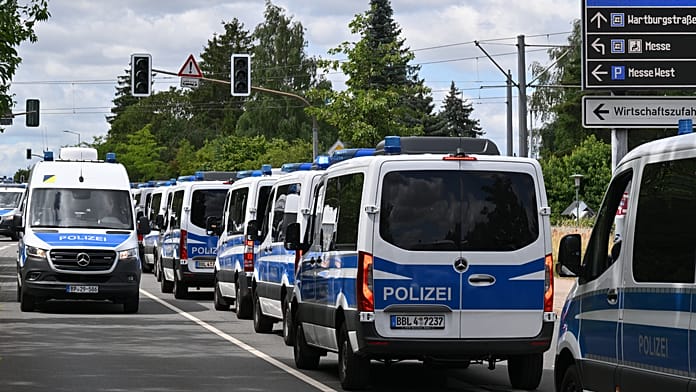
20,000 protest against AfD party conference in Germany Thüringen police described the protest as "legitimate" but said an AfD constituency office and police officers had been attacked with paint bombs and fireworks.
euronews · about 2 months ago

Wir brauchen einen Mitte-rechts-Bundespräsidenten Deutschlands Krise ist zu ernst, um über das Geschlecht des Staatsoberhauptes zu diskutieren. Gefragt ist eine Persönlichkeit, die in der Lage ist, eine auseinanderfallende politische Landschaft zu retten.
welt.de · about 2 months ago
„Wir sind die neue Volkspartei – Für Weidel macht die Union „Politik gegen die Deutschen Zehntausende Gegendemonstranten werden in Erfurt zum AfD-Bundesparteitag am Wochenende erwartet. Die Polizei bereitet sich auch auf gewaltbereite Linksextremisten vor. Alle Entwicklungen im Live-Ticker.
welt.de · about 2 months ago
Wochentaz-Podcast: Soll man die AfD blockieren? Das Bündnis Widersetzen mobilisiert nach Erfurt, um den AfD-Bundesparteitag zu verhindern. Eine gute Idee? Und was muss sich in der Antifa verbessern? mehr...
taz.de · about 2 months ago
+++ AfD-Parteitag und Gegenprotest +++: Höcke dreht die Bullshit-Tombola Trotz Blockaden kann der Bundesparteitag der AfD in Erfurt beginnen. Während drinnen populistisch gepöbelt wird, gehen die Proteste draußen weiter. mehr...
taz.de · about 2 months ago
Bavarian State Parliament Delegation Visits EUFOR Headquarters EUFOR Commander Major General Maurizio Fronda welcomed a Bavarian State Parliament delegation to Camp Butmir during their visit to Bosnia and Herzegovina. Led by President Ilse Aigner and accompanied by German Ambassador H.E. Alfred Grannas, the delegation discussed the security situation and EUFORs role in maintaining stability. Major General Fronda outlined EUFORs activities and emphasized […] The post Bavarian State Parliament Delegation Visits EUFOR Headquarters appeared first on Sarajevo Times.
sarajevo times · about 2 months ago
AfD: Tausende protestieren gegen AfD-Parteitag in Erfurt Trotz Demonstrationen läuft der AfD-Parteitag in Erfurt bisher wie geplant. Aktivisten versperrten zuvor Zufahrtswege – den Beginn der Veranstaltung konnten sie damit aber nicht verhindern.
handelsblatt · about 2 months ago
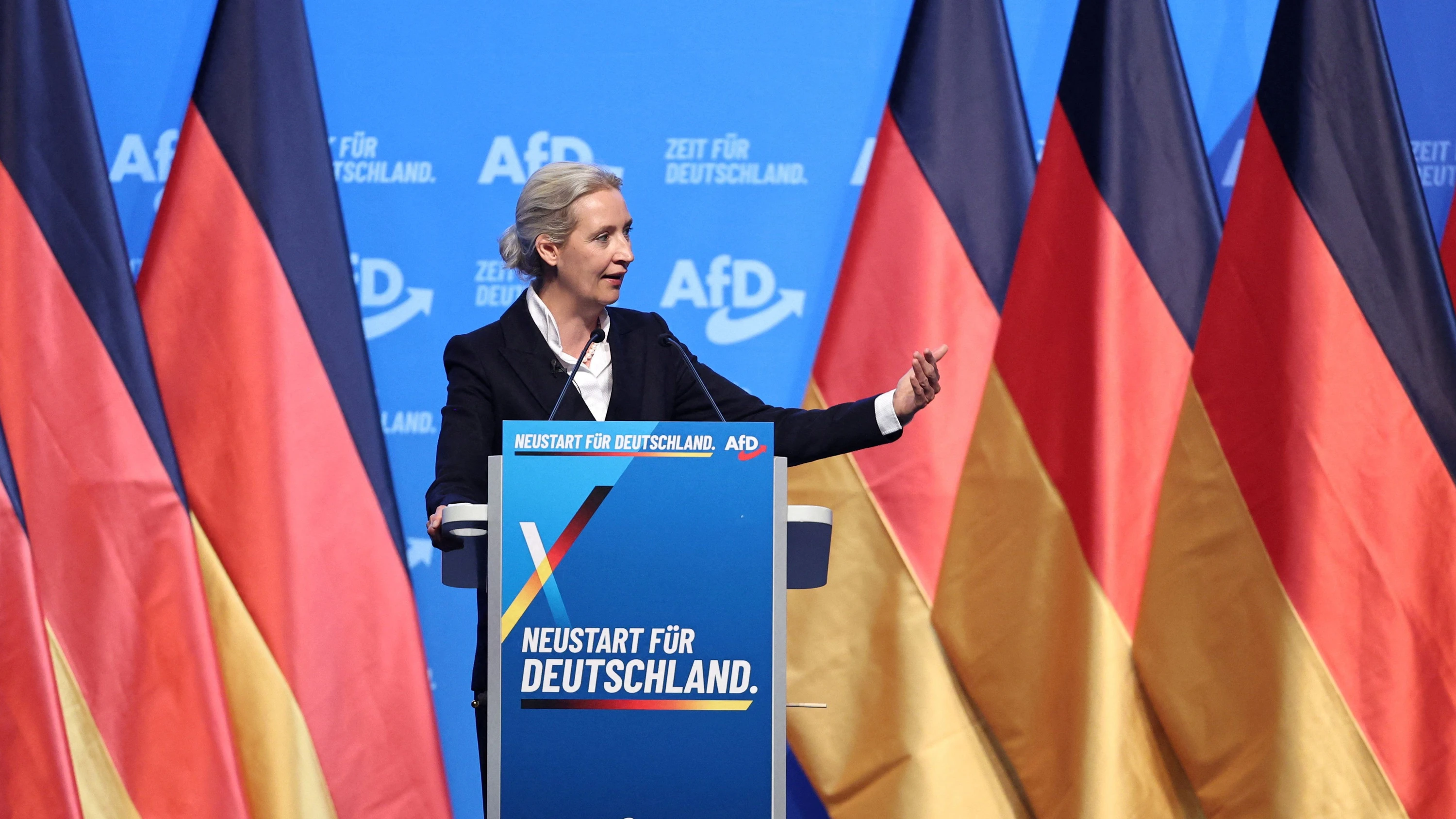
Deutschland-Liveblog: Brisanter Antrag fliegt von der Tagesordnung beim AfD-Parteitag Höcke forderte Überarbeitung der Unvereinbarkeitsliste der Partei +++ Merz kündigt bei CDU-Landesparteitag Aktionsplan gegen Sozialleistungsmissbrauch an +++ AfD-Parteitag beginnt pünktlich, trotz massiver Verkehrsbehinderungen durch Demonstrationen +++ alle Entwicklungen im Liveblog
faz · about 2 months ago
La question des violences sexuelles, «une problématique dont toute la société doit semparer, les hommes aussi» Des marches citoyennes prévues dans près de 80 villes françaises ce samedi 4 juillet, contre les violences sexistes et sexuelles faites aux femmes et aux enfants. Une mobilisation qui découle de laffaire Lyhanna, du nom de cette collégienne retrouvée morte il y a un mois dans le sud-ouest de la France après avoir été violée. Le principal suspect de ce meurtre avait pourtant déjà fait lobjet de plaintes pour viol sur mineur, mais navait jamais été auditionné, ce qui a mis en avant des dysfonctionnements dans la justice dans ce domaine. Isabelle Steyer, avocate pénaliste, co-fondatrice de lassociation Action juridique Femmes, est linvitée du jour.
rfi.fr · about 2 months ago
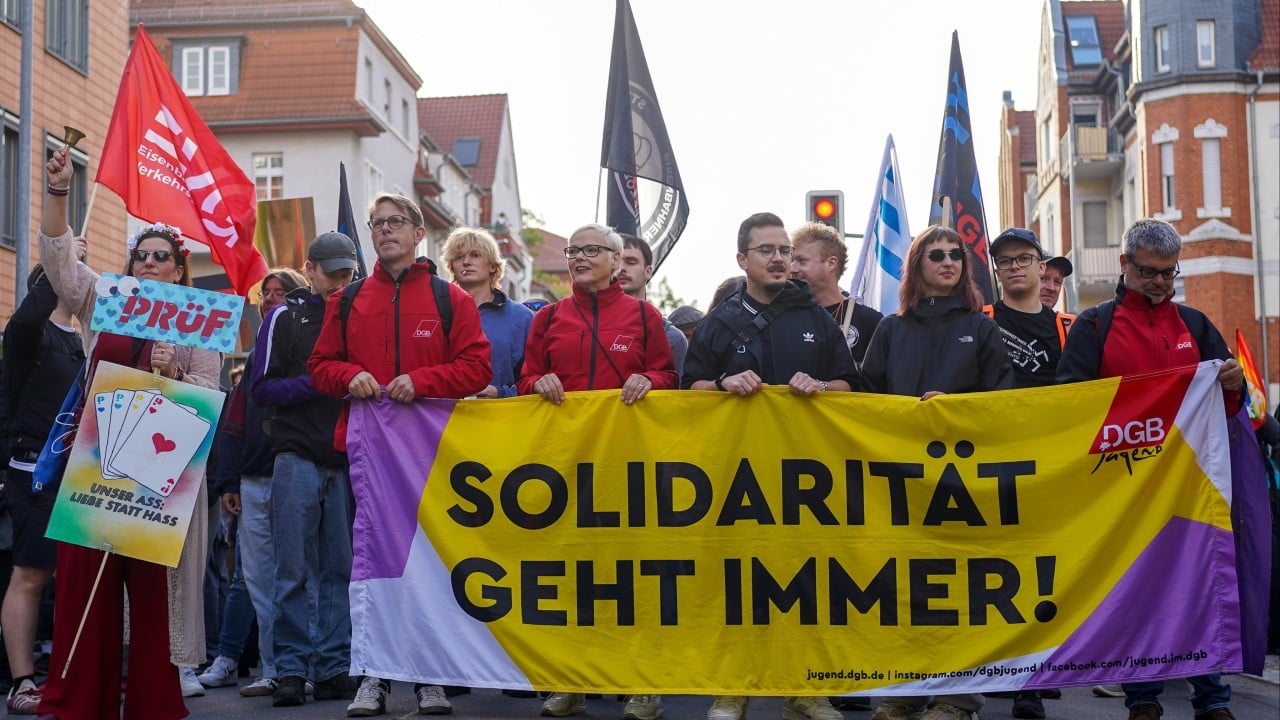
We wont tolerate this: thousands in Germany protest against far-right AfD Thousands of demonstrators flooded a German city on Saturday, blocking major roads and disrupting public transport, in a bid to shut down the annual congress of the far-right AfD party. About 20,000 people flocked to Erfurt, in Thuringia state, according to police, to protest against the Alternative for Germany (AfD) party that tops national opinion polls. The protesters, led by an alliance dubbed Resistance, blocked routes into the city, with some abseiling from a motorway bridge. Several...
south china morning post · about 2 months ago
Thousands of protesters in Germany rally against far-right AfD The demonstrations did not stop the partys annual congress in Erfurt from starting on time.
politico.eu · about 2 months ago
„Anders als in der Politik redet die Polizei miteinander Beim AfD-Parteitag in Erfurt trifft eine starke, gut vorbereitete Polizei auf Tausende Demonstranten. Die Lage ist dynamisch, aber unter Kontrolle. „Wir sind sehr gut vernetzt, sagt Polizeigewerkschafter Manuel Ostermann
welt.de · about 2 months ago
Algeria counts votes in second parliamentary polls since 2019 Algeria began counting votes on Thursday after polling stations closed in the countrys second parliamentary elections since the 2019 popular movement. Voter turnout reached 11.24 by 3 pm local time, with over 24 million eligible voters, as counting continues across 69 provinces.
yenisafak · about 2 months ago
„Die Regierung von Merz ist fatal für Deutschland BSW-Gründerin Sahra Wagenknecht kritisiert Versuche, den AfD-Parteitag zu verhindern, und betont die Notwendigkeit sachlicher Debatten. Sie sieht Überschneidungen, aber auch klare Unterschiede zur AfD. „Wir stimmen jedem vernünftigen Antrag zu.
welt.de · about 2 months ago
Merz teilt gegen Reformkritiker aus: „Kulturpessimisten, Untergangspropheten, Nöler, Nörgler, empörte Berufskritiker: Wegtreten! Helmut Kohl versprach den Bürgern einst blühende Landschaften. Beim Parteitag der NRW-CDU sagt der heutige CDU-Chef dem Land etwas nüchterner sehr gute Jahre voraus. Unter einer Bedingung.
tagesspiegel · about 2 months ago
Bundesparteitag: Alice Weidel sieht AfD auf Siegeskurs – „Wir sind die neue Volkspartei Auf dem Parteitag setzt die AfD auf Harmonie – und Angriffe auf die CDU. Der Spitzenkandidat für Sachsen-Anhalt wird bereits wie ein Wahlsieger gefeiert.
handelsblatt · about 2 months ago
AfD-Parteitag begann unter Protesten In Erfurt im deutschen Bundesland Thüringen hat am Samstag der Parteitag der rechtspopulistischen Alternative für Deutschland (AfD) begonnen. Berichte über Rivalitäten an der Parteispitze, insbesondere zwischen ihm und der Kovorsitzenden Alice Weidel, wies Tino Chrupalla zurück. „Unsere Partei ist einig wie nie zu vor, sagte er. Begleitet wird das Treffen von umfangreichen Gegenprotesten.
orf.at · about 2 months ago
Erfurt am Samstag: Trotz Protest und Blockaden: AfD-Parteitag beginnt pünktlich Tausende Menschen beteiligen sich an Demonstrationen gegen den AfD-Parteitag in Erfurt, Aktivisten versperren Zufahrtswege und eine Autobahn. Der Parteitag kann dennoch wie geplant beginnen.
handelsblatt · about 2 months ago