 Thursday, May 21Thursday, May 21
Germany is accelerating plans to carry out mass deportations of migrants in irregular situations as the European Union’s Pact on Asylum and Migration is set to enter into force in mid-June 2026. The move aligns with broader EU efforts to tighten immigration controls, including faster expulsion procedures for those without legal status. However, the policy has drawn criticism for its potential human rights implications, particularly as the EU simultaneously engages in controversial diplomatic actions, such as inviting Taliban representatives to Brussels—despite the EU not recognizing the Taliban government’s legitimacy .
The EU’s approach to migration remains contentious, with asylum applications declining across member states but the backlog of pending cases growing. Germany, along with Italy, Spain, and France, accounts for 77% of all initial asylum applications in the EU. Meanwhile, the bloc continues to prioritize border externalization and return policies, which critics argue undermine humanitarian protections. NGOs and academics have condemned recent Council of Europe statements on migration, warning that allowing exceptions to universal human rights standards could erode protections for other vulnerable groups . The Mediterranean migration route remains deadly, with 765 deaths recorded in early 2026, highlighting the human cost of EU border policies .

Dutch minister warns EU-U.S. trade deal must hold as Trump tariff deadline looms European Union member states and the European Parliament are set to resume negotiations with the United States on Tuesday over a long-delayed trade agreement, as officials warn that time is running
nltimes.nl · 2 days ago
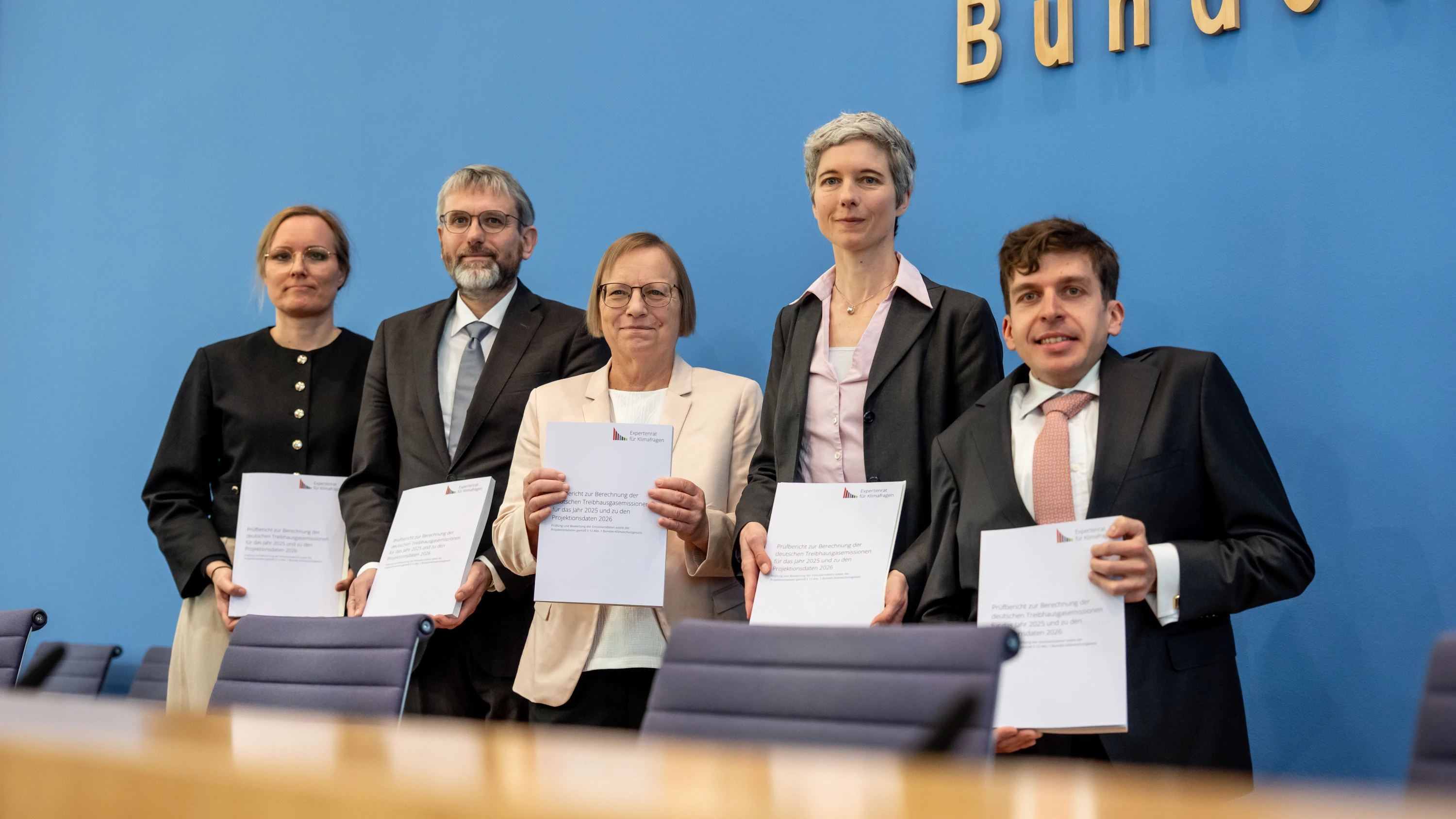
Klimaziele in Gefahr: „Netto-Null erst 2050 – warum nicht? Wer den Bericht zu den Emissionen ernst nimmt, sollte für alle Vorschläge offen sein. Auch für Katherina Reiches umstrittenes Heizungsgesetz.
faz · 2 days ago
Expertenrat mahnt: Klimaziele verfehlt – na und? Die Macht des Expertenrats für Klimafragen beruht auf der Feststellung, dass Klimaziele nicht eingehalten werden. Mit dem Klima hat das nichts zu tun.
faz · 2 days ago
Immigration irrégulière: vers des expulsions massives en Allemagne et les Talibans à Bruxelles À lapproche de lentrée en vigueur du Pacte Asile et Migration de lUnion européenne, prévue mi-juin 2026, plusieurs pays veulent accélérer les procédures dexpulsion de migrants en situation irrégulière. La Commission, elle, invite des Talibans à Bruxelles, représentants dun gouvernement dont elle ne reconnait pas la légitimité.
rfi.fr · 2 days ago

Deaths in the Mediterranean: An ongoing tragedy met with widespread indifference Migrants in the Mediterranean: The mechanics of silence (1/4). The first quarter of 2026 was one of the deadliest since 2014 for migrants departing from Tunisia and Libya toward Europe, with 765 deaths recorded by the International Organization for Migration. The EU system in the region is currently aimed more at containing the movement of people than saving lives.
le monde · 2 days ago
For NGOs and academics, the Council of Europe is undermining the concept of universal protection of human rights Harsh accusations and criticism have been levelled at the statement on migration adopted by ministers from the 46 member states last Friday in Chișinău, Moldova. Forde said: Once exceptions and differing standards are allowed to creep in, the way is paved for the erosion of other groups rights in the future
eunews.it · 2 days ago
Per ONG e accademici, il Consiglio dEuropa distrugge lidea di tutela universale dei diritti umani Dure accuse e critiche alla dichiarazione sulla migrazione adottata dai ministri dei 46 Paesi membri venerdì scorso a Chișinău, in Moldavia. Forde: Una volta che si insinuano eccezioni e standard differenziati, si apre la strada allerosione dei diritti di altri gruppi in futuro
eunews.it · 2 days ago
EU rejects Swiss ministers criticism of steel tariffs The steel duties recently approved by Brussels do not violate the joint declaration on the stabilisation and development of Swiss-EU relations package, the European Commission argued on Monday, rejecting criticism voiced by Swiss Economics Minister Guy Parmelin. +Get the most important news from Switzerland in your inbox Two days ago, on Swiss public radio SRF, Parmelin called the planned stricter EU rules on steel imports unacceptable. He had also said he was surprised by the timing, as it came just as the Swiss parliament was examining the recently signed package of agreements. + Swiss president labels EU steel tariffs as counterproductive Parmelin, who also holds the rotating Swiss presidency this year, also referred to the joint declaration between Bern and Brussels to avoid tensions or obstacles during the Swiss parliaments consideration of the dossier. The aim is not to jeopardise the ratification process of the agreements. + Switzerland, EU sign package of agreements ...
swissinfo · 2 days ago
Asylum applications are falling across the EU, but the number of people awaiting a decision is rising Eurostat figures show that Italy, Spain, France, and Germany accounted for 77 per cent of all initial applications. Furthermore, Italy ranks third in the number of pending cases. Meanwhile, the EU continues to pursue a policy of externalising its borders, closing them and carrying out returns
eunews.it · 2 days ago
Klimaneutralität: Deutschland droht alle Ziele zu verfehlen Ein Expertenrat der Bundesregierung stellt deren Klimapolitik ein miserables Zeugnis aus: Schon das Ziel für 2030 sei kaum zu erreichen – und bis 2045 sieht es noch schlechter aus.
sueddeutsche · 3 days ago
Study: Switzerland should abolish OECD minimum tax A study by the University of St Gallen (HSG) is calling for the abolition of the OECD minimum tax. It says the rules are outdated, legally risky and detrimental to Switzerland as a business location. +Get the most important news from Switzerland in your inbox This is the conclusion of the study published on Monday by the HSGs Institute of Law and Economics. The geopolitical and economic framework conditions have changed fundamentally since the referendum in 2023, said Peter Hongler, HSG Professor of Tax Law, at a media conference in Zurich. The minimum tax, which was voluntarily introduced by Switzerland in 2024, now fails to fulfil its original purpose, he said. + Swiss voters back minimum tax on multinational earnings In addition, the tax harbours considerable legal risks and could cost more than it benefits in economic and fiscal terms for Switzerland as a business location, said Hongler. The study commissioned by the Swiss-American Chamber of Commerce states that the tax ...
swissinfo · 3 days ago