 Tuesday, July 7Tuesday, July 7
6 days · 2 summary articles
SpaceX Transporter-17 launches as rivals question rideshare sustainability: dozens of satellites deployed
NASA accelerates Moon programme with 184bn investment as geopolitical and technical challenges mount
SpaceX’s rideshare dominance under scrutiny as Transporter-17 lifts off
SpaceX launched its Transporter-17 rideshare mission from Vandenberg Space Force Base on the morning of 7 July 2026, deploying dozens of satellites into low-Earth orbit as industry executives voiced fresh concerns about the long-term viability of such programmes. The Falcon 9 flight marked the latest in SpaceX’s Transporter series, a service that has reshaped access to space for small satellites since its 2021 debut. Yet even as the rocket climbed, rival operators warned that the programme’s future is now in question, with one executive describing the mood as “panic” over its sustainability.
The payload roster included Austria’s first commercial satellite, Oasis Alpha, built by Vienna-based Tumbleweed to offer plug-and-play microgravity research. The 80-kilogram spacecraft carries four European experiments in standardized “Pods,” including bio-catalysis tests by Mass Balance and AI-driven autonomous systems from Delft University of Technology. “We built Oasis Alpha to prove that going to space can be fast, simple and unbureaucratic,” said Tumbleweed co-founder Guillaume Brault. The mission was procured via a rideshare slot, underscoring SpaceX’s role as the default launch broker for small satellites.
Romania, meanwhile, celebrated its first entirely private European Space Agency mission as CyberCUBE rode to orbit on the same Transporter-17 stack. Developed by Romanian engineers, the loaf-of-bread-sized satellite will spend a year testing cybersecurity algorithms to protect future European spacecraft from jamming, spoofing and other digital threats. “We’ve just lived the strongest emotion of our professional lives,” said Cristian Chițu, space director at the Romanian aerospace firm overseeing the project. CyberCUBE’s success follows a decade of capacity-building in Bucharest and comes as NATO allies prepare a new space-defence architecture.
NATO’s deputy secretary-general, Radmila Šekerinska, announced on 7 July that eight members—Denmark, Canada, Finland, Germany, Norway, the Netherlands, Sweden and Turkey—will launch the HALO constellation, a “mega-constellation” designed to integrate national military satellites into a resilient network. “This new model will be particularly helpful for high-speed communications, intelligence and missile tracking,” she told reporters at the alliance summit in Ankara. Canada simultaneously joined NATO’s STARLIFT initiative, committing to shared launch capacity across allied spaceports, while Spain became the 19th nation to participate in the Alliance Persistent Surveillance from Space programme.
On the commercial front, German start-up Isar Aerospace signed a ten-year agreement with Maritime Launch Services to build a Canadian launch complex in Nova Scotia, aiming to offer up to 40 orbital flights annually from 2029. Isar will pay CAD 15 million per year after a 30-month grace period, with first launches pencilled in for 2028. The deal coincides with a Canadian submarine procurement that includes German TKMS technology, creating a defence-industrial link between Berlin and Ottawa. “We want to give Canada its own orbital launch capability,” said Isar CEO Daniel Metzler during the NATO summit.
Across the Atlantic, the Balearic Islands inaugurated their first satellite, Posidònia, built by Open Cosmos and launched by SpaceX from Cape Canaveral. The 80-kilogram Earth-observation craft carries high-resolution cameras and AI-driven data pipelines to monitor mass tourism, wildfires and coastal flooding in real time. “It’s as if we could photograph Madrid from the Balearics and count the windows of a building,” said Open Cosmos engineer Tomeu Massuti. The four-million-euro project is co-financed by European funds and will operate for three years at an altitude of 600 kilometres.
The Bundeswehr, Germany’s armed forces, meanwhile confirmed plans to field a constellation of up to 1,200 satellites as part of a €35 billion military space investment, signalling Berlin’s determination to secure sovereign space assets. The announcement follows a week of high-profile launches that have underscored both the promise and the fragility of Europe’s space ambitions.
Follow us for live European news
4 further sources not geolocated
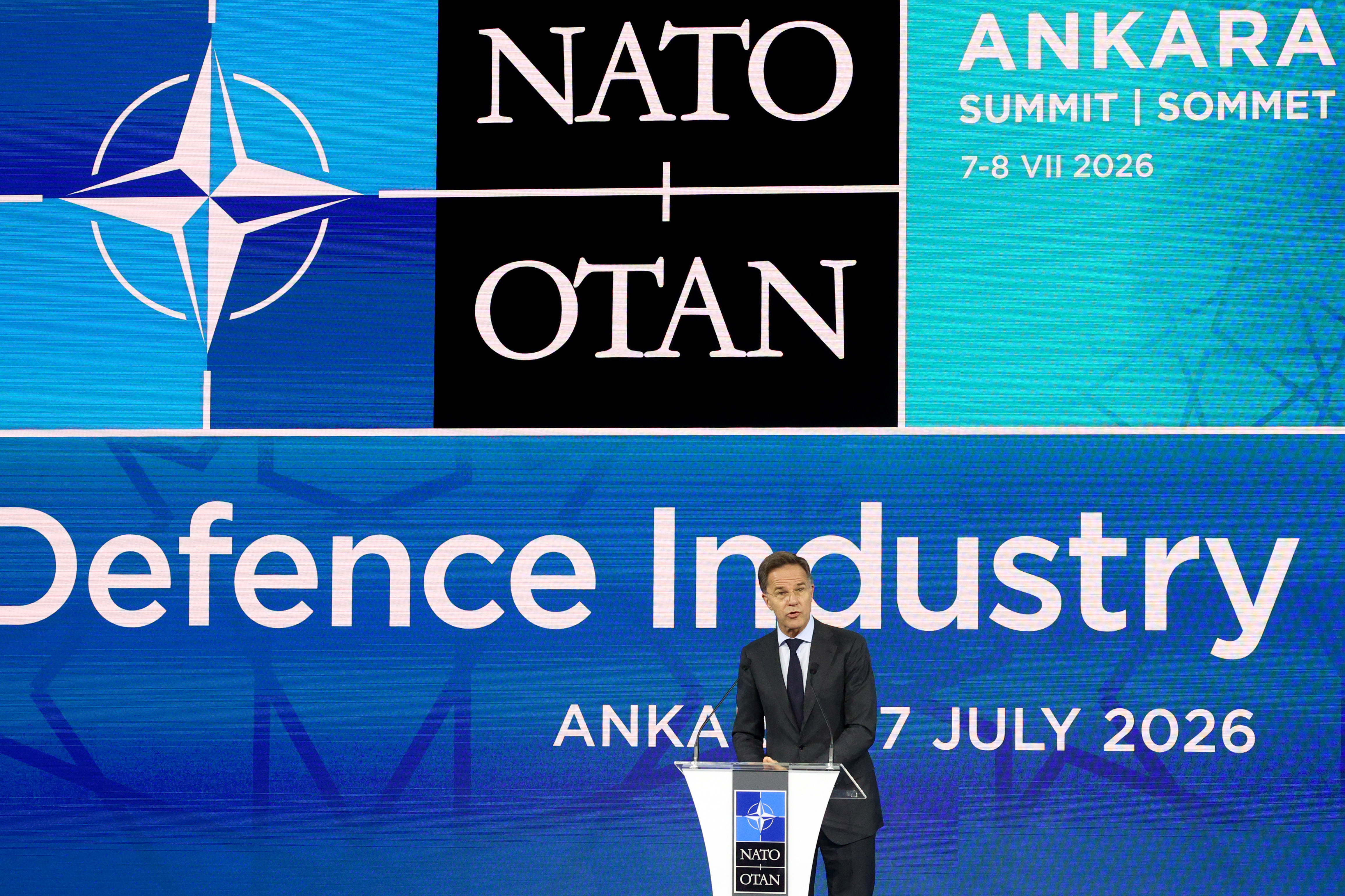
Eight NATO allies launch HALO satellite constellation initiative The project aims to stitch together spacecraft managed by individual member countries into one mega-constellation, alliance officials said.
defense news · about 4 hours ago

SpaceXAI remplace xAI, avec un gigantesque projet derrière ce nouveau nom Absorbé par SpaceX, lentreprise xAI doit désormais servir un projet plus vaste. ...
la libre · about 4 hours ago

Baleares lanza al espacio desde Cabo Cañaveral el Posidònia, su primer satélite espacial Facilitará información para la toma de decisiones en tiempo real sobre el clima, inundaciones o incendios
la vanguardia · about 4 hours ago

CyberCUBE, satelitul inovator lansat de România. A fost plasat pe orbită de o rachetă a SpaceX Prima misiune a Agenției Spațiale Europene condusă integral de o companie privată din România. Satelitul CyberCUBE a fost plasat pe orbită de pe o platformă a SpaceX. Sistemul va testa modalități prin care viitorii sateliți europeni pot fi protejați împotriva amenințărilor cibernetice, tot mai frecvente în ultimii ani.
digi24 · about 4 hours ago
Komet 3I/Atlas: Kosmisch Seit einem Jahr beflügelt ein rätselhaftes interstellares Objekt die Fantasie auf der Erde. Nun ist klar, worum es sich handelt.
die zeit · about 4 hours ago
Raumfahrt: Isar Aerospace baut Startplatz in Kanada Sobald es dem Raketenhersteller gelingt, ins All zu fliegen, braucht er mehrere Startplätze. Das Unternehmen hat nun eine Vereinbarung für einen Startkomplex an der Ostküste Kanadas unterschrieben.
sueddeutsche · about 4 hours ago

У Європі створять центр обслуговування ракет PAC - 3 для систем Patriot – Владислав Косіняк - Камиш
gdelt bot · about 5 hours ago
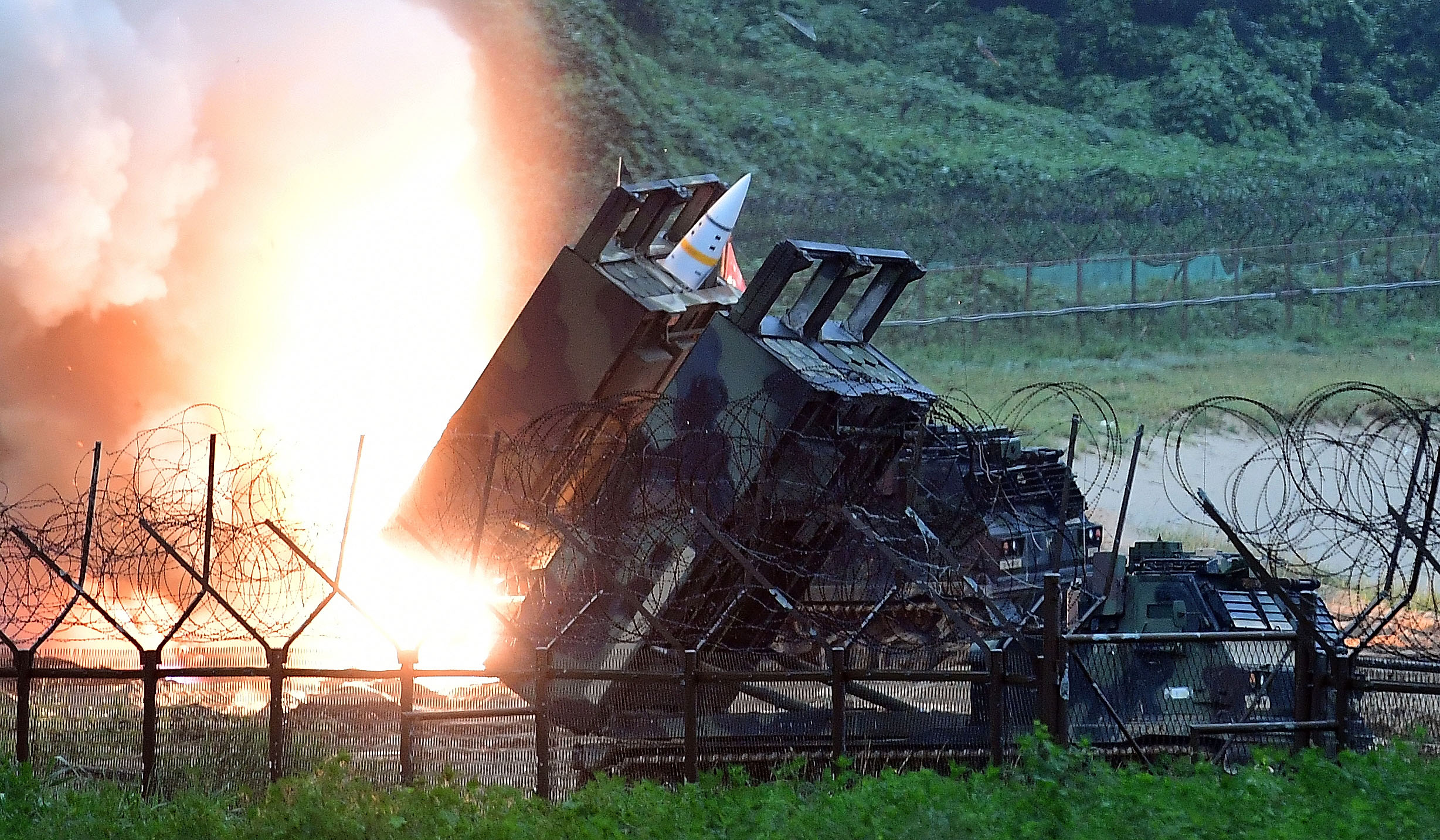
Germany set to become first international site for ATACMS missile production The move addresses a bottleneck, as Lockheed Martin has been winding down ATACMS output at its Camden, Arkansas, site while prioritizing newer missiles.
defense news · about 5 hours ago
The Pentagon calls this Chinese firm a military company. Its lidar runs US robotaxis anyway A lidar maker the Pentagon brands a Chinese military company quietly wires up Americas robotaxis, trucks, and even an airport. Nvidia is one of its partners. Hesai makes many of the sensors self-driving machines use to see. The Shanghai firm also sits on a US Department of Defense blacklist of Chinese military companies, CNBC reports. […] This story continues at The Next Web
the next web · about 5 hours ago
Romania leads its first private ESA mission with CyberCUBE launch A Falcon 9 rocket lifted off from Vandenberg Space Force Base in California on the morning of 7 July, carrying a satellite roughly the size of a loaf of bread that will spend the next year probing how European spacecraft can be attacked. The payload, called CyberCUBE, is the first European Space Agency mission run […] This story continues at The Next Web
the next web · about 5 hours ago
Simera Sense to provide imagers for Canary Islands constellation Belgiums Simera Sense has won a contract to provide multispectral imagers for a small constellation being designed to track wildfires, volcanic activity and other regional priorities for the Canary Islands off the coast of Spain. The post Simera Sense to provide imagers for Canary Islands constellation appeared first on SpaceNews.
spacenews · about 5 hours ago
SpaceX launches Transporter-17 amid concerns about rideshare programs future SpaceX launched the latest in its Transporter series of rideshare missions July 7 as industry concerns about the programs future reach what one rival company executive called a panic. The post SpaceX launches Transporter-17 amid concerns about rideshare programs future appeared first on SpaceNews.
spacenews · about 5 hours ago
Erfolgreicher Start von Österreichs erstem kommerziellen Satelliten Ziel ist es, Institutionen und Unternehmen Forschung in der Schwerelosigkeit schnell und unbürokratisch zu ermöglichen, ohne über Fachwissen in der Luft- und Raumfahrttechnik oder in Bezug auf die Einhaltung gesetzlicher Vorschriften verfügen zu müssen.
die presse · about 5 hours ago

Älteste Quasare des Universums beleuchten ein kosmisches Rätsel neu Das Weltraumteleskop Euclid hat 31 Quasare im frühen Kosmos aufgespürt. Zwei davon erstrahlten schon in den ersten 670 Millionen Jahren nach dem Urknall
der standard · about 5 hours ago
Iraqi Airways launches direct Basra–Baku route Iraqi Airways has launched a direct Basra–Baku route, starting 8 July with one weekly flight, giving travellers in Basra and Iraqs southern provinces a direct connection to Azerbaijan for the first time.
intellinews · about 5 hours ago
Airbus to make first foray into engine manufacturing with hydrogen tie-up European aircraft maker to form joint venture with Germanys MTU Aero Engines to take on China and US rivals
financial times · about 5 hours ago
#Germany The Bundeswehr is planning to build a satellite constellation that could include up to 1,200 satellites, aiming to enhance its military communications and capabilities in space. This initiative is part of a broader €35 billion investment in military space capabilities over the next few years. Subscribe to @OSINTdefender Chat room
telegram_OSINTdefender · about 5 hours ago
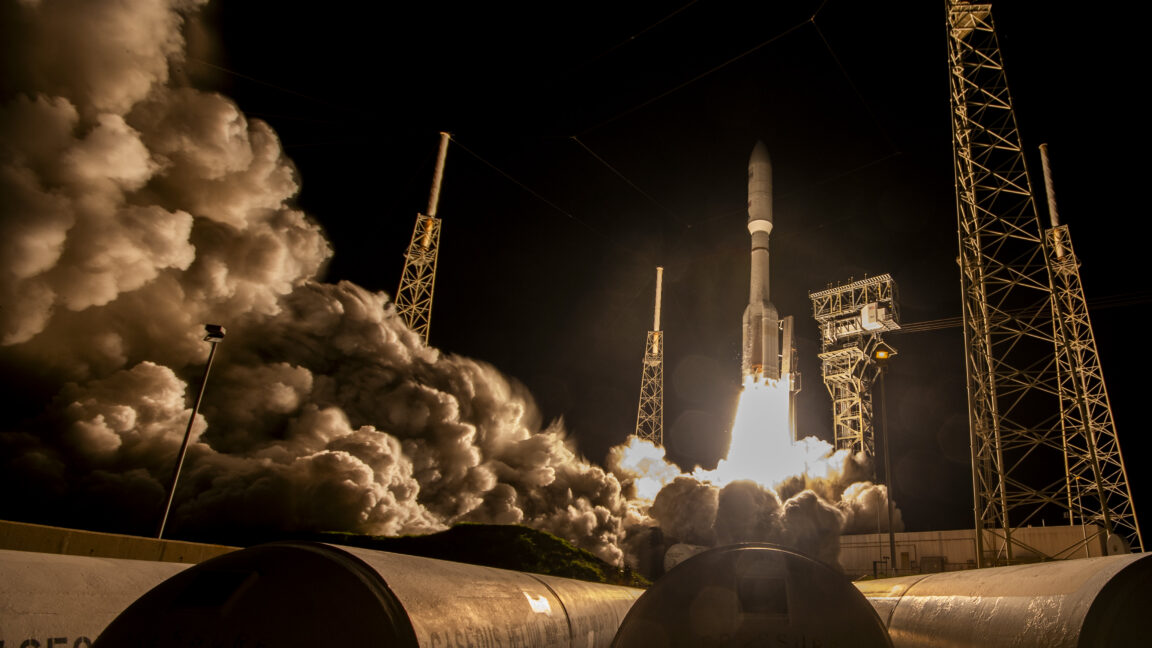
ULAs last six Atlas Vs cant launch anything besides Boeings Starliner Amazon says it has enough satellites in orbit to begin initial broadband service at mid-latitudes later this year.
ars technica · about 5 hours ago
Raumfahrt: Zweite Raketenstartbasis für Isar Aerospace in Kanada Bisher hat die Rakete des deutschen Raumfahrt-Start-ups Isar Aerospace erst einen Testflug absolviert. Doch bald soll es eine zweite Startbasis geben.
tagesspiegel · about 5 hours ago