 Thursday, May 28Thursday, May 28
Donald Trump installs loyalist Kevin Warsh as Fed chair amid escalating inflation and political pressure
Donald Trump swore in former Wall Street banker Kevin Warsh as chair of the U.S. Federal Reserve on Friday, handing the central bank’s reins to a handpicked ally as inflation surges and markets brace for potential rate hikes by the end of 2026. The move caps years of public attacks by Trump on the Fed’s independence, even as the president now claims he wants a "totally independent" central bank—while simultaneously demanding lower rates to bolster his economic agenda.
Warsh, 55, inherits a Fed under unprecedented political scrutiny. At his swearing-in ceremony, Trump struck a conciliatory tone, urging Warsh to "don’t look at me, don’t look at anybody" and instead focus on price stability. Yet the president’s history of pressuring his predecessor, Jerome Powell—whom he publicly berated for not cutting rates—casts doubt on that pledge. Trump’s veiled criticism of Powell during the event underscored the tension: "The Fed had become distracted," he said, without naming Powell directly .
The new chair faces immediate economic headwinds. Inflation, measured by the Fed’s preferred gauge, hit 3.8% in April—the highest in three years—while core prices rose 3.3%, well above the central bank’s 2% target. Fed Governor Christopher Waller, a recent convert to hawkishness, warned that rate cuts are off the table unless inflation improves or the labor market weakens. "I can no longer rule out rate hikes further down the road," Waller said, citing rising inflation expectations and a stabilizing jobs market . Wall Street now prices in a 60% chance of a rate hike by December 2026, a stark reversal from earlier bets on cuts .
Warsh’s tenure begins as the Fed grapples with a "series of successive price shocks," from the Iran war’s energy disruptions to persistent inflation that has exceeded the 2% target for five years. Waller compared the phenomenon to a rigged coin: "Enough shocks in a row, and people start pricing in more to come," making inflation harder to tame . The Fed’s last rate cuts—justified as "insurance" against a weakening labor market—may have left policy too loose, Deutsche Bank analysts warned, with growth, fiscal stimulus, and financial conditions all pointing to overheating risks.
Trump’s broader economic agenda adds to the pressure. A *Guardian* poll found that most Americans believe the president is "not focused enough on the economy," a vulnerability as he campaigns for re-election in 2028 . Meanwhile, his administration’s trade policies are sparking international friction: Trump’s envoy to Canada accused Ottawa of erecting "new trade barriers" by forcing U.S. streaming giants to fund Canadian content, a move the U.S. argues violates trade agreements .
Warsh’s appointment also deepens concerns about the Fed’s independence. Supreme Court Justice Clarence Thomas administered the oath—a symbolic nod to Trump’s judicial reshaping of the federal bench. The *New York Times* publisher has accused news outlets of "capitulation" to Trump’s attacks on the press, highlighting the broader erosion of institutional norms under his presidency . For Warsh, the challenge is clear: deliver on Trump’s demand for lower rates without sacrificing the Fed’s credibility—or risk becoming the latest casualty of the president’s economic whims.

NYT publisher calls out news outlets for capitulation to Trump administration NYT publisher calls out news outlets for capitulation to Trump administration The Times has been embroiled in several major lawsuits against Donald Trump and the federal government since the presidents return to the White House last year.
politico.eu · 5 days ago

Trump Envoy Accuses Canada of New Trade Barriers With Streaming Revamp President Trumps chief envoy in Ottawa accused Canadian authorities of imposing new trade barriers by sharply increasing how much the big, U.S.-based online streaming companies must contribute to Canadian television programming.
wsj · 6 days ago
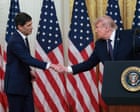
Kevin Warsh sworn in as Fed chair as Trump faces backlash over economy Former Wall Street banker takes over amid growing concern over cost of living – and disapproval of Trumps agendaUS politics live – latest updatesKevin Warsh has been sworn in as chair of the US Federal Reserve, tasked with steering the worlds largest economy as the Trump administration faces mounting pressure over Americans financial wellbeing.Warsh, handpicked by Donald Trump, takes charge of the powerful central bank as it comes under extraordinary pressure from the US president to cut interest rates, even as prices climb. Continue reading...
theguardian · 6 days ago
![Trump to Fed chair Warsh: Dont look at me, dont look at anybody The Warsh era begins with soaring inflation, a Middle East energy shock bleeding into other parts of the economy and colleagues skeptical that rate cuts should come anytime soon.Add on top: Kevin Warsh faces more political pressure to deliver lower rates than any other Federal Reserve chair in recent memory.Why it matters: The 17th Fed chair, sworn in Friday at the White House, inherits a set of economic conditions that make it difficult to justify cutting rates.Despite President Trumps unprecedented pressure on Warshs predecessor, Jerome Powell, to cut rates, the president struck a different tone on Friday.Honestly, I really mean this: I want Kevin to be totally independent and just do a great job. Dont look at me, dont look at anybody. Just do your own thing and do a great job, Trump said at Warshs swearing-in ceremony.What theyre saying: Our mandate at the Fed is to promote price stability and maximum employment, Warsh said.When we pursue those aims with wisdom and clarity, independence and resolve, inflation can be lower, growth stronger, real take-home pay higher, and America can be more prosperous, and no less important, Americas place in the world more secure.To fulfill this mission, he added, I will lead a reform-oriented Federal Reserve, learning from past successes and mistakes, both escaping static frameworks and models, and upholding clear standards of integrity and performance.The intrigue: Not long before Warsh was officially sworn into the post, Fed governor Christopher Waller gave a notable speech that cemented his hawkish pivot.Just months ago, he was a leading advocate for rate cuts to boost what he saw as a souring labor market. Wallers speech, aptly titled Policy Risks Have Changed, suggests his view has flipped.Waller said it might be appropriate to strip the Feds policy statement of its easing bias language, aligning with a group of Fed presidents who dissented last month over the inclusion of such a signal.Zoom in: Waller says the inflation picture has materially worsened. He estimated that the Feds go-to inflation gauge ran around 3.8 in April compared with a year ago, the highest in three years, with core personal consumption expenditures at roughly 3.3.Inflation is not headed in the right direction, Waller said. He added that the labor market appeared to be stabilizing, removing the factor that previously cemented his argument for rate cuts.I am going to need to see improvement on inflation or a significant deterioration in the labor market before I would consider reducing the policy rate.Waller stopped short of calling for near-term rate hikes, noting that their lagged effects could impair the economy if the Iran wars energy shock subsides.He noted, however: I can no longer rule out rate hikes further down the road if inflation does not abate soon, and that is especially true if measures of inflation expectations, some of which have risen lately, show signs of becoming unanchored.There are early signs that consumers might be adjusting their outlook on long-run inflation, a huge concern for the Fed.The big picture: The Warsh-era Fed will have to grapple with the uncomfortable fact that inflation has run above the central banks 2 target for five years, complicating the calculus of whether the current war-driven energy shock is transitory.The problem is the series of successive price shocks this decade. Waller warned that even if Americans believe each individual price shock will fade, watching them stack up one after another can cause them to revise their inflation expectations higher anyway because the pattern starts to feel like evidence that higher inflation is the new normal.Waller compared it to a series of coin flips: If you flip heads three times in a row, you rationally start to wonder if the coin is rigged, even if you know each flip is supposed to be independent.Theres a similar logic for inflation: Enough shocks in a row, and people start pricing in more to come, which itself makes inflation harder to bring down.What to watch: Whether the Feds rate cuts last year — framed as insurance against a weakening labor market — have left policy too loose for the moment.[W]ith growth solid, the labor market showing increasing signs of stabilization, inflation accelerating and fiscal policy and financial conditions supportive, the Feds policy stance might be miscalibrated, Deutsche Banks Matthew Luzzetti and Matthew Raskin wrote.](https://images.axios.com/i8D0xIt2776celF5yQyOAXvf9vU=/0x0:4631x2605/1366x768/2026/05/22/1779466009957.jpg)
Trump to Fed chair Warsh: Dont look at me, dont look at anybody The Warsh era begins with soaring inflation, a Middle East energy shock bleeding into other parts of the economy and colleagues skeptical that rate cuts should come anytime soon.Add on top: Kevin Warsh faces more political pressure to deliver lower rates than any other Federal Reserve chair in recent memory.Why it matters: The 17th Fed chair, sworn in Friday at the White House, inherits a set of economic conditions that make it difficult to justify cutting rates.Despite President Trumps unprecedented pressure on Warshs predecessor, Jerome Powell, to cut rates, the president struck a different tone on Friday.Honestly, I really mean this: I want Kevin to be totally independent and just do a great job. Dont look at me, dont look at anybody. Just do your own thing and do a great job, Trump said at Warshs swearing-in ceremony.What theyre saying: Our mandate at the Fed is to promote price stability and maximum employment, Warsh said.When we pursue those aims with wisdom and clarity, independence and resolve, inflation can be lower, growth stronger, real take-home pay higher, and America can be more prosperous, and no less important, Americas place in the world more secure.To fulfill this mission, he added, I will lead a reform-oriented Federal Reserve, learning from past successes and mistakes, both escaping static frameworks and models, and upholding clear standards of integrity and performance.The intrigue: Not long before Warsh was officially sworn into the post, Fed governor Christopher Waller gave a notable speech that cemented his hawkish pivot.Just months ago, he was a leading advocate for rate cuts to boost what he saw as a souring labor market. Wallers speech, aptly titled Policy Risks Have Changed, suggests his view has flipped.Waller said it might be appropriate to strip the Feds policy statement of its easing bias language, aligning with a group of Fed presidents who dissented last month over the inclusion of such a signal.Zoom in: Waller says the inflation picture has materially worsened. He estimated that the Feds go-to inflation gauge ran around 3.8 in April compared with a year ago, the highest in three years, with core personal consumption expenditures at roughly 3.3.Inflation is not headed in the right direction, Waller said. He added that the labor market appeared to be stabilizing, removing the factor that previously cemented his argument for rate cuts.I am going to need to see improvement on inflation or a significant deterioration in the labor market before I would consider reducing the policy rate.Waller stopped short of calling for near-term rate hikes, noting that their lagged effects could impair the economy if the Iran wars energy shock subsides.He noted, however: I can no longer rule out rate hikes further down the road if inflation does not abate soon, and that is especially true if measures of inflation expectations, some of which have risen lately, show signs of becoming unanchored.There are early signs that consumers might be adjusting their outlook on long-run inflation, a huge concern for the Fed.The big picture: The Warsh-era Fed will have to grapple with the uncomfortable fact that inflation has run above the central banks 2 target for five years, complicating the calculus of whether the current war-driven energy shock is transitory.The problem is the series of successive price shocks this decade. Waller warned that even if Americans believe each individual price shock will fade, watching them stack up one after another can cause them to revise their inflation expectations higher anyway because the pattern starts to feel like evidence that higher inflation is the new normal.Waller compared it to a series of coin flips: If you flip heads three times in a row, you rationally start to wonder if the coin is rigged, even if you know each flip is supposed to be independent.Theres a similar logic for inflation: Enough shocks in a row, and people start pricing in more to come, which itself makes inflation harder to bring down.What to watch: Whether the Feds rate cuts last year — framed as insurance against a weakening labor market — have left policy too loose for the moment.[W]ith growth solid, the labor market showing increasing signs of stabilization, inflation accelerating and fiscal policy and financial conditions supportive, the Feds policy stance might be miscalibrated, Deutsche Banks Matthew Luzzetti and Matthew Raskin wrote.
axios · 6 days ago

Kevin Warsh sworn in by Clarence Thomas as Trump claims he wants independent Fed Reserve under his hand-picked chair Trump has spent years attempting to bully the central bank into lowering interest rates to artificially juice the U.S. economy
independent · 6 days ago
Kevin Warsh sworn in as new US Fed chair Warsh will lead the central bank at a time when its independence has come under scrutiny amid political pressure.
aljazeera · 6 days ago
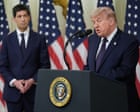
Trump claims Federal Reserve had become distracted as he swears in new chair Kevin Warsh – US politics live President makes veiled criticism of outgoing chief Jerome Powell, whom he attacked frequently, at White House ceremonyMost Americans think Trump is not focused enough on economy – pollSign up for the Breaking News US emailTheres broad recognition there are going to be eventually less US troops in Europe than historically, Rubio saysRubio said he didnt set the timeline for reducing the number of US troops in Europe, but it has been an ongoing process that started from the first day of this administration. Continue reading...
theguardian · 6 days ago
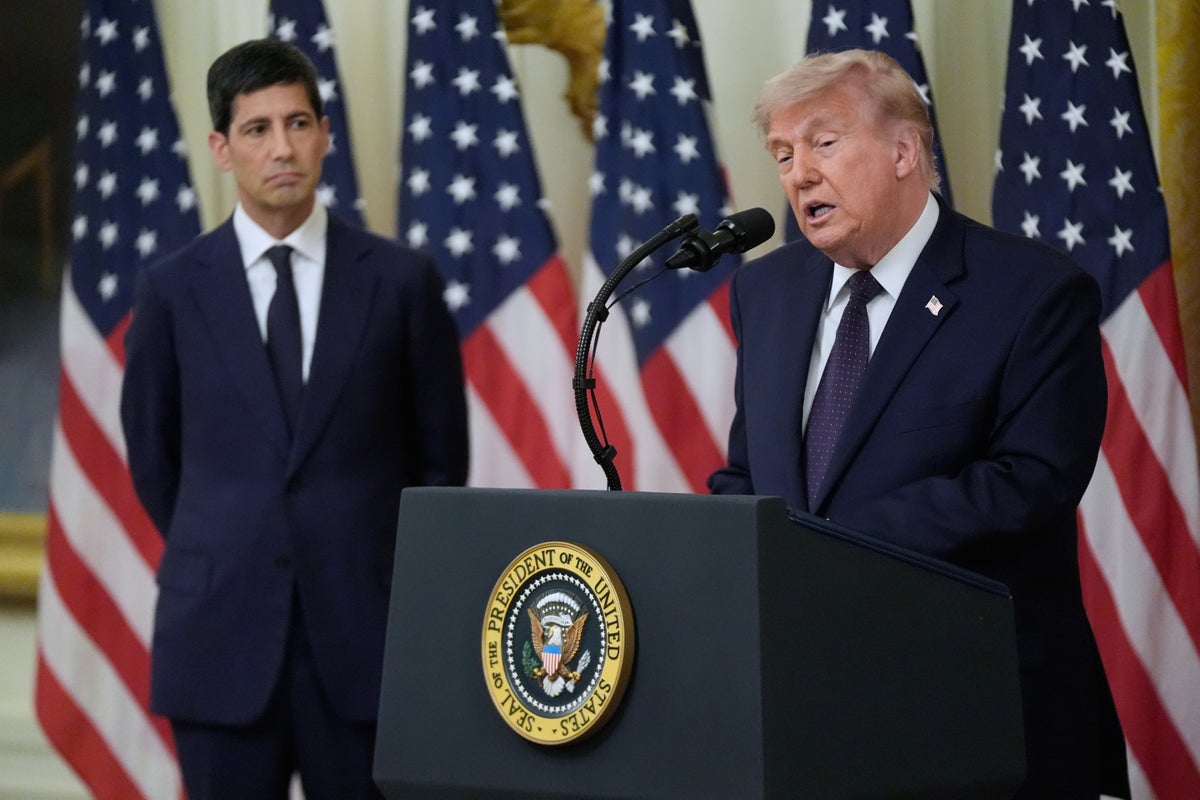
Trump claims he wants independent Fed Reserve — as he swears in his hand-picked chair Kevin Warsh Trump has spent months attempting to bully the central bank into lowering interest rates to artificially juice the U.S. economy
independent · 6 days ago

Trump to swear in new Federal Reserve chair Kevin Warsh – US politics live President to host White House ceremony that ends tenure of Jerome Powell, who face repeated attacks from TrumpMost Americans think Trump is not focused enough on economy – pollSign up for the Breaking News US emailTheres broad recognition there are going to be eventually less US troops in Europe than historically, Rubio saysRubio said he didnt set the timeline for reducing the number of US troops in Europe, but it has been an ongoing process that started from the first day of this administration. Continue reading...
theguardian · 6 days ago
Wall Street bets on 2026 rate rise as Kevin Warsh takes charge of the Fed Markets expect central bank to lift borrowing costs by end of 2026 as Iran war intensifies inflation
financial times · 6 days ago
Warsh faces mounting rate rise bets as he takes charge of Fed Markets expect central bank to lift borrowing costs by end of 2026
financial times · 6 days ago