 Thursday, May 28Thursday, May 28
Far-right parties and politicians across Europe face mounting backlash over racist rhetoric and violent anti-asylum protests as mainstream parties sharpen their opposition.
The far-right Forum for Democracy (FvD) and its leader, Lidewij de Vos, came under fire from nearly all parties in the Dutch parliament during a debate on violent anti-asylum protests, with critics accusing the party of inciting unrest. The backlash follows a surge in demonstrations against asylum shelters in the Netherlands, where self-described "concerned citizens" have increasingly adopted far-right talking points, as reported by *taz* . Meanwhile, Dutch party leader Rob Jetten condemned calls for violence but left the door ajar for cooperation with far-right figure Grzegorz Markuszower, signaling persistent divisions over how to counter extremism .
In France, Marine Le Pen’s Rassemblement National (RN) faced accusations of deliberate disinformation after the party shared a heavily edited video of left-wing leader Jean-Luc Mélenchon. The nine-times-remixed clip distorted Mélenchon’s remarks on immigration and rural France, reinforcing RN’s narrative of an opposition between "native" communities and newcomers, *Libération* revealed . The incident underscores the far right’s reliance on manipulated media to stoke racial tensions.
In Sweden, the Sweden Democrats (SD) intensified their criticism of the ruling Moderate Party (M), with SD politician Denice Westerberg accusing Migration Minister Johan Forssell of cowardice on deportation policies. Westerberg proposed an unexpected compromise—granting clemency to well-integrated, non-criminal minors facing expulsion—while maintaining hardline stances on broader immigration controls .
Portugal’s former Prime Minister Pedro Passos Coelho escalated his anti-immigration rhetoric, attacking "identity politics" and warning that politicians who embrace populism risk becoming "prostitutes without character." Speaking at an event attended by far-right Chega leader André Ventura, Passos Coelho framed immigration as a threat to Europe’s cultural cohesion, a narrative increasingly adopted by center-right figures .
The backlash against far-right movements coincides with a broader reckoning over racism and antisemitism. In Lisbon, a hate crime targeting a synagogue reignited debates over rising antisemitism, with commentator Paulo Mendes Pinto condemning the "silence that kills" . Meanwhile, anti-racist activists, including SOS Racisme president Dominique Sopo, urged the left to move beyond performative solidarity, arguing that true anti-racism requires dismantling systemic hierarchies .
The developments reflect a continent grappling with the normalization of far-right discourse, even as mainstream parties struggle to contain its spread. In the Netherlands, the FvD’s isolation in parliament contrasts with the persistent influence of figures like Markuszower, while in Portugal, Passos Coelho’s rhetoric signals a rightward shift among establishment conservatives. The coming months will test whether the current backlash translates into sustained political action—or merely a temporary reprieve.

Action day against hate crime and hate speech
gdeltproject.org · 1 day ago
Rechtsradikale Bewegung: Hollands Hassbürgertum In den Niederlanden nehmen Proteste gegen Asylunterkünfte zu. Die Demonstrierenden selbst nennen sich „besorgte Bürger. Ein Ortsbesuch. mehr...
taz.de · 1 day ago
Sågningen av Johan Forssell: För feg M är för fega i migrationspolitiken, anser SD-politikern Denice Westerberg. Samtidigt lyfter hon en oväntad lösning på tonårsutvisningarna: Man kan ge nåd till en välintegrerad icke-kriminell människa.
svenska dagbladet · 1 day ago
Comment une vidéo relayée par Marine Le Pen, coupée et remontée neuf fois, manipule le discours de Mélenchon sur la «nouvelle France» Un montage, repris par la députée RN, assemble plusieurs extraits dun vieux discours du leader insoumis afin de renforcer une opposition entre immigration et ruralité.
liberation · 1 day ago
USA: Wie ICE versucht, unter dem Radar zu bleiben ICE ist aus dem Fokus der Öffentlichkeit verschwunden. Hat die US-Regierung ihre Migrationspolitik geändert? Oder agiert die Einwanderungsbehörde inzwischen einfach nur diskreter?
sueddeutsche · 1 day ago
Far-right FvD takes blows from almost all parties in debate on violent anti-asylum riots The far-right FvD and party leader Lidewij de Vos faced attacks from almost all other parties in a Tweede Kamer debate on the violence used at recent anti-asylum protests.
nltimes.nl · 1 day ago
Ce que toutes les personnes de gauche devraient retenir de la BD de François Ruffin Lantiracisme nest pas quun postulat, rappelle Dominique Sopo, président de SOS Racisme. Il sagit de traiter sur un pied dégalité un Autre que lhistoire a construit comme un inférieur.
liberation · 1 day ago

Wie Richard Schuberth den "neuen" Antisemitismus der Linken geißelt Der Wiener Autor und Essayist liest all jenen die Leviten, die für Palästina eintreten. Oftmals sitzen sie, so Schuberth, Chimären des Antisemitismus auf
der standard · 1 day ago
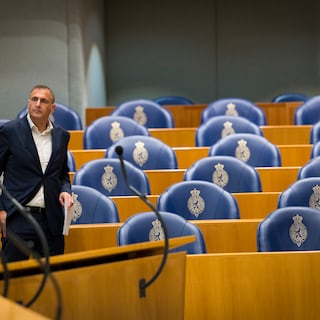
Jetten hekelt oproep tot geweld, maar houdt deur voor Markuszower nog steeds op een kier
de volkskrant · 1 day ago
Antissemitismo, o silêncio que nos vai matando Esta mesma frase, pintada noutro local, poderia ser entendida de outra forma. Aqui, na sinagoga de Lisboa, não poder ser outra coisa senão um crime de ódio racista e antissemita. Opinião de Paulo Mendes Pinto
publico · 2 days ago
Passos Coelho ao ataque aos políticos prostitutos Com André Ventura na plateia, com quem falou sobre o ritmo da actividade política, Passos Coelho encarnou uma atitude antipolíticas identitárias e dura com a imigração.
publico · 2 days ago
Em modo anti-woke, Passos diz que políticos postiços ficam prostitutos sem carácter Crítico da imigração que está a deslaçar a Europa e do movimento woke, Passos Coelho atira aos políticos que vestiram casaca do populismo: correm risco de ficar como prostitutos sem carácter.
publico · 2 days ago