Loading…
 Saturday, August 29Saturday, August 29
2 months · 4 summary articles
Today, Sunday 21 June 2026, Greece and the Netherlands mark Father’s Day against a backdrop of cultural tradition, evolving fatherhood and personal loss. In Athens, the feast is observed on the summer solstice for the first time under a national calendar that fixed the date on 21 June, aligning the holiday with the longest day of the year . Dutch fathers, meanwhile, are using the occasion to reflect on new norms: six in ten now take extended paternity leave after a birth, according to fresh polling data released today, even as stigma lingers for those who do not .
The shift in Dutch work-life balance is underscored by personal testimony. One father told NUjij that he felt “a nagging sense that I was making things much harder for my colleagues” when he took extra leave, yet he persisted because he wanted to be present for his child’s first weeks. The survey, published on Father’s Day itself, shows that while uptake has climbed steadily since 2023, four in ten fathers still forgo the additional weeks, often citing workplace pressure or financial concerns.
In Greece, the solstice date carries symbolic weight. The Ministry of Labour announced in March 2026 that 21 June would replace the movable March date, harmonising Father’s Day with the summer solstice and reinforcing its ties to light, growth and continuity . Cultural institutions have responded with exhibitions: the Domus gallery in central Athens today opens “A Journey to Fatherhood,” pairing paintings from the 1950s to the 2020s with verses that trace the emotional arc of becoming a father .
For some, the day is bittersweet. Dutch actress Tanja Jess, 59, marked Father’s Day by sharing an Instagram tribute to her father, who died of cancer three years ago. “It is a heavy day,” she wrote, “yet love remains.” Her post has resonated across Dutch social media, drawing thousands of condolences and reflections on the enduring bond between fathers and children.
Across both countries, the solstice sun will set after nearly seventeen hours of daylight, a natural reminder of the extended care and presence that modern fatherhood now seeks to embody.
Follow us for live European news

Γιορτή του Πατέρα 2026: Γιατί γιορτάζεται στις 21 Ιουνίου και πώς καθιερώθηκε
protothema · 2 months ago
Domus: Ταξίδι προς την πατρότητα Ζωγραφικά έργα διαφορετικών περιόδων και στίχοι ποιήματος συνδιαλέγονται σε ένα αφιέρωμα για την Ημέρα του Πατέρα.
protothema · 2 months ago
Tanja Jess eert overleden vader op Vaderdag: Ik hou van jou Het is een beladen dag voor Tanja Jess (59). Het is inmiddels ruim drie jaar geleden dat haar vader overleed aan de gevolgen van kanker. Op Vaderdag staat de actrice stil bij dit grote gemis en deelt ze op Instagram een liefdevolle herinnering aan hem.
rtl nieuws · 2 months ago
Catherine en kinderen feliciteren prins William met verjaardag Prins William is zondag 44 jaar geworden. Ter gelegenheid van zijn verjaardag en Vaderdag feliciteerden prinses Catherine en hun kinderen hem op sociale media.
rtl nieuws · 2 months ago
NU+ | Vaders nemen wél uitgebreid verlof na geboorte: Moest op strepen staan Zes op de tien vaders nemen aanvullend geboorteverlof op, anderen laten die kans voorbijgaan. Met Vaderdag in zicht vertellen NUjijers waarom zij ondanks stigmas wél uitgebreid verlof opnemen. "Ik had een knagend gevoel alsof ik het anderen erg moeilijk maakte."
nu.nl · 2 months ago
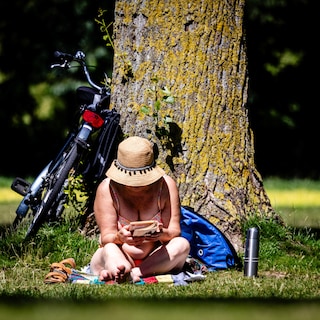
Bijna 17 uur aan daglicht op deze langste dag: wat doet dat met een mens?
parool · 2 months ago