 Monday, June 8Monday, June 8
A powerful 7.8-magnitude earthquake struck off the southern Philippine island of Mindanao on Monday morning, killing at least eight people, collapsing buildings and triggering tsunami warnings across the Pacific, including in the Philippines, Indonesia, Malaysia and Japan.
The tremor, which struck at 07:37 local time (23:37 GMT Sunday) at a depth of 33 km, had its epicentre 32 km south of Maasim, according to the U.S. Geological Survey. Authorities in General Santos City reported at least five fatalities, while police in nearby regions confirmed three additional deaths, bringing the toll to eight. Rescue teams are still searching for survivors amid strong aftershocks, including a 6.4-magnitude quake that rattled Mindanao shortly after the main event.
Tsunami warnings were issued within minutes of the quake, with authorities in the Philippines, Indonesia and Malaysia ordering coastal evacuations. The Pacific Tsunami Warning Center initially forecast waves of up to three metres in parts of the Philippines, though these warnings were later downgraded as the threat subsided. By midday local time, authorities had lifted the tsunami alert for the Philippines, though officials in Japan and Indonesia maintained lower-level advisories as a precaution.
The quake caused significant damage in General Santos City, where buildings collapsed and roads were blocked by debris. “Many buildings were affected, but I cannot enumerate them now because we are busy with ongoing rescues,” said Master Sergeant Robert Dagon of the General Santos City police . Video footage showed panicked schoolchildren running from classrooms as the ground shook, while residents along the coast fled to higher ground.
The disaster comes as the Philippines begins its academic year, adding to the chaos. Schools in affected regions were closed, and government offices urged residents to prioritise safety over property. “Your life is more important than anything you leave behind,” said a public safety announcement broadcast across the region .
Geologists warned that aftershocks could continue for days, complicating rescue efforts. The quake’s location along the Pacific Ring of Fire, a seismically active zone, underscores the region’s vulnerability to such events. While the immediate tsunami threat has passed, authorities are bracing for further assessments of structural damage and potential landslides in mountainous areas.
International aid agencies have pledged support, with the Red Cross preparing emergency supplies for displaced families. The full extent of the disaster may take days to emerge as communications in remote areas remain disrupted.

Philippines verifying reports of at least five deaths after magnitude 7.8 quake reut.rs/3PKkEaw
bluesky bot · about 2 hours ago

Alerte de tsunami după un cutremur cu magnitudinea 7,8 în Filipine. Mai multe victime în urma puternicului seism Puternicul cutremur cu magnitudinea de 7,8, care a avut loc luni dimineață, în largul insulei Mindanao, din sudul Filipinelor, a declanșat alerte de tsunami în Pacific, relatează AFP și Reuters. Au fost emise alerte de tsunami în Filipine, Indonezia și de către Sistemul american de avertizare împotriva tsunami-urilor, iar locuitorii din zonele de coastă au …
hotnews.ro · about 2 hours ago

Tsunamivarningar efter skalv utanför Filippinerna En kraftig jordbävning med magnituden 7,8 har inträffat utanför södra Filippinernas kust, enligt USA:s geologiska myndighet USGS. Upp till en meter höga tsunamivågor har nått kusten i Filippinerna, och det finns tsunamirisk i flera andra länder. Minst tre personer har mist livet och flera skadats, uppger polisen.
dagens nyheter · about 2 hours ago
Tsunamiwarnung nach schwerem Erdbeben vor den Philippinen Nach einem Erdbeben der Stärke 7,8 wurden Tsunamiwarnungen für die Philippinen, Indonesien und sogar Japan ausgesprochen. Bei dem Erdbeben sind Menschen gestorben und es gibt Berichte über zahlreiche Verletzte.
die presse · about 2 hours ago
Schäden auf Mindanao: Tsunami-Warnung nach Erdbeben auf den Philippinen aufgehoben
die zeit · about 2 hours ago
Cutremur cu magnitudinea de 7,8 în Filipine, urmat de alertă de tsunami. Locuitorii au fugit spre zonele înalte Un cutremur puternic, cu magnitudinea de 7,8, a zguduit luni dimineață sudul Filipinelor, provocând panică în rândul populației și declanșând alerte de tsunami în mai multe regiuni de coastă.
adevarul · about 2 hours ago
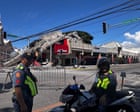
Strong earthquake strikes southern Philippines with tsunami warnings issued People told to prepare for waves of up to three metres in parts of the Philippines, with smaller waves possible in Indonesia and MalaysiaA magnitude 7.8 earthquake shook part of the southern Philippines early on Monday, sparking tsunami warnings on some regional coasts, collapsing buildings and killing at least three people.Many buildings were affected, but I cannot enumerate them now because we are busy with ongoing rescues, Master Sergeant Robert Dagon of the General Santos City police told Agence France-Presse. Continue reading...
theguardian · about 2 hours ago

Philippine police says at least three dead from magnitude 7.8 earthquake reut.rs/3Q7W17x
bluesky bot · about 3 hours ago
Major quake off Philippines kills at least four, triggers tsunami warnings A powerful 7.8-magnitude earthquake rocked the southern Philippines on Monday, killing at least four people, toppling buildings and prompting tsunami warnings across parts of Southeast Asia and the Pacific, as authorities ordered coastal residents to evacuate and rescuers searched for victims amid strong aftershocks. 👉 Read more:
telegram bot · about 3 hours ago

Alerte au tsunami levée après un puissant séisme aux Philippines : "Votre vie est plus importante que tout ce que vous laissez derrière vous" Un puissant séisme de magnitude 7,8 a fait au moins trois morts et provoqué leffondrement de nombreux bâtiments dans le sud des Philippines lundi matin, jour de la rentrée scolaire dans le pays, déclenchant une alerte au tsunami dans le Pacifique qui est désormais levée. ...
la libre · about 3 hours ago
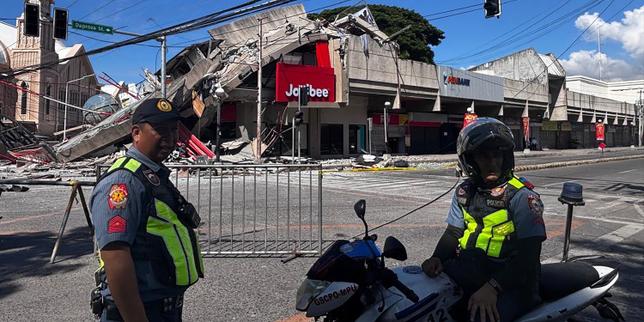
Aux Philippines, trois morts dans un puissant séisme, alerte au tsunami dans le Pacifique Le tremblement de terre de magnitude 7,8 a provoqué leffondrement de bâtiments dans lîle de Mindanao, dans le sud du pays. Des ordres dévacuations sont en cours pour risque de tsunami dans les régions côtières, ainsi quaux Célèbes, en Indonésie, et en Malaisie.
le monde · about 3 hours ago
Tsunami-Warnung aufgehoben: Starkes Erdbeben erschüttert die südlichen Philippinen Zunächst wurden bis zu drei Meter hohe Wellen befürchtet – jetzt wurde die Tsunami-Warnung für die Philippinen wieder aufgehoben. Aber das Ausmaß der Schäden nach dem schweren Beben ist noch unklar.
tagesspiegel · about 3 hours ago
Cutremur puternic în Filipine, urmat de alertă de tsunami Un cutremur puternic, cu magnitudinea de 7,8, al cărui epicentru s-a situat în largul coastelor de sud ale Filipinelor, urmat de o replică de cu magnitudinea 6,1, a provocat moartea a cel puțin unei persoane şi a declanşat o alertă de tsunami în Pacific, au anunţat autorităţile, notează AFP.
digi24 · about 3 hours ago
Philippinen: Tsunamiwarnung nach schwerem Beben vor den Philippinen Vor der Insel Mindanao wurde ein Erdbeben der Stärke 7,8 registriert. Für Japan gab es eine Tsunamiwarnung. Auch in vier weiteren Ländern sind extreme Wellen möglich.
die zeit · about 3 hours ago
Danes warned of tsunami risk in Indonesia The Ministry of Foreign Affairs warns Danes in Indonesia about tsunami risks following an earthquake. The warning covers Gorontalo, East Kalimantan, North Maluku, Southeast Sulawesi, and North Sulawesi. A magnitude 7.8 earthquake struck off the Philippines second-largest island, Mindanao, followed by a magnitude 6.1 aftershock. The US National Oceanic and Atmospheric Administration (NOAA) warned of […]
cphpost · about 3 hours ago
7.8 magnitude earthquake rocks the Philippines, triggering tsunami warnings across the region The strongest earthquake to hit the Philippines this year was centered at sea and caused damage in a key coastal city, knocking down power and setting off 1-metre tsunami waves along nearby coasts, officials said.
euronews · about 3 hours ago
A strong magnitude 7.8 earthquake that struck off the southern Philippine island of Mindanao damaged buildings in General Santos City, as authorities are verifying reports of at least five deaths in the southern city.
bluesky bot · about 3 hours ago
Ausmaß noch unklar: Tsunami-Warnung nach schwerem Erdbeben vor den Philippinen Ein starkes Erdbeben erschüttert die südlichen Philippinen. Die Behörden warnen vor möglichen Tsunami-Wellen und rufen Menschen an den Küsten zur Flucht auf. Berichte über Schäden liegen bereits vor.
tagesspiegel · about 3 hours ago
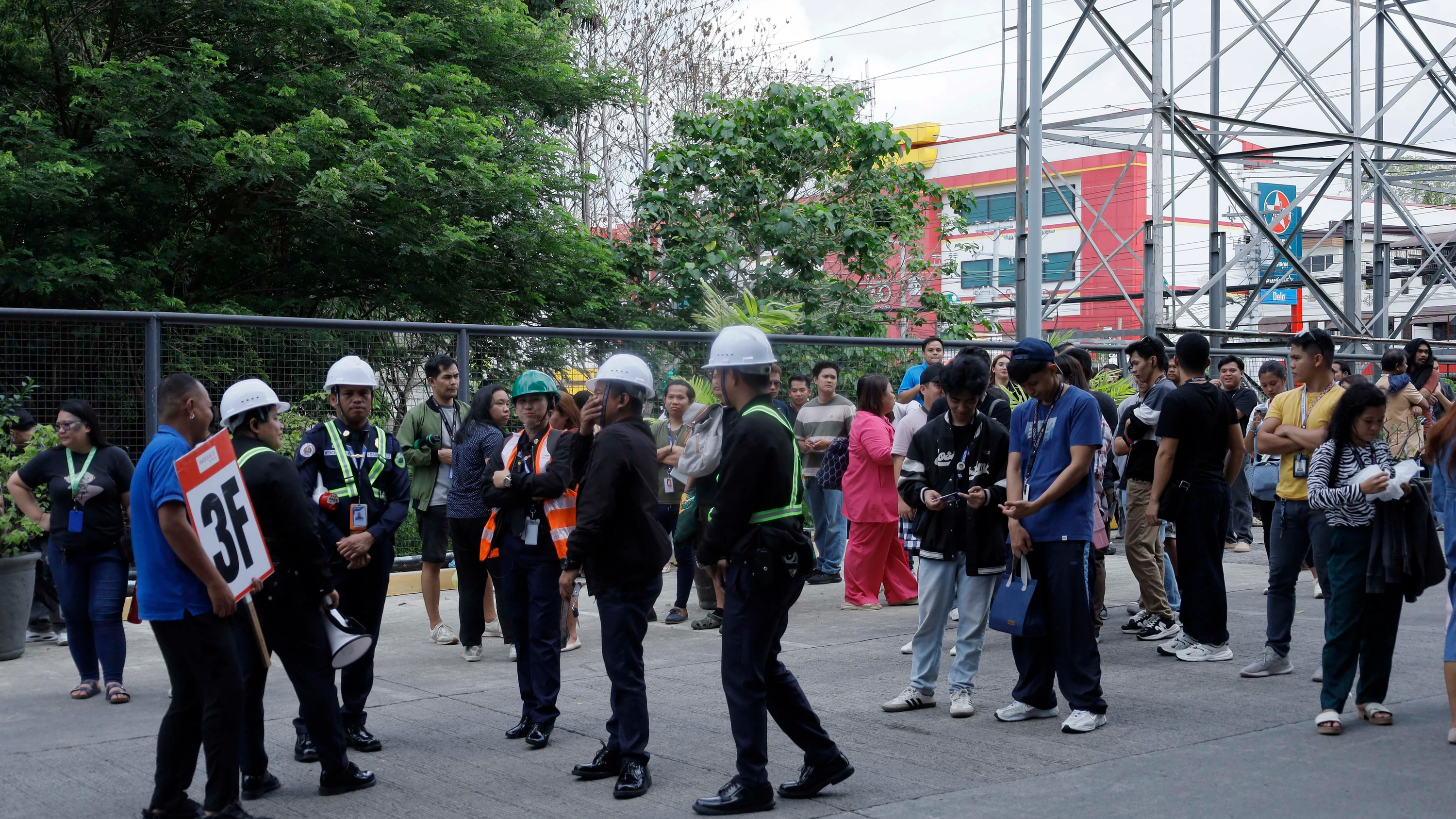
Tsunami-Warnung: Schweres Erdbeben auf den Philippinen Erneut bebt am Pazifischen Feuerring die Erde. Die Behörden auf den Philippinen und in Indonesien warnen vor einem Tsunami - und rufen die Menschen auf, sich in Sicherheit zu bringen.
faz · about 3 hours ago
Major quake off Philippines kills three, triggers tsunami warnings A 7.8-magnitude earthquake struck the southern Philippines on Monday, killing at least three people, collapsing buildings and sparking tsunami warnings across the region.
france24 · about 3 hours ago

Powerful Earthquake Rocks Southern Philippines The 7.8 magnitude quake struck off the coast of the island of Mindanao, prompting tsunami warnings.
wsj · about 4 hours ago