
EU surveillance program flags minors for non-criminal activity, German data shows

An investigation has revealed that the European Union's mass surveillance program, designed to protect children, is disproportionately targeting minors and flagging non-criminal activities. According to German police data obtained by investigators, 48 of the alerts generated by the system were not actual crimes, and 40 targeted minors .
The findings have raised concerns about the scope and impact of the EU's surveillance measures, which were implemented with the stated goal of protecting children from harm. Critics argue that the program is being used to monitor minors for non-criminal behavior, infringing on their privacy rights.
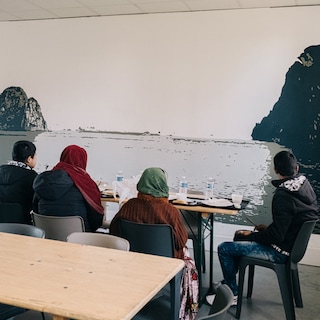
Meanwhile, in the Netherlands, there has been a significant increase in the number of alarming disappearances of unaccompanied minors, according to a report published on July 13. The report states that the number of such cases has risen sharply, sounding alarm bells for child protection agencies .
The surveillance program, known as Chat Control, has come under fire for its broad scope and potential to infringe on privacy rights. The investigation found that Thorn, a company founded by actor Ashton Kutcher, played a role in drafting the legislation.
The increase in disappearances of unaccompanied minors in the Netherlands is particularly concerning, as these children are often vulnerable to exploitation and abuse. Authorities are calling for increased measures to protect these children and prevent them from going missing.
The issues facing young people in Europe are further highlighted by demographic trends. In Romania, for example, the population is declining by 100,000 people per year, according to the country's leading demographer. Vasile Ghețău, speaking at a recent event, said that there are no solutions to the country's demographic decline, with the number of births at 150,000 per year and deaths at 250,000 .
This demographic decline is part of a broader trend in Europe, where birth rates are falling and populations are aging. The challenges of an aging population and low birth rates are putting pressure on social services and economic growth across the continent.
As Europe grapples with these challenges, the focus on young people is becoming increasingly important. From surveillance and protection to demographic trends, the issues facing Europe's youth are complex and multifaceted.
The revelation about the EU's surveillance program has sparked a debate about the balance between protection and privacy. Critics argue that the program is too broad and lacks sufficient oversight, while supporters say that it is necessary to protect children from harm.
The investigation into the surveillance program is ongoing, and officials have promised to review the findings and take appropriate action. However, the issue is likely to remain contentious as Europe continues to grapple with the challenges of protecting its young people in an increasingly digital world.
Follow us for live European news
- 2
- 2
- 2
- 1
- 1
- 1
- 1
- 1
- 1
- 1
- 1
- 1
- 1
5 further sources not geolocated
Articles

Wachtlijsten voor migranten die zwemles willen puilen uit Steeds meer volwassenen met een migratieachtergrond willen leren zwemmen. Tessa Laan richtte daarom Swimpact op, waar vluchtelingen, asielzoekers en ongedocumenteerden zwemles krijgen. De vraag is zo groot dat veel deelnemers lang op een plek moeten wachten.
rtl nieuws · about 4 hours ago
Klager over Dao er faldet fra 15.000 til tæt på nul
dr.dk · about 4 hours ago

Duizenden asielzoekers leven door verstopping al vele jaren in azc
trouw · about 4 hours ago
Army general left classified maps on a train in Poland, watchdog finds
gdeltproject.org · about 5 hours ago

El despegue de China Segunda potencia del mundo por dimensión de su PIB. Leer
expansion · about 5 hours ago
Thousands retrace Death March route at Srebrenica anniversary Thousands of mourners from around the world completed the annual Peace March through eastern Bosnia and gathered at the Potocari Memorial Cemetery to bury 10 newly identified victims, retracing the perilous route survivors took to escape the 1995 genocide while demanding the atrocity never be forgotten.
yenisafak · about 5 hours ago
Jagland: Europe is a Peace Continent - The Nordic Page
gdeltproject.org · about 5 hours ago
Avem o scădere a populației de 100.000 de locuitori pe an. Cel mai important demograf al țării: „Nu văd soluții Nu există o soluție la declinul demografic al României, de 80.000 – 100.000 de persoane anual, în condițiile în care numărul de născuți este de 150.000, iar cel al deceselor de un sfert de milion, a spus demograful Vasile Ghețău, în cadrul unui eveniment de specialitate. „Nu văd soluții la declinul demografic al României. Nu …
hotnews.ro · about 5 hours ago
AI is not enough to arrest Chinas decline There are other, more powerful forces weighing on the countrys economy
financial times · about 5 hours ago
Topul celor mai „pașnice țări de pe glob. Primul loc, ocupat de același stat în ultimii 19 ani. Unde se află România Rata scăzută a criminalității, coeziunea socială puternică și peisajele naturale uimitoare determină alcătuirea unui top – Indicele Global al Păcii. Națiunea care ocupă primul loc în 2026 nu abandonează această poziție privilegiată de nu mai puțin de 19 ani.
digi24 · about 5 hours ago
Military Archives - The Last Refuge
gdeltproject.org · about 5 hours ago
Chinas Green Great Wall tames desert growth, but scientists warn the fight is not over For half a century, workers in northern China have been using a technique called "straw checkerboards" to combat desertification
abcnews · about 5 hours ago
Verpflichtender Unterricht: Schulministerium beschafft tausende Reanimationspuppen
die zeit · about 6 hours ago
Secretul „zonei albastre din Europa: locul unde oamenii ajung la 100 de ani de cinci ori mai des decât în restul continentului Într-o regiune izolată din Sardinia, numărul persoanelor care ajung la vârsta de 100 de ani este de aproximativ cinci ori mai mare decât în restul Europei. Cercetătorii care au studiat așa-numita „zonă albastră au descoperit că secretul longevității nu ține doar de alimentație sau genetică, ci și de curiozitate, reziliență emoțională și o viață socială activă.
digi24 · about 7 hours ago
Grenzkontrollen: Zahl illegaler Einreisen aus Polen deutlich gesunken
die zeit · about 7 hours ago
Protest on Londons Tower Bridge demands release of Dr Hussam Abu Safia Pro-Palestine activists unfurled a giant Palestinian flag and a banner on Londons Tower Bridge.
aljazeera · about 7 hours ago

Bhutan is offering families cash incentives to have more children as the tiny Himalayan kingdom grapples with a nosediving birthrate and a growing exodus of young people seeking opportunities abroad. u.afp.com/SKHR
bluesky_AFP English · about 7 hours ago

How Indian scientists are mapping the brains last frontier
news.yahoo.com · about 7 hours ago
Why Indias education system gets poor marks from millions of students Huge disparities and brutally competitive exams mean only a select few secure a good degree and a well paid job
financial times · about 8 hours ago
Aantal onrustwekkende verdwijningen van minderjarigen op de vlucht gestegen: Dit zou alle alarmbellen moeten doen afgaan
de morgen · about 8 hours ago
Western Europe is sleepwalking toward civilizational suicide
gdeltproject.org · about 9 hours ago
Ägypten: Archäologen entdecken 3.000 Jahre alte Grabstätte
orf.at · about 9 hours ago

New era for Gibraltar with removal of 118-year-old border controls with Spain
news.yahoo.com · about 9 hours ago

According to an AFP tally, the list of countries moving to ban social media for children now stretches to more than 20, including five where restrictions are already in force. u.afp.com/SKHa
bluesky_AFP English · about 9 hours ago
El Gobierno oculta cuántos inmigrantes regularizados se han apuntado al paro mientras los registros afloran hasta 20.000 La regularización no exige una oferta laboral, por lo que los extranjeros pueden inflar el desempleo Leer
elmundo · about 9 hours ago

Calls for radical action as Burnham told homelessness in England may rise 25 by 2030
bluesky_The Guardian · about 10 hours ago

Home Office to spend £250m on protecting Jewish communities in England and Wales
bluesky_The Guardian · about 10 hours ago
Dypt inne i fjellet øver de på det verste som kan skje «En krig er dessverre ikke lenger urealistisk,» konstaterer den tyske generalmajoren på krigføringssenteret. Nå er det alvor.
nrk · about 10 hours ago

Sarcelles: Europes Jews Cannot Become the Barometer of Our Security Failures #Europe
mastodon bot · about 10 hours ago
Czech Government Considers Making Kindergarten Compulsory from Age Four The Czech government is considering extending compulsory preschool education from one year to two, meaning children could be required to attend kindergarten from the age of four. Education Minister Robert Plaga (ANO) said the proposal aims to provide earlier support for children who may need additional help before starting primary school. Schools need more psychologists, special educators and other experts who can support both children and teachers. This support must begin as early as possible, already in kindergarten, Plaga said in a video published on Facebook. He added that early intervention can improve childrens chances of success later in life. Currently, preschool education is compulsory in Czechia only for children who turn five before the start of the school year. The minister argues that earlier attendance could help children from disadvantaged backgrounds or those facing difficult situations at home. A childs more challenging behavior is not always caused by a lack of interest in education. In some cases, children are dealing with difficult circumstances and need support before their problems become more serious, Plaga said. He added that helping children develop their abilities or overcome difficult periods represents a long-term investment in society. Lack of kindergarten places remains a challenge... The post Czech Government Considers Making Kindergarten Compulsory from Age Four appeared first on Prague Morning.
prague morning · about 10 hours ago