
Latvias airBaltic faces scrutiny after six-year-old child seated alone on flight
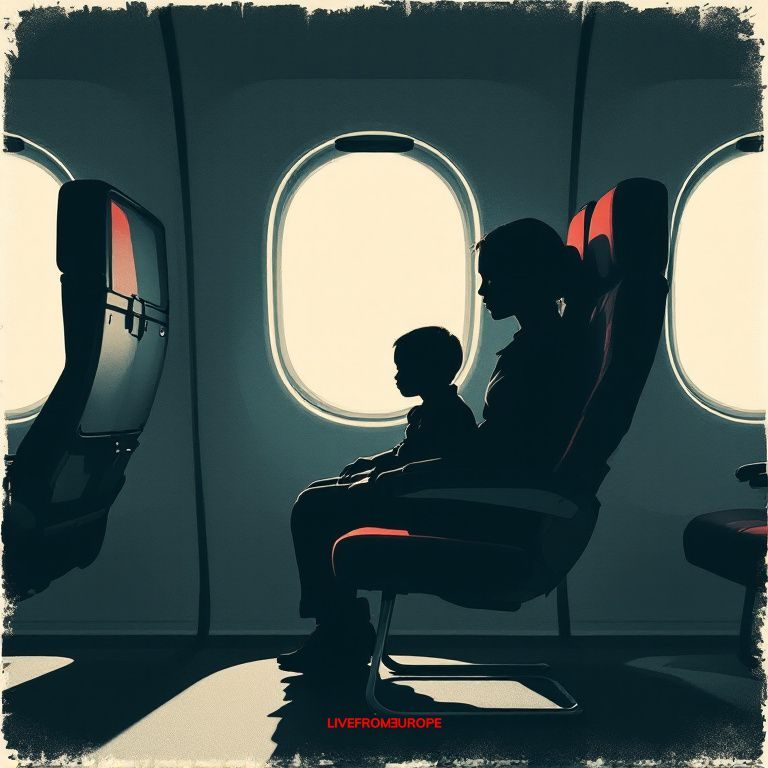
Latvia’s airBaltic faces scrutiny after assigning a six-year-old child a separate seat on a flight, prompting renewed debate over airline seating policies and passenger rights. The incident, reported by Latvian Television on July 5, occurred on a recent airBaltic service and has drawn attention to the airline’s handling of family seating arrangements. Starting next year, European regulations will prohibit airlines from charging extra fees for seat selection, with only infants guaranteed a seat alongside their parents. The case highlights the gap between regulatory changes and their practical implementation in the aviation sector.
The incident involved a family traveling with their six-year-old child, who was assigned a seat separately from their parents on an airBaltic flight. Latvian Television’s report did not specify the flight’s route or date, but confirmed the child was seated alone. The airline has not publicly addressed the incident, and airBaltic did not respond to requests for comment. The case underscores broader concerns about airline policies on family seating, particularly as new EU rules aim to simplify and standardize passenger rights.
The upcoming European directive, set to take effect in 2027, will ban airlines from charging additional fees for seat selection, a practice that has long been criticized for exploiting families traveling with children. Under the new rules, only infants under two years old will be exempt from seat assignment requirements, ensuring they can remain on a parent’s lap during the flight. The directive is part of a broader effort by the EU to enhance passenger protections and reduce hidden costs in air travel.
The incident at airBaltic comes amid heightened scrutiny of airline practices across Europe. Consumer advocacy groups have long argued that seat selection fees disproportionately affect families, forcing parents to pay premiums to sit together. The European Consumer Organisation (BEUC) has previously called for stricter regulations to prevent airlines from separating families or charging excessive fees for basic services. The airBaltic case may prompt further action from Latvian authorities or the EU, particularly if additional complaints emerge.
For airBaltic, the incident risks damaging its reputation as a family-friendly carrier. The airline, which operates a fleet of Airbus A220 and Boeing 737 aircraft, serves destinations across Europe and beyond. While the airline has not commented on the specific incident, its handling of the situation could influence future passenger trust. The case also raises questions about the airline’s training and policies for staff responsible for seat assignments, particularly during high-demand travel periods.
As the EU moves toward implementing the new seating rules, airlines will need to adapt their policies to comply with the directive. The airBaltic incident serves as a reminder of the challenges airlines face in balancing operational efficiency with passenger welfare. For families traveling with children, the case highlights the importance of verifying seat assignments at the time of booking and advocating for clearer policies from airlines. The incident may also prompt further regulatory oversight to ensure that airlines prioritize passenger comfort and safety in seating arrangements.
Follow us for live European news
Articles

Inside the Tech Stack Powering Todays Precision Engineering - The Baltic Times Precision engineering now rests on a connected chain of measurement hardware, inspection software, calibrated workflows, and experienced judgmen......
baltic times · about 4 hours ago
How B2B Market Research Reduces Risk Before You Launch - The Baltic Times A launch can look solid inside a planning meeting and still miss the mark once buyers weigh in. Business purchases move through longer review cy......
baltic times · about 4 hours ago
RIX Riga Airport recognized as the Best European Airport in the 5–10 Million Passenger Category - The Baltic Times RIX Riga Airport has received one of the most prestigious awards in the European aviation industry – the EUROPE Best Airport Awards......
baltic times · about 6 hours ago
EM&E Group evolves artillery with its guided ammunition: ALKON 122 and ALKON 122 LASER - The Baltic Times In contemporary combat scenarios, the difference between strategic success and operational failure lies almost exclusively in precision. Convent......
baltic times · about 6 hours ago
Inclusive by Design: NEO-CYCLEs Commitment to Women in Deep Tech - The Baltic Times Gender equality as continuous practise of the project Despite making up over half of EU higher ......
baltic times · about 6 hours ago
Latvias Prime Prometics surpasses 100-million-euro mark - The Baltic Times In an industry long focused on youth, Latvias Prime Prometics has achieved remarkable success by doing the opposite. The beauty brand, fo......
baltic times · about 6 hours ago
5 Cross-Border Data Risks for Baltic Firms in London - The Baltic Times Opening a London office can unlock new markets, investors, and talent. But it can also quietly multiply your data protection exposure overnight.......
baltic times · about 6 hours ago
How offices shape urban life: SEB Pop-up housing market at SATEKLES BIZNESA CENTRS - The Baltic Times The role of the workplace has changed significantly in recent years. Whereas offices were once primarily spaces for daily work, companie......
baltic times · about 6 hours ago
MiCA in 2026: How the Baltics Became Europes Gateway for Crypto Licensing - The Baltic Times In 2026, the Baltic states have emerged as the strategic hub for international fintech companies seeking to secure a cryptocurrency exchange ...
baltic times · about 6 hours ago
Lithuanias KRS Director Paulius Grigas: Construction is not about bricks or AI – it is still all about people - The Baltic Times Having experienced the largest growth surge in the companys history and doubled its revenues, KRS, one of Lithuanias fastest-growing......
baltic times · about 6 hours ago
Druskininkai Mayor Ricardas Malinauskas: Our resort never stops reinventing itself - The Baltic Times Under the leadership of Ricardas Malinauskas, the long-serving mayor, Druskininkai has transformed from a traditional sleepy spa town into one o......
baltic times · about 6 hours ago
Division is their weapon: why the Baltics and the Indo-Pacific share one war - The Baltic Times On 10 September 2025, at least 19 russian drones of an Iranian design crossed deep into Poland. It was no accident. It was an assessment of how ......
baltic times · about 6 hours ago
Tallinns T1 Center secured additional financing of 17 million euros from LHV Pank - The Baltic Times OÜ Lintgen, the operator of the T1 Center, and AS LHV Pank renewed the previous cooperation agreement, under which the bank will fi......
baltic times · about 6 hours ago
AI Is Entering Organisations from the Bottom Up - The Baltic Times For some, artificial intelligence (AI) is the latest technological trend. For others, it is simply another buzzword. But for many employ......
baltic times · about 6 hours ago
Vegvisir Secures Venture Backing to Become the Operating System for Allied Warfare - The Baltic Times Estonian defence tech company secures backing from the Baltic Sea regions most active defence-focused VC fund, as it accelerates de......
baltic times · about 7 hours ago
AgroCredit Latvia expands its activities – financing is now also available to foresters throughout Latvia - The Baltic Times The financial service provider SIA "AgroCredit Latvia" is expanding its activities and in the future will offer financing solutions no......
baltic times · about 7 hours ago
DIGMATIX Expands into Central Europe with the Acquisition of Czech and Romanian Technology Companies - The Baltic Times DIGMATIX, the Latvian technology company formerly known as Digital Mind, has acquired two leading Microsoft Business Applications partners in Ce......
baltic times · about 7 hours ago
Cambridges Baltic Geopolitics Programme: strengthening understanding in a changing Europe - The Baltic Times The University of Cambridges Centre for Geopolitics is a leading research institution focused on international security and strategic affai......
baltic times · about 7 hours ago
Post-Pandemic Tourism in the Baltics: What Has Changed? - The Baltic Times As some regions around the world grapple with declining tourism, the Baltics are experiencing a surge in tourist traffic. In fact, tourism now g......
baltic times · about 7 hours ago
New Residential Development in Āgenskalns Secures EUR 3.4 Million Financing from Signet Bank - The Baltic Times Signet Bank has provided EUR 3.4 million in financing to SIA L 24 for the construction of two identical three-storey residential apartme......
baltic times · about 7 hours ago
Baltic households hold tens of billions in bank deposits. The return: under 2 - The Baltic Times Households across the Baltic states hold tens of billions of euros in bank deposits — pools that are still growing, in some cases at doubl......
baltic times · about 7 hours ago
European Brand TATUUM Continues Baltic Expansion with the Opening of Its First Store in Lithuania - The Baltic Times European affordable premium fashion brand TATUUM continues its expansion across the Baltic region by opening its first store in Lithuani......
baltic times · about 7 hours ago
The Red Jackets launch the Exporters Skills Fund to strengthen Latvias export competitiveness and human capital - The Baltic Times The Latvian Exporters Association The Red Jackets has launched the Exporters Skills Fund, an initiative aimed at crea......
baltic times · about 7 hours ago
A record year for Škoda Group: new orders worth almost € 1.8 billion - The Baltic Times Škoda Group has completed one of the most significant years in its modern history. The year 2025 confirmed the Groups retu......
baltic times · about 7 hours ago
Worlds Best Sidecar and Quad Riders Set for Madona in One Month - The Baltic Times In just one months time – 25–26 July – the Smeceres Sils motocross track in Madona, Latvia, will welcome the wo......
baltic times · about 7 hours ago
Latvijas Banka Publishes Its Climate-Related Financial Disclosures Report - The Baltic Times Latvijas Banka has released its annual report on Climate-Related Disclosures for its non-monetary policy portfolios, reaffirming its commitment ......
baltic times · about 7 hours ago
Landscapes of Latvias Eastern Border in Reinis Hofmanis Exhibition Borderland at ISSP Gallery - The Baltic Times From 10 July to 3 September, ISSP Gallery presents Borderland, a solo exhibition by photographer Reinis Hofman......
baltic times · about 7 hours ago
Latvian Coffee Brand Rocket Bean Café Ranked Among Europes Best - The Baltic Times Latvian coffee roaster and specialty coffee brand Rocket Bean has been included in The Worlds 100 Best Coffee Shops – Europ......
baltic times · about 7 hours ago
Business Risk Strategies for Baltic Companies - The Baltic Times Baltic companies operate in a region shaped by trade links, digital growth, energy exposure, skilled labor constraints, and proximity to wider E......
baltic times · about 7 hours ago
Vytautas Kasiulis Museum of Art opens the artistic universe of Nijolė Šivickas de Mockus brought from Columbia to Lithuania - The Baltic Times Thursday, 2nd July at 6 pm, the Vytautas Kasiulis Museum of Art (A. Goštauto St 1, Vilnius) of the Lithuanian National Museum of Art open......
baltic times · about 7 hours ago