Loading…
 Saturday, August 29Saturday, August 29
3 months · 7 summary articles
NATO leaders gathering in Ankara on Monday will confront a summit dominated by two existential questions: whether Europe can truly replace America’s shrinking role in the alliance and whether Donald Trump will accept the answer. With the 32-member summit opening in Turkey on 7 July, diplomats have finalised a declaration that labels Russia a direct threat to Euro-Atlantic security and pledges €70 billion ($80 billion) in annual military aid to Ukraine for 2026 and 2027, according to NATO ambassadors on Friday. The aid package, already agreed in draft texts, is designed to demonstrate that Europe has assumed Washington’s financial burden after Trump halted US support for Kyiv.
The pledge, which includes €30 billion each year from an EU loan and national commitments, was nearly derailed by Italy but approved by ambassadors ahead of the summit. “The financing from the European Union loan and the pledges they have made already mean they are on course to reach the 70 billion euros in each year,” a diplomat told AFP . Ukrainian President Volodymyr Zelensky will attend a leaders’ dinner on Tuesday but will not take part in the main sessions, reflecting NATO’s caution to avoid provoking Trump as his administration seeks to end the war.
Europe’s push for strategic autonomy is colliding with Trump’s demand for greater burden-sharing. NATO Secretary-General Mark Rutte has spent weeks courting the US president, highlighting a €1 trillion increase in European and Canadian defence spending since 2017. “I want to show you what this president was able to achieve,” Rutte told reporters in late June, displaying boards emblazoned with “The Trump Trillion” . Yet Trump’s recent threats to reduce NATO support—including his claim that it is “ridiculous” for the US to maintain current levels—have left European capitals bracing for confrontation. “You can never eliminate the Trump factor,” a senior diplomat warned. “If he wakes up on the wrong side, that’s it.”
The summit’s agenda reflects Europe’s attempt to square the circle. French President Emmanuel Macron will hold bilateral talks with Turkish counterpart Recep Tayyip Erdoğan, while German Chancellor Friedrich Merz has told Trump that Berlin is ready to take on greater responsibility. “Germany is prepared to take on greater responsibility for European security,” Merz said . Yet Macron has ruled out replacing US capabilities, instead proposing a new NATO capability model. “France is not going to replace US capabilities,” his office stated, “but European allies need to consider a new capability model for NATO” .
Turkey’s Erdoğan, meanwhile, stands to gain geopolitical capital from hosting the summit. Despite domestic crackdowns ahead of the gathering—including the arrest of 225 activists—Ankara has positioned itself as a bridge between Trump and European leaders. “Erdoğan will use the NATO summit as a showcase for Turkey’s burgeoning military industry,” noted *Expansión* . The alliance’s cohesion will be tested by budget disputes, with Spain resisting calls to raise defence spending and Poland warning that failure to meet the 5% GDP target could fracture NATO into “two or three parts” .
As leaders arrive in Ankara, the summit’s success hinges on whether Europe’s financial pledges can temper Trump’s scepticism—or whether his demands for unilateral concessions will overshadow the alliance’s future. “The NATO chief wants to avoid public disputes and showcase allied unity,” said Claudia Major of the German Marshall Fund . Yet with Trump’s unpredictability and Europe’s fragile consensus, the alliance faces its most precarious moment since the Cold War.
Follow us for live European news
4 further sources not geolocated

„Du kannst niemals den Trump-Faktor ausschalten – Die Nato setzt auf einen historischen Schritt Vor dem Nato-Gipfel in Ankara fürchten europäische Diplomaten die Launen des US-Präsidenten. Damit die unabhängiger von den USA wird, sind bereits konkete Schritte geplant. Vor allem auf Deutschland kommt eine Menge zu.
welt.de · about 2 months ago

Ankara tightens security, air traffic for NATO summit Türkiye has ramped up security in Ankara ahead of the July 7-8 NATO summit, deploying more than 56,000 police and gendarmerie personnel. Temporary flight restrictions will be in place at Esenboğa Airport, with exemptions for aircraft carrying foreign leaders and official delegations.
yenisafak · about 2 months ago
Tranziția spre NATO 3.0: SUA vor prezenta la Ankara mai multe măsuri care să atenueze impactul reducerii forțelor din Europa Întrucât se ridică din ce în ce mai multe întrebări despre viitorul NATO, înaintea summitului cheie de la Ankara, de pe 7-8 iulie, e de așteptat ca Washingtonul să folosească evenimentul pentru a prezenta o serie de inițiative menite să atenueze impactul politic al unei amprente reduse a SUA în Europa, transmite Euractiv.
digi24 · about 2 months ago

Comment of the Embassy of #Russia in the Netherlands to Izvestia newspaper (3 July 2026) Military infrastructure deployment in the Netherlands in the interests of #Ukraine and #NATO • We note the ongoing modernisation of local air bases, military logistics facilities and transport network. • Capacities for hosting allied forces and conducting joint exercises are being expanded.
mastodon bot · about 2 months ago
Ministry of Defense will not disclose which additional air defense systems will be deployed for operational security reasons - The Baltic Times RIGA - The Ministry of Defense will not disclose at this time, for operational security reasons, exactly which additional air defense systems wi......
baltic times · about 2 months ago
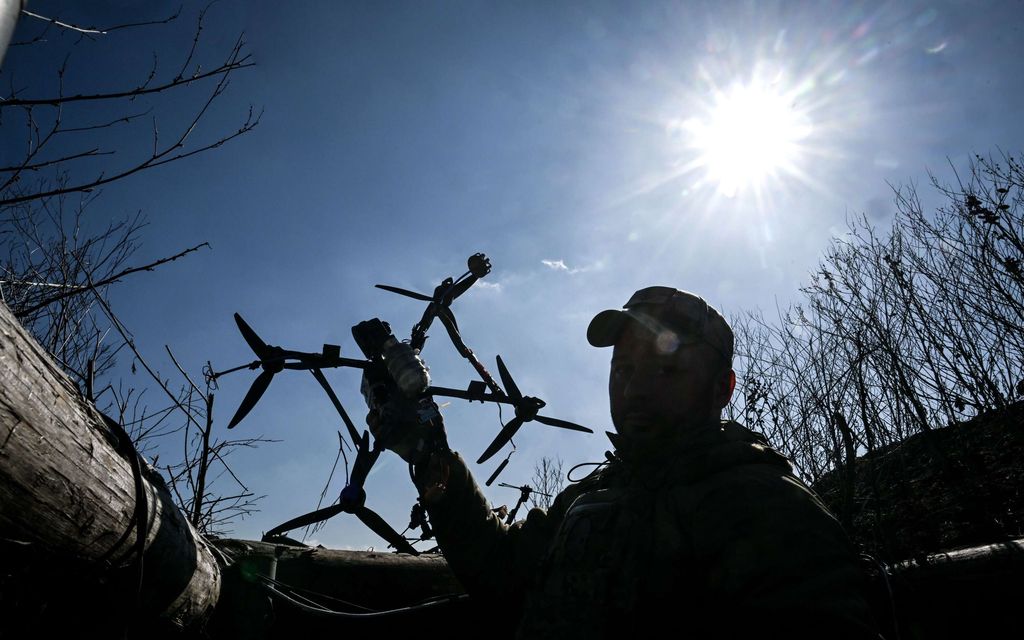
IL:n tiedot: Nokian 5G-teknologialla ohjataan Ukrainan drooneja – USA ja useat Nato-maat haluavat sen käyttöönsä
iltalehti · about 2 months ago
Trump set to put NATO unity to the test at Turkey summit
gdeltproject.org · about 2 months ago
Outgoing UK PM Starmer says successor cannot spend less time on foreign affairs Outgoing Prime Minister Keir Starmer said whoever succeeds him would have to devote as much time to international crises and diplomacy as he did, rejecting suggestions Britains next leader could focus more heavily on domestic issues. Starmer, who announced last month that he would step down after two years in office, said in a BBC […]
cyprus mail · about 2 months ago
Turkish defense products to be showcased at NATO summit Türkiyes Defense Industries Secretariat will host a high-level reception at Turkish Aerospace Industries as part of the NATO Defense Industry Forum. Indigenous air platforms will perform demonstration flights, and senior allied officials will attend.
yenisafak · about 2 months ago
Belarusian president calls for new stage in Myanmar ties Belarusian President Alexander Lukashenko called for launching a "new stage" in relations with Myanmar during talks with his counterpart Min Aung Hlaing in Naypyidaw, saying the well-being of their peoples would anchor bilateral cooperation and that the two countries should build ties serving as a regional example.
yenisafak · about 2 months ago
Erdogan, Trump share strong will to lift CAATSA sanctions: Fidan Turkish Foreign Minister Hakan Fidan said on Thursday that President Recep Tayyip Erdogan and US President Donald Trump share a "strong will" to lift sanctions imposed on Türkiye under the Countering Americas Adversaries Through Sanctions Act (CAATSA), adding that both governments are taking steps to resolve the issue.
yenisafak · about 2 months ago
Former NATO chief proudest of Sweden, Finland accession Former NATO Secretary General Jens Stoltenberg has told Anadolu that Sweden and Finlands entry into the alliance was the decision he is most proud of during his decade‑long tenure. He thanked President Erdoğan for his cooperation and said his main expectation for the Ankara summit is to demonstrate unity.
yenisafak · about 2 months ago
Belgian defense minister: NATO needs Türkiye, praises Turkish tech Belgian Defense Minister Theo Francken has told Anadolu that Türkiye is a very important ally and should be included in Europes defense programs. He praised Turkish technology, said Europe can learn a lot from Ankara, and stressed that unity is essential ahead of the NATO summit.
yenisafak · about 2 months ago
Germanys Merz rejects Trumps NATO burden-sharing criticism Chancellor Friedrich Merz has pushed back against President Trumps claims that Germany is not contributing enough to NATO defense. Merz said Germany is doubling its defense budget within four years and making its largest-ever military investment, insisting we have nothing to be ashamed of.
yenisafak · about 2 months ago
Putin: Russia and US share responsibility for global security President Vladimir Putin has said that Russia and the United States, as the two largest nuclear powers, share a special responsibility for global security. In a message to President Trump marking US Independence Day, he called for constructive, equal, and mutually beneficial relations between the two nations.
yenisafak · about 2 months ago
Dutch Advisory Council calls for long-term support for Ukraine The Dutch Advisory Council on International Affairs has called on Europe to prepare now for the creation of security assurance forces for Ukraine and for strengthening Ukrainian and European defense capabilities.
ukrinform · about 2 months ago
Ukraine backers to vow major support at NATO summit
gdeltproject.org · about 2 months ago
Fidan, Syrian counterpart discuss regional developments Turkish Foreign Minister Hakan Fidan held a phone call with Syrian Foreign Minister Asaad Hassan al‑Shaibani to exchange views on recent developments in the region, Turkish diplomatic sources said. No further details were provided.
yenisafak · about 2 months ago
Merz tells Trump Germany ready for more NATO responsibility Chancellor Friedrich Merz told President Donald Trump that Germany is prepared to take on greater responsibility for European security, as NATO becomes more European to remain transatlantic. The two leaders agreed to continue discussions at next weeks Ankara summit.
yenisafak · about 2 months ago
Polish FM: NATO summit will signal unity to Putin Polish Foreign Minister Radosław Sikorski has said the upcoming NATO summit in Ankara will demonstrate Western unity to President Putin, warning Moscow against staging a false-flag provocation against Poland or another alliance member.
yenisafak · about 2 months ago
NATO summit: Turkiye enforces strict security, protest restrictions
gdeltproject.org · about 2 months ago
Erdogans warm ties with Trump offer Turkey an edge ahead of NATO summit
gdeltproject.org · about 2 months ago
Dit staat er op het spel bij de NAVO-top in Ankara De NAVO-top in Ankara op 7 en 8 juli belooft weer spannend te worden. In Turkije wordt de balans opgemaakt of alle NAVO-landen zich houden aan de afspraak om snel de defensie-uitgaven te verhogen. De Amerikaanse president Trump wil niet langer opdraaien voor de veiligheid van Europa.
rtl nieuws · about 2 months ago
France says NATO summit to focus on European security, Ukraine support The Élysée Palace has announced that the upcoming NATO summit in Ankara will centre on European security, support for Ukraine, and the realignment of US-European efforts. A bilateral meeting between President Macron and President Erdoğan is expected on the sidelines.
yenisafak · about 2 months ago
Türkiye central to NATOs future security, says former German general Retired Brigadier General Klaus Wittmann has told Anadolu that Türkiye is the solid cornerstone of NATOs southeastern defence and a key Black Sea power. He said the Ankara summit will focus on military aid for Ukraine and increased defence spending, and downplayed the likelihood of US withdrawal from NATO.
yenisafak · about 2 months ago
Nato, stress test con Trump. Per Meloni la sponda di Erdoğan Dopo il burden sharing, il burden shifting. Giorgia Meloni sa bene che il vertice Nato in programma ad Ankara il 7 e 8 luglio si avvia a certificare un nuovo...
il sole 24 ore · about 2 months ago
Preparatory meetings ahead of Holguin visit The Greek and Turkish Cypriot side continue to hold regular meetings with the United Nations ahead of the visit of UN Special Envoy Maria Angela Holguin to the island later in July. Speaking to the Cyprus News Agency (CNA), sources said that both the Greek Cypriot and Turkish Cypriot sides are holding separate meetings with […]
cyprus mail · about 2 months ago
Canada, Europe to vow major support for Ukraine at NATO summit
gdeltproject.org · about 2 months ago
South Korean president to attend NATO summit in Türkiye President Lee Jae Myung will attend the NATO summit in Ankara and deliver a keynote speech at the invitation of Secretary General Mark Rutte. He will also participate in a defence industry forum, marking South Koreas continued engagement with the alliance.
yenisafak · about 2 months ago
Swedish PM says NATO summit in Ankara comes at turbulent time Swedish Prime Minister Ulf Kristersson said NATOs upcoming summit in Ankara will convene during a "turbulent time" for European and global security, as allied leaders prepare to discuss boosting defense industrial capacity and maintaining long-term military assistance to Ukraine.
yenisafak · about 2 months ago