 Sunday, June 7Sunday, June 7
Loneliness has become the unspoken fuel of Europe’s political extremes, warns British writer Olivia Laing in a landmark essay marking the tenth anniversary of her acclaimed book *The Lonely City*. In a searing reflection published Sunday in *The Guardian*, Laing argues that the weaponisation of isolation is now central to the rise of far-right movements across the continent, turning private despair into public power.
Laing, who first moved to New York in 2012 at age 35, describes her own descent into “a fortress of solitude” after a sudden breakup left her adrift in a city that demanded connection. “The need for concealment further entrenched the isolation,” she writes, “so that loneliness grew ever more inescapable.” What began as personal anguish has since metastasised into a political phenomenon, she contends, as populist leaders exploit the void left by broken communities and hollowed-out public trust.
Her diagnosis arrives as new research from Finland and Germany links rising authoritarian sentiment among young men to chronic loneliness, particularly in post-industrial regions where traditional social bonds have frayed. Political scientists point to Finland’s 2025 general election, where the Finns Party surged to 22% support among men under 30, many of whom reported feeling “invisible” in both workplace and civic life. Similar patterns are emerging in eastern Germany, where youth unemployment and rural depopulation have created what sociologists call “lonely landscapes.”
Critics argue that Laing’s thesis risks over-simplifying complex socio-economic drivers, yet her timing is hard to dismiss. On the same day, Finland’s Ministry of Social Affairs announced a €40 million pilot programme to deploy “loneliness mentors” in 50 municipalities, pairing isolated individuals with trained volunteers. “We’re not just treating symptoms,” said Minister Sanna Marin. “We’re trying to rebuild the connective tissue of society.”
Meanwhile, in the UK, the Labour Party has pledged to make loneliness a core policy area if returned to power in the next election, citing a 2025 YouGov poll showing 37% of Britons aged 18–34 feel “often or always lonely.” Shadow Health Secretary Wes Streeting called it “the silent epidemic of our age.”
Laing, however, cautions against quick fixes. “Loneliness isn’t a policy problem to be solved,” she writes. “It’s a mirror held up to what we’ve become.” Her essay closes with a plea for cultural honesty: to name the ache, to stop pretending it doesn’t exist, and to resist those who would turn it into rage.
The piece has already sparked debate in European cultural circles, with *Le Monde* calling it “the most urgent cultural diagnosis of 2026.” As the continent braces for another summer of political turbulence, Laing’s warning lingers: in the quiet between the noise, the far right is listening.

Salman Rushdie e a morte: o último instante No final da narrativa, o narrador questiona-se sobre o futuro — o que será de nós, para onde iremos. As nossas palavras falham-nos. Com este novo livro, Rushdie diz-nos que ainda é capaz de as encontrar
observador · about 2 hours ago

Kirjat | Autoritaarisuus vetoaa nyt vasemmalla ja oikealla, sanoo ekonomisti Heikki Pursiainen Heikki Pursiainen luki alkuvuodesta Amartya Senin klassikon ja vaikuttui. Kuukausiliitteen Luen tässä -juttusarjassa kiinnostavat ihmiset kertovat kirjasta, joka on tehnyt vaikutuksen.
helsingin sanomat · about 2 hours ago
Richard Dawkins findet Bewusstsein in einer KI namens Claudia In einem Essay lässt sich der populäre Biologe durch die Konversation mit einem Sprachmodell zu erstaunlichen Schlüssen inspirieren.
die presse · about 2 hours ago

Vicky Martín Berrocal: "El amor ha sido mi punto débil, no he sabido gestionarlo" A sus 53 años, la sevillana vive «un momento único». Pódcast y docureality de éxito, 10 años de su marca Victoria, ocho de sus fragancias... La suya es una historia que huele a reinvención. Leer
elmundo · about 2 hours ago
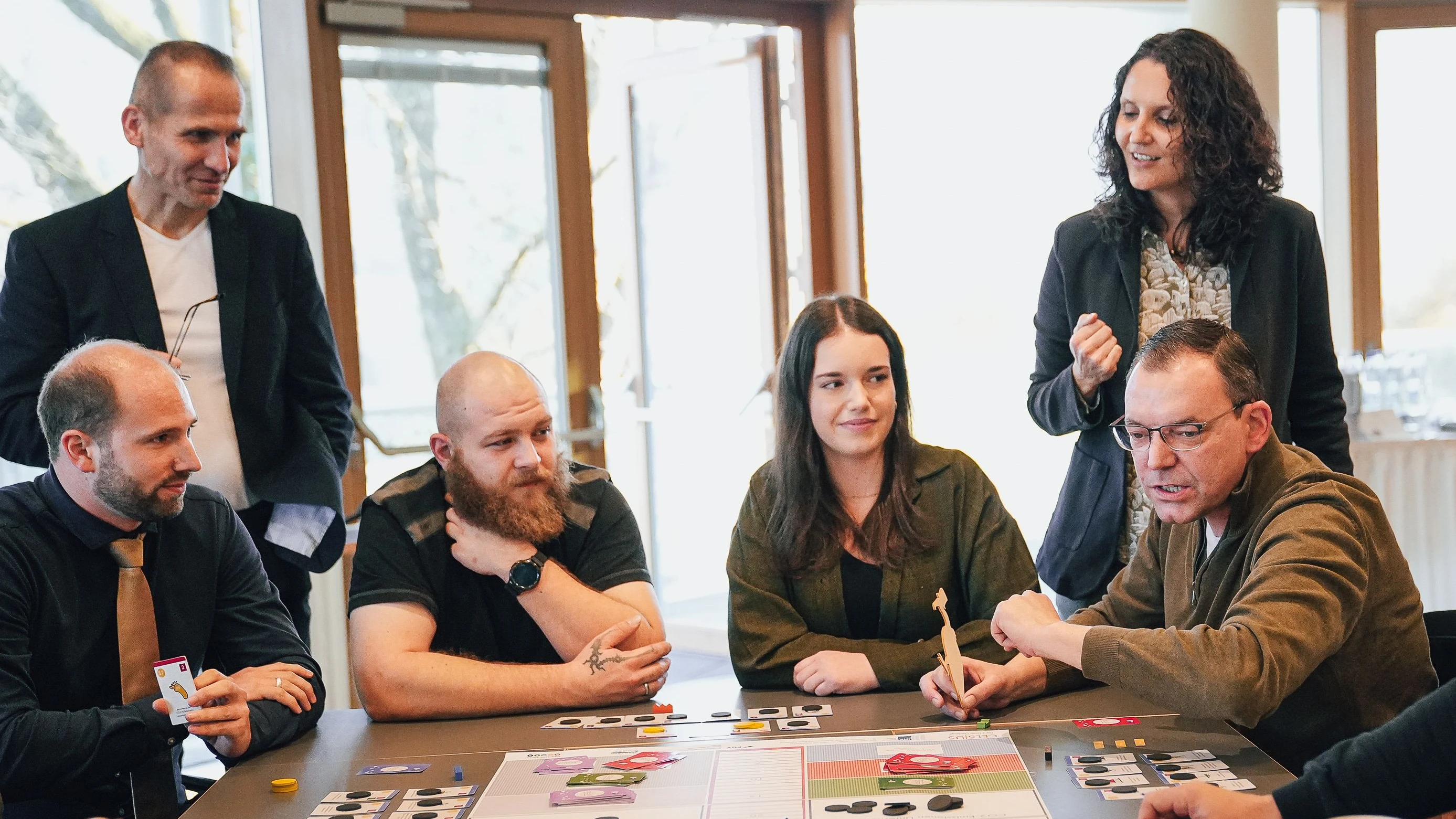
Lernen mit Gamification: Wie aus Spiel produktiver Ernst wird Unis und Unternehmen setzen auf Gamification, also spielerisches und getaktetes Lernen. Das soll anspornen und den Horizont erweitern. Machen uns die neuen Methoden schlauer?
faz · about 2 hours ago

Herzblatt-Geschichten: Zusammenhalt und Zärtlichkeit Plant „Bild zur Fußball-WM einen Knutsch-Ticker? Was hat Merkel Merz voraus? Und wie stark ist Kubicki? Die Herzblatt-Geschichten.
faz · about 2 hours ago

Our Leaving Cert obsession is intimately linked to a century-old story of education We do go at our end-of-school exam awful hard. Why are we like this?
thejournal · about 2 hours ago
Taiwans Li Ang opens Polands Authors Reading Month with reading
gdeltproject.org · about 2 hours ago

Dining across the divide: Im not a climate denier, but aiming for net zero by 2050 is unrealistic An apolitical retired IT manager and a far left biologist disagree over tackling global heating – but are they in harmony over truth and reconciliation?• Want to meet someone from across the divide? Click here to find out howDon, 74, FarnhamOccupation Retired IT project manager Continue reading...
theguardian · about 2 hours ago

This is how we do it: I joined a hook-up app for widowed people, and discovered the strongest chemistry Ive ever felt Nicky and Dan share an outlook on life shaped by their experiences of loss – and it has ignited their sex lives• How do you do it? Share the story of your sex life, anonymouslyI thought: Ive found someone else who wants to live every moment like its their last – he gets it Continue reading...
theguardian · about 2 hours ago

Should we ditch the idea of three meals a day? Our rigid eating habits date to the Industrial Revolution – its time to embrace culinary spontaneityOne of the stupidest things in an earnest but stupid school of culinary thought is that each of the three daily meals should be balanced. So argues American food writer MFK Fisher in her 1942 book How to Cook a Wolf. She goes on: In the first place not all people need or want three meals each day. Many of them feel better with two or one and one-half, or five.Fisher wrote her book ostensibly as a guide on how to feed yourself pleasurably and nourishingly during a period of food shortages caused by war, but there is much in her insightful advice to inspire and provoke us today. More than 80 years later, threats to the sacred breakfast-lunch-dinner mode of eating can still make the news: A nation of snackers: Britons no longer eat three meals a day, gasped one recent headline in the Times. Deviations from the standard model are the subject of research by academics and health professionals, and food retailers commission studies in an attempt to understand (and shape?) when and how customers consume their food. Continue reading...
theguardian · about 2 hours ago

Far right groups prey on it: Olivia Laing on the weaponisation of loneliness A decade after The Lonely City was first published, the writer reflects on whats changed – and how the feelings that drove them to write their bestseller are key to understanding our turbulent politicsI first had the idea of writing a book about loneliness in 2012. I was 35 and had just moved to New York City when I became lost in a labyrinth of isolation and misery. A love affair had ended abruptly while I was still sky-high with expectation, buoyant with relief that I was finally entering settled coupledom. To have failed in this transition, to have been rejected and left alone, filled me with a shame that felt literally unspeakable.So there I was: alone in the city, an exile condemned to watch the world go by. It was a humiliating and very frightening feeling. The pain was intensified, as a broken leg or even a broken heart would not have been, by the fact that my loneliness felt inadmissible, a thing that could not be said for fear of repelling other people. This was the most alarming aspect of the experience, in that the need for concealment further entrenched the isolation, so that loneliness grew ever more inescapable, a fortress of solitude whose bulwarks and ramparts would not stop growing. Continue reading...
theguardian · about 2 hours ago
Domenik en Ferenc over MAFS-geheim: We zeiden dat hij een nieuwe medewerker was Domenik en Ferenc zijn het succeskoppel van het afgelopen seizoen van Married at First Sight. De liefde spatte vanaf het moment dat ze voor het altaar stonden van het scherm. In hun column voor RTL Boulevard geven de heren een inkijkje in hun leven samen.
rtl nieuws · about 3 hours ago

„Hockey ist der einzige Nicht-Kampfsport, der Prügel feiert Amazon hat wieder einmal eine Young-Adult-Buchreihe verfilmt und dominiert damit die Buch- und Streamingcharts. Warum junge Menschen Eishockey-Romanzen mögen und weshalb „Off Campus ein Kulturprodukt auf der Höhe seiner Zeit ist.
welt.de · about 3 hours ago
Er litteraturfeltet på bærtur? Debutant Sarah Adekoyas fantasyroman er en streit nytolkning av en av Vestens store ideer, som passer ypperlig for…
aftenposten · about 3 hours ago

Inséparables, un époustouflant roman dapprentissage, damitié et dadoration Stephanie Wambugu a fait un début remarqué sur la scène littéraire américaine. Paru en avril en France, Inséparables explore la relation complexe entre Ruth et Maria, des amies denfance noires dorigine modeste, queers, qui vont évoluer dans des sphères artistiques. Un premier roman époustouflant sur lobsession, applaudit The New York Times.
courrier international · about 3 hours ago
The first rung is vanishing The Last Word: Not every graduate role will disappear. The issue is not the end of the junior career, but the need for firms to redesign it. For years, the first rung of professional life was built from work nobody especially loved. Junior bankers checked models. Consultants cleaned slides. Lawyers reviewed documents. Graduates wrote first […] The first rung is vanishing was originally published on Emerging Europe.
emerging europe · about 3 hours ago

Buch zur Fußball-WM: 90 amüsante und geistreiche Spielminuten Schon in „Deutsche Dinge hat der Autor Andreas Matlé einen ungewöhnlichen Blick auf Alltagsgegenstände bewiesen. Dies gelingt ihm auch in seinem WM-Buch „Tore, Träume und Triumphe.
faz · about 3 hours ago

„Dafür hasse ich den Suff – Hella von Sinnen begann schon mit 12 mit dem Trinken Andere bringt sie zum Lachen, doch es gab auch schwierige Zeiten im Leben von Hella von Sinnen. Die Komikerin berichtet nun, dass sie schon früh anfing, Alkohol zu konsumieren.
welt.de · about 3 hours ago