 Saturday, June 13Saturday, June 13
France and Chad are quietly restoring military ties a year and a half after Paris withdrew its troops from N’Djamena, signalling a cautious return of French influence in the Sahel that contrasts with Moscow’s and Ankara’s growing presence elsewhere in West Africa.
On 13 June 2026, *Le Monde* reported that French and Chadian officials have begun implementing a bilateral cooperation agreement that will allow French advisers to re-enter Chadian barracks and training grounds. The rapprochement follows months of discreet negotiations between the governments of President Mahamat Déby and President Emmanuel Macron, who has sought to rebuild security partnerships without repeating the high-profile deployments that fuelled anti-French sentiment in 2024 and 2025 .
The phased re-engagement comes as France’s traditional sphere of influence in West Africa fractures. In neighbouring Mali, Burkina Faso and Niger, juntas have expelled French forces and turned instead to Russian Wagner mercenaries and Turkish Bayraktar drones, eroding Paris’s decades-old military footprint . Chad, however, has maintained a comparatively stable relationship with France, hosting a French military base until its closure in late 2024. Analysts say Déby’s government now views French expertise as critical to countering jihadist advances in the Lake Chad basin.
The agreement stops short of a full base reopening. Instead, French personnel will operate under “advisory and support” mandates, with no permanent combat units stationed in Chad. French officials insist the arrangement respects Chadian sovereignty while allowing Paris to retain a foothold in a strategically vital country that borders Libya, Sudan and the Central African Republic.
The shift coincides with broader French efforts to redefine its African policy after the collapse of the SCAF defence programme with Germany and repeated setbacks in the Sahel. In an interview published the same day, French Armed Forces Minister Sébastien Lecornu acknowledged that “selective re-engagement” is the only viable path forward .
Yet the rapprochement faces domestic scrutiny. In Switzerland, where some cantons have abolished early French-language instruction while others cling to it, the debate over cultural influence mirrors wider European anxieties about post-colonial power . In Chad, critics argue that any French military presence risks reigniting public resentment, particularly among young activists who view France as an unreliable partner. Pro-government voices counter that the arrangement is a pragmatic necessity in a region where Islamist insurgencies have killed thousands since 2015.
With Russian and Turkish contractors already active across the Sahel, France’s cautious return to Chad underscores a broader scramble for influence in which old colonial ties are being renegotiated—not abandoned.

Après léchec du Scaf, la France et lAllemagne peuvent-elles réussir à sentendre sur lénergie ?
lexpress · about 2 hours ago
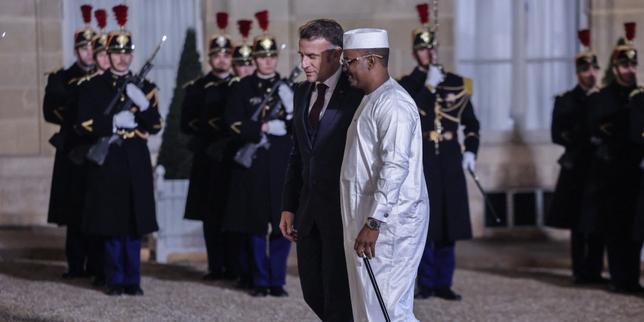
Au Tchad, larmée française prépare un retour à pas feutrés Un an et demi après léviction brutale des soldats français basés au Tchad, Paris et NDjamena avancent sur la reprise de leur coopération militaire bilatérale.
le monde · about 2 hours ago

Diskussion ums Frühfranzösisch – Französisch für die Nation: eine Schweizer Geschichte Gewisse Kantone schaffen Frühfranzösisch ab. Andere klammern sich daran. Ein Konflikt mit einer langen Geschichte.
srf.ch · about 2 hours ago
De strijd om West-Afrika: Russische huurlingen, Turkse drones en een tanende Franse invloed | NRC Wereldzaken Frankrijk trekt zich terug uit West-Afrika, maar laat zijn oude invloedssfeer niet zomaar los. Terwijl Parijs zoekt naar nieuwe manieren om aanwezig te blijven, springen ook…
nrc · about 2 hours ago

Enerji kavgasında barut kokusu
gdelt bot · about 2 hours ago