 Sunday, June 7Sunday, June 7
Eurozone leaders signal shift away from Middle East energy dependence as hidden costs of oil reliance mount
European policymakers are accelerating plans to reduce the bloc’s exposure to Middle East energy markets, as new data reveals the economic and political toll of persistent supply disruptions. The move—dubbed *"5_ditching_weniger_hidden_may"* in internal EU documents—comes after May’s inflation surge to 3.2% was driven by a 10.9% jump in energy prices, directly linked to the Strait of Hormuz blockade and regional conflicts, according to Eurostat figures .
The European Commission will today warn that over a million jobs across the EU face elimination in the coming years, with high energy costs and the green transition cited as primary threats. A leaked draft of the *European Semester Spring Package* highlights that industries reliant on fossil fuel imports—particularly from the Middle East and North Africa (MENA)—are most vulnerable, with manufacturing and heavy industry sectors expected to bear the brunt of layoffs .
The push for energy independence aligns with Brussels’ broader *Tech Sovereignty Package*, unveiled this week, which aims to reduce reliance on foreign technology providers in critical sectors. Officials frame the strategy as a response to "hidden political costs" of MENA oil dependence, including geopolitical leverage exerted by supplier nations and domestic backlash over migration policies tied to energy partnerships. A report by *The Nordic Page* argues that Europe’s multiculturalism policies have been quietly undermined by the need to maintain stable oil flows, with governments prioritizing energy security over social cohesion .
Key measures under *"5_ditching_weniger_hidden_may"* include:
The ECB’s anticipated June rate hike—signaled by May’s inflation data—adds urgency to the shift, as higher borrowing costs threaten to squeeze industries already struggling with energy price volatility. Analysts warn that without rapid diversification, the EU risks a "double shock" of inflationary pressures and industrial decline, particularly in Germany and Italy, where energy-intensive sectors dominate.
Background: The eurozone’s inflation trajectory has mirrored geopolitical tensions in the Middle East since late 2025, with the Strait of Hormuz blockade disrupting 20% of global oil flows. While previous EU strategies focused on short-term price stabilization, *"5_ditching_weniger_hidden_may"* marks a pivot toward structural decoupling—a move that could reshape Europe’s energy, industrial, and foreign policies for decades.

Eurozone inflation hits 3.2 as Middle East war drives energy prices Annual inflation in the eurozone rose to 3.2 in May, marking the fourth consecutive monthly increase as energy prices jumped 10.9 on the back of Middle East supply disruptions and the ongoing blockade of the Strait of Hormuz, according to official figures.
yenisafak · 4 days ago
International Business: Euro zone inflation hits 3.2pc in May as energy costs climb
gdeltproject.org · 4 days ago
The jobs squeeze facing Europe Today the Commission will publish its European Semester Spring Package, a checkup on EU countries economies. But the news isnt too good. The report warns that over a million jobs across Europe could be lost in the coming years as a result of high energy costs, competition from abroad and the green transition. On the […]
politico.eu · 4 days ago
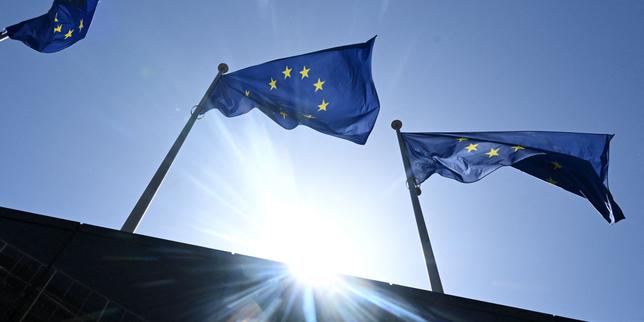
EU targets technological sovereignty with push for homegrown tech and distance with US and Asia The sweeping strategy to strengthen European alternatives to foreign technology providers comes as Brussels seeks to reduce reliance on US and Asian firms in critical sectors ranging from cloud computing to artificial intelligence.
le monde · 4 days ago
Hundreds of thousands of EU jobs at risk, Commission to warn The EU will for the first time assess whether countries are investing enough in the people needed to sustain Europes economic and industrial ambitions.
politico.eu · 4 days ago
Multiculturalism is d(r)ead in Europe – MENA oil and the (hidden) political price Europe pays for it
gdeltproject.org · 4 days ago

Big tech: "Digital sovereignty is about control and authority across the full IT estate — not borders."Me: 🤣 Big Tech claims digital sovereignty isnt about borders, while the U.S. openly treats AI, cloud, chips and data as instruments of geopolitical and military power.US: The United States views its technology, such as AI, as an instrument of economic, strategic, and military power.#EU #TechSovereigntyPackage
mastodon bot · 4 days ago