
Armenia seals US strategic pact ahead of June elections as TRIPP corridor divides nation
Armenia signs landmark US strategic partnership deal as snap parliamentary elections loom
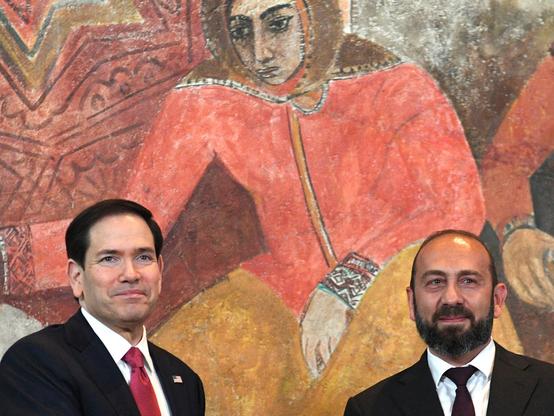
Armenian Prime Minister Nikol Pashinyan formalized a strategic partnership agreement with the United States on Tuesday, 26 May, in a move that sharpens the geopolitical stakes of the country’s upcoming parliamentary elections. The deal, signed during a surprise visit by US Senator Marco Rubio to Yerevan, commits both nations to deepen economic, security, and diplomatic ties—including advancing the controversial TRIPP corridor, a planned transport route linking Azerbaijan to its exclave of Nakhchivan through Armenian territory.
The agreement arrives just weeks before Armenia’s snap elections, scheduled for 21 June 2026, which Pashinyan has framed as a referendum on his pro-Western pivot. His government has increasingly distanced itself from traditional ally Russia, a shift that has drawn criticism from Moscow and pro-Russian factions within Armenia. According to *Al Jazeera*, the deal "aims to deepen ties despite challenges from pro-Russia parties," which have accused Pashinyan of betraying national interests by aligning with Washington .
Rubio’s visit underscored the US’s growing engagement in the South Caucasus. During meetings with Armenian Foreign Minister Ararat Mirzoyan, the senator pledged continued support for the TRIPP corridor, a project that could reshape regional power dynamics but has faced opposition from Armenian nationalists who view it as a concession to Azerbaijan. *Euronews* reported that the US and Armenia "pledged to move forward on the economic corridor," with Rubio hailing it as a step toward "regional peace" . Slovak outlet *Aktuality.sk* added that the corridor could "fundamentally alter power relations in the region" .
The election campaign, which officially began in mid-May, has seen parties polarize around competing visions for Armenia’s future. Pashinyan’s Civil Contract party advocates for closer integration with the West, while opposition blocs—including the Armenian National Congress and [Hayastan Alliance—demand](en.wikipedia.org) a return to Moscow’s orbit. A 15 May analysis by *Armenia Election Monitor* described the vote as a "referendum on peace and sovereignty," with the TRIPP corridor and US partnership emerging as flashpoints . Earlier reporting from the same outlet noted that European observers had "rallied around Pashinyan," while Russia condemned the US deal as interference .
International election observers, including missions from the OSCE and Council of Europe, are expected to play a critical role in monitoring the polls. A 20 May briefing by *Armenia Election Monitor* highlighted concerns over "electoral integrity and foreign influence," particularly given Russia’s history of meddling in Armenian politics .
The elections follow a turbulent period for Armenia, including the 2020 Nagorno-Karabakh war and the 2023 Azerbaijani offensive that forced Yerevan to cede control of the disputed region. Pashinyan’s government has since pursued a fragile normalization process with Azerbaijan, a policy that has alienated hardline factions but won cautious support from Western capitals. The US deal—coupled with the TRIPP corridor—signals a bet on Armenia’s westward trajectory, but its success hinges on Pashinyan’s ability to secure a mandate in June.
Articles

8 May 2026 - Armenia Election Monitor - Europeans rally around Pashinyan, but the Russians are not amused
commonspace · 2 days ago
13 May 2026 - Armenia Election Monitor - As Armenias election campaign starts, parties compete over rival visions for the countrys future
commonspace · 2 days ago
Presidente de Portugal ratifica acordo que reconhece notas de estudantes brasileiros Tratado havia sido assinado em abril de 2023 e põe fim à burocracia para matrículas de alunos até o 12.º ano nos dois países. O acordo não abrange o reconhecimento de diplomas universitários.
publico · 2 days ago
22 May 2026 - Armenia Election Monitor - The upcoming Armenian election will decide the future direction of the country
commonspace · 2 days ago
⚡ NEWSArmenia Signs Strategic Partnership with US Amidst ElectionArmenian Prime Minister Nikol Pashinyan signed a strategic partnership deal with the United States as parliamentary elections approach, aiming to deepen ties despite challenges from pro-Russia parties.📰 #Russia #EU #Geopolitics #GeoWire
mastodon bot · 2 days ago
États-Unis et Arménie sengagent à avancer dans leur projet de corridor lors de la visite de Marco Rubio Les États-Unis se sont engagés mardi 26 mai, lors dune rencontre éclair du secrétaire dÉtat Marco Rubio avec son homologue Ararat Mirzoyan à Erevan, à poursuivre avec lArménie un projet de corridor reliant certaines régions de lAzerbaïdjan, pays rival.
rfi.fr · 2 days ago
Armenia signs strategic partnership deal with US as election approaches PM Nikol Pashinyan, who deepened ties with US, faces challenge from pro-Russia parties in upcoming parliamentary polls.
aljazeera · 2 days ago

BNP Paribas steps up Mistral partnership to bolster rapid AI defences reut.rs/4wMFbff
bluesky bot · 2 days ago
15 May 2026 - Armenia Election Monitor - Armenias 2026 vote: A referendum on peace and sovereignty?
commonspace · 2 days ago
USA prisľúbili ďalšiu podporu kľúčového koridoru TRIPP medzi Azerbajdžanom a Nachičevanom USA potvrdili pokračovanie projektu koridoru TRIPP cez Arménsko, ktorý má spojiť Azerbajdžan s Nachičevanom. Projekt môže zásadne zmeniť mocenské pomery v regióne.
aktuality.sk · 2 days ago
20 May 2026 - Armenia Election Monitor - The role of electoral observer missions in Armenia ahead of the parliamentary elections
commonspace · 2 days ago
US and Armenia pledge to move forward on economic corridor during Rubio visit Marco Rubio visited Yerevan, backing PM Pashinyans pro‑western course and signed TRIPP corridor and strategic partnership deals to boost regional peace.
euronews · 2 days ago