 Thursday, May 21Thursday, May 21
The global bond market is experiencing a significant selloff driven by rising inflation expectations, energy price shocks, and elevated fiscal deficits, with implications for monetary policy under incoming Federal Reserve Chair Kevin Warsh. U.S. Treasury yields have surged, with the 30-year bond reaching 5.11%—its highest level since 2007—up from 4.63% at the end of February. This rise reflects investor concerns over persistent inflation, fueled by robust U.S. demand, the Iran conflict’s impact on energy prices, and high government borrowing (around 6% of GDP). Bond markets now price in 2.7% annual inflation over the next five years, the highest since 2023, with near-term inflation expectations driving much of the yield increase .
The selloff is not confined to the U.S. U.K. gilt yields have climbed to multiyear highs, with 30-year yields at levels last seen in 1998, driven by inflation fears and political uncertainty, including concerns over a potential Labour leadership bid by Andy Burnham. The IMF has warned that the U.K. must continue reducing its fiscal deficit to stabilize markets, as bond investors grow wary of rising debt levels . IMF Managing Director Kristalina Georgieva attributed the global bond rout to higher oil prices, which have exacerbated inflationary pressures and dampened market sentiment, particularly in Europe .
Warsh’s appointment as Fed Chair adds complexity to the policy response. While he has argued that AI-driven productivity gains could eventually be disinflationary, the current AI capital expenditure boom is offsetting traditional growth-dampening effects of oil shocks, keeping demand resilient. The Fed faces a paradox: cutting short-term rates could further unmoor inflation expectations, while hiking rates might reassure investors but risk tightening financial conditions. Economists suggest a hawkish stance from Warsh could stabilize bond yields by signaling the Fed’s commitment to controlling inflation . Meanwhile, the bond market’s reaction reflects a mix of near-term inflation fears and longer-term concerns over structural factors like AI-related capital demand and fiscal deficits.
> Background: **Global inflation fears and yen sell-off surge amid rising oil prices and bond yields.** — *6 hours ago*
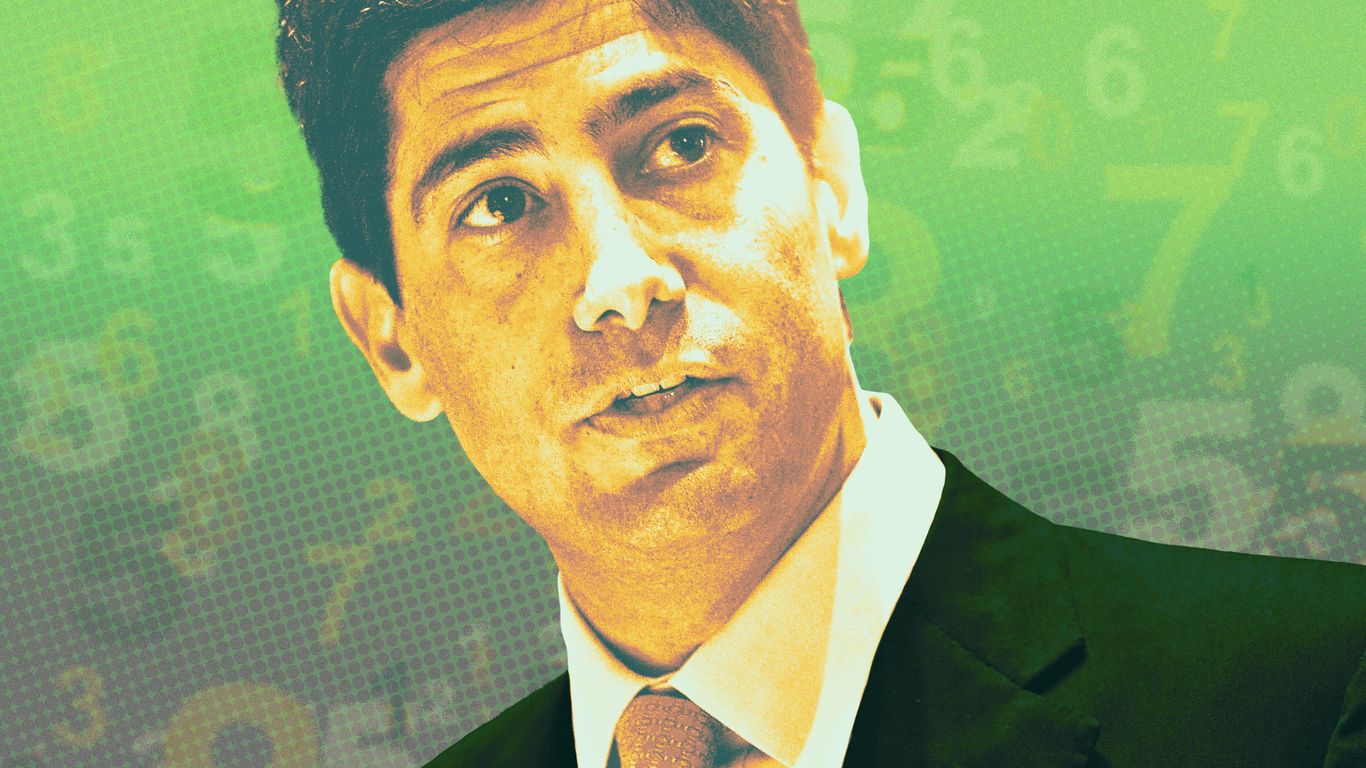
Kevin Warshs bond market bind Kevin Warsh hasnt even been sworn in as leader of the Federal Reserve yet, and his first great test has already arrived.The big picture: Global bond markets are sending borrowing costs markedly higher in this era of energy supply disruptions, AI-fueled demand for capital and massive fiscal deficits.The yield on 30-year U.S. Treasury bonds has surged to 5.11, its highest level since 2007. The rate was 4.63 at the end of February.It sets up an environment where the Fed may well need to prevent inflation expectations — as reflected in bond traders bets — from coming unmoored.Its a paradox of monetary policy: Sometimes, the only solution for higher long-term interest rates is higher short-term interest rates.Zoom out: Warsh has spent years criticizing the Fed for letting inflation run too hot for too long. Now, hes inheriting a bond market thats pricing in exactly that scenario.Warsh has argued that AI will ultimately be disinflationary — that productivity gains will lower the cost of producing goods and services and give the Fed room to cut rates. But now the AI capex boom is running so hot that its offsetting the traditional growth-dampening effect of the oil shock, keeping demand resilient.Warshs thesis may yet prove out. But the evidence for the disinflationary case hasnt shown up in the data yet, while the near-term inflationary scenario is plain to see in both the data and in every trip to the gas station or grocery store. Zoom in: U.S. demand has proven robust, and the Iran war has driven up energy prices, creating an inflationary surge. Government borrowing remains high, around 6 of U.S. GDP.As such, global investors are demanding higher compensation to park their money in Treasuries.But if the Fed were to cut its short-term interest rate target in the face of that shift, it could unmoor inflation expectations further, resulting in even higher long-term rates.Conversely, a pivot toward a rate hike or two this year could assure investors that the Fed, despite Warshs recent dovish rhetoric, wont let inflation get out of control.What theyre saying: A more hawkish Warsh than the financial markets expect might stop bond yields from rising, wrote Ed Yardeni, an economist at Yardeni Research.Indeed, by acting hawkishly, Warsh might have a chance of delivering what the White House wants: lower real-world borrowing costs, Yardeni added.The AI boom is breaking the traditional oil shock playbook. A supply disruption of this scale might traditionally slow the economy enough to give the Fed cover to cut.But the current backdrop is the opposite: The U.S. is a net exporter, helping offset the energy impact. And thanks to the AI boom, U.S. demand is holding up and investment is surging.State of play: Jerome Powells term as chair ended on Friday, and Warsh won Senate confirmation to the post last week. But Warsh is awaiting a formal presidential commission and completing a liquidation of assets to comply with ethics rules.The Fed said late Friday that the Board of Governors elected Powell to continue serving as chair pro tempore in the interim.In a reminder that nothing is normal about this Fed leadership transition, two governors dissented — Michelle Bowman and Stephen Miran — saying they wanted an explicit time limit on how long Powell can serve in that role.Data: Federal Reserve; Note: Based on spread between nominal yields on Treasury securities and yields on comparable inflation-protected securities; Chart: Neil Irwin/AxiosThe details of why bond yields are rising matter a lot — how much of the rise in rates is due to higher inflation expectations and how much due to higher real yields, which are in turn shaped by supply and demand for capital.In this episode, the surge in rates is mostly fueled by higher near-term inflation expectations, while both factors contribute to the rise in longer-term rates.By the numbers: As of Friday, bond markets priced in 2.7 annual inflation over the next five years, based on the spread between inflation-protected securities and regular Treasury notes.Thats the highest since 2023 and up from 2.2 at the end of last year. It accounts for roughly the entire run-up in five-year yields in that span.But if you go out further on the yield curve, the story is more mixed. In the period between five and 10 years from now, bond markets priced in 2.3 annual inflation as of Friday, up from 2.05 at the end of March.In other words, over that longer time horizon, there is a more substantial rise in real yields.Between the lines: In the near term, bond investors expect that the energy price shock will keep a floor under overall inflation.Over the somewhat longer term, theyre less worried about inflation and more worried about fundamental factors, including huge federal borrowing and demand for AI-related investment capital.The bottom line: Borrowers — including corporations, homebuyers and the federal government — are paying more now to compensate bond buyers for taking the risk of longer-term lending.
axios · 3 days ago

Goldanleger aufgepasst: Wie weit der Goldpreis jetzt sinken kann Der Goldpreis hat sich deutlich von seinen Rekorden aus dem Januar entfernt. Ist es möglich, dass er bald wieder sein altes Niveau aus der Zeit vor der Goldrally erreicht?
faz · 3 days ago

Dutch state pension holiday allowance jumps 20 in 2026, up 47 since 2023 The Netherlands net AOW holiday allowance will rise sharply in 2026, with payments increasing 20 percent compared with 2025 and 47 percent compared with 2023, according to calculations from senior
nltimes.nl · 3 days ago

Rising prices are Britons biggest money worry as inflation stays high, survey finds Households increasingly gloomy about finances amid fears of interest rate rises due to higher fuel pricesBusiness live – latest updatesRising prices have become the top financial concern for UK households, according to a monthly consumer confidence survey, before Wednesdays official figures, which are likely to show inflation remaining stubbornly high.Amid fears of higher interest rates owing to increased fuel prices after the closure of the strait of Hormuz amid the conflict in the Middle East, households have become increasingly gloomy about their financial situation, the report said. Continue reading...
theguardian · 3 days ago
Dollar dips; rising oil and bond yields temper losses U.S. one hundred dollar bills are shown in Buenos Aires, Argentina, on April 15, 2026. Matias Baglietto |…
europesays.com · 3 days ago

IMF raises UK growth forecast and backs Reevess deficit reduction plans – business live International Monetary Fund says Staying the course on deficit reduction will be important for the UK, in annual assessment of the economyThe head of the International Monetary Fund has said that a sell-off in global bond markets was reflecting the impact of higher oil prices.IMF managing director Kristalina Georgieva was speaking as she arrived for a meeting of G7 finance ministers in Paris, Reuters reports.A combination of political turmoil and renewed gains for oil has been kryptonite for hopes of a new FTSE 100 rally.Of course, the selling has not been confined to the UK, and continental indices are registering heavier losses as oil lurches higher once again. The market rally is rapidly coming to grips with the reality of the situation in the Middle East and in the global oil market, and it is not going to be pretty. Continue reading...
theguardian · 3 days ago

U.K. Gilt Yields Climb to Multiyear Highs on Inflation, Political Concerns Yields on 30-year gilts hit a high last seen in 1998, while 10-year yields were at their highest since 2008.
wsj · 3 days ago
Euro: Bond sell-off weighs against US Dollar – ING INGs Chris Turner argues that higher long-dated yields and elevated energy prices are negative for Eurozone growth and…
europesays.com · 3 days ago
What the bond market can expect from the Fed under Kevin Warsh Warsh is committed to the independence of the Fed, but some of his other ideas could shake up…
europesays.com · 3 days ago
UK must keep cutting fiscal deficit, says IMF Warning comes as bond investors worry about Andy Burnhams potential bid for Labour leadership
financial times · 3 days ago
Treasury yields rise as inflation fears drive global bond rout U.S. Treasury yields continued their ascent on Monday as global bond markets sold off amid concerns of resurgent…
europesays.com · 3 days ago
UK government borrowing costs slip back from multi-year highs as bond market rout calms – business live Rolling coverage of the latest economic and financial news, as rising oil price sours sentiment in the markets and drive up bond yieldsThe head of the International Monetary Fund has said that a sell-off in global bond markets was reflecting the impact of higher oil prices.IMF managing director Kristalina Georgieva was speaking as she arrived for a meeting of G7 finance ministers in Paris, Reuters reports.A combination of political turmoil and renewed gains for oil has been kryptonite for hopes of a new FTSE 100 rally.Of course, the selling has not been confined to the UK, and continental indices are registering heavier losses as oil lurches higher once again. The market rally is rapidly coming to grips with the reality of the situation in the Middle East and in the global oil market, and it is not going to be pretty. Continue reading...
theguardian · 3 days ago