 Sunday, June 7Sunday, June 7
EU and Western Balkans leaders gather in Tivat on Friday for a high-stakes summit focused on enlargement, economic integration and regional security, as Montenegro’s President Milo Đukanović hosts counterparts from the bloc and the EU’s top officials. The two-day meeting in the Adriatic resort town comes amid escalating diplomatic tensions and security warnings that have cast a shadow over Serbia’s participation.
Serbian President Aleksandar Vučić has defied warnings from his own security services and EU counterparts, confirming he will attend despite what Belgrade’s BIA intelligence agency called a “high security risk” linked to organised crime networks and recent bilateral clashes with Montenegro. The agency cited “credible threats” against Vučić’s delegation, while Montenegro’s government confirmed it had denied entry to 87 Serbian passengers who arrived on a chartered flight from Belgrade ahead of the summit . Border checks between the two countries have been tightened, with Montenegro’s Interior Ministry citing “heightened vigilance” at all entry points .
Montenegro’s President Nikšić Dan is expected to use the summit to highlight his country’s progress toward EU accession, with Brussels officials signalling that Podgorica could join the bloc as early as 2028 if reforms continue. The agenda includes progress on gradual integration, economic cooperation and security coordination, with EU High Representative Josep Borrell and European Commission President Ursula von der Leyen among the attendees .
Security concerns extend beyond bilateral tensions. EU officials have privately expressed alarm at the influence of organised crime syndicates across the Western Balkans, which they say could undermine enlargement efforts. “This is not just about politics—it’s about the rule of law,” said one senior EU diplomat, speaking on condition of anonymity. “If we can’t guarantee safe passage for leaders, how can we guarantee safe markets or secure borders?”
The summit also takes place against a backdrop of geopolitical competition, with the United States and European Union jockeying for influence in Bosnia and Herzegovina, where tensions are rising over the appointment of a new High Representative to oversee the Dayton Peace Agreement . Analysts warn that unresolved disputes in the region could derail the enlargement process, which Brussels views as a strategic priority to counter Russian and Chinese influence.
As leaders arrive in Tivat, the summit’s success may hinge on whether Vučić’s presence overshadows the broader agenda—or whether the gathering can deliver tangible progress on the path to EU membership for the Western Balkans.

Aleksandar Vucic a fost avertizat de agenția de securitate a Serbiei să nu meargă la summitul UE din Muntenegru. Motivele invocate Agenția de securitate a Serbiei l-a avertizat pe președintele Aleksandar Vucic să nu se deplaseze vineri în Muntenegru pentru un summit cu liderii Uniunii Europene și ai țărilor balcanice, invocând amenințări la adresa securității pe fondul unui schimb de replici diplomatice între cele două țări, relatează Reuters.
digi24 · 3 days ago
EU-Westbalkantreffen: Geheimdienste raten Vučić von Reise ab Grund sei ein "hohes Sicherheitsrisiko" aufgrund von Geheimdiensten und kriminellen Clans. Der serbische Präsident plant dennoch zum Treffen in Montenegro zu reisen
der standard · 3 days ago
Președintele Nicușor Dan participă la summitul Balcanilor de Vest. Liderii UE se întâlnesc în Muntenegru Liderii Uniunii Europene și cei ai statelor din Balcanii de Vest se reunesc vineri, 5 iunie, la Tivat, în Muntenegru, pentru un summit dedicat extinderii UE, integrării economice și consolidării securității regionale. Evenimentul figurează și pe agenda președintelui Nicușor Dan.
adevarul · 3 days ago

Tajemniczy lot z Serbii. 87 osób dostało zakaz wjazdu do Czarnogóry przed szczytem UE Grupa mężczyzn przyleciała do nadmorskiego miasta Tivat czarterowym lotem z Serbii. W piątek (5 czerwca) odbędzie się tam szczyt Unii Europejskiej z przywódcami Bałkanów Zachodnich.
gazeta.pl · 3 days ago

The #EUWesternBalkans summit will take place tomorrow in Tivat, Montenegro. On the agenda: 📌progress made in the gradual integration of the Western Balkans into the EU 📌opportunities and challenges associated with the enlargement process Read more → link.europa.eu/H4RW8d
bluesky bot · 3 days ago
Geheimdienste raten Vucic von Reise zum EU-Westbalkantreffen ab Der serbische Präsident will trotz der Spannungen weiterhin zu dem Treffen reisen. An der Grenze zwischen Montenegro und Serbien wurden derweil strengere Kontrollen eingeführt.
die presse · 3 days ago

In todays #BrusselsPlaybookPod: 🇮🇹 Italys Giorgia Meloni faces an uphill battle in next years election 🇷🇺 Brussels tightens the screws on Moscow 🍸 What on earth is a Spritz Misto? Listen 👇
bluesky bot · 3 days ago

Csoportos létszámleépítést jelentett be Balásy Gyula egyik cége Gondok a Visual Europe Groupnál (VEG).
hvg.hu · 3 days ago
VG: Increased Security for Stoltenberg against Terrorist Threat
gdeltproject.org · 3 days ago
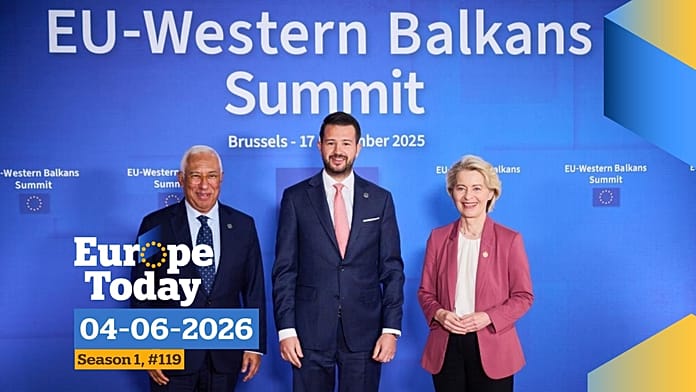
Europe Today: EU eyes expansion at high-stakes EU-Western Balkans summit EU and Western Balkans leaders are gathering in Montenegro ahead of a high-level summit focused on EU enlargement. Montenegro, the host nation, is also a frontrunner and could join the bloc as early as 2028. Our EU Editor, Maria Tadeo, reports live from Tivat.
euronews · 3 days ago
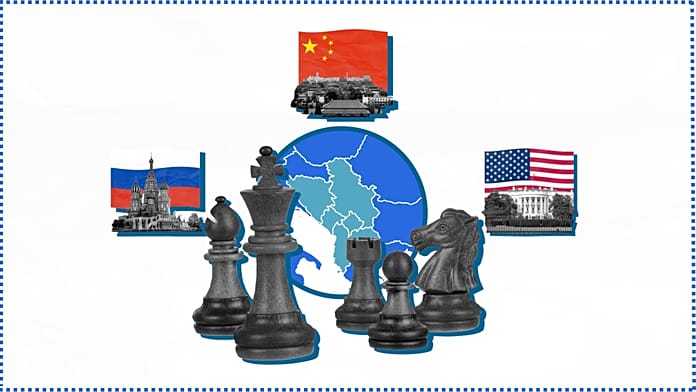
Watch: Forget idealism—the multi-billion euro reason the EU wants the Western Balkans in the bloc Top EU chiefs are gathering in Tivat, Montenegro from this Thursday for the EU-Western Balkans summit. But with the EU already struggling to manage 27 member states, why is Brussels pushing for enlargement right now?
euronews · 3 days ago

European Peoples Party chief Manfred Weber is at the height of his powers, with plans to expand his political dominion. But there are signs his heart might be pulling him back to Bavaria. More in Brussels Playbook 👇
bluesky bot · 3 days ago
Napätie okolo nového predstaviteľa Bosny rastie. Európa a USA zápasia o právomoci kľúčového úradu Rada pre implementáciu mieru rozhoduje o novom strážcovi Daytonskej dohody v Bosne a Hercegovine. Hrá sa o rozsah jeho moci aj smerovanie krajiny k EÚ.
aktuality.sk · 3 days ago