 Thursday, June 18Thursday, June 18
Paris reimagined: How VivaTech and contemporary art are reshaping the City of Light
The Eiffel Tower’s iron lattice now hums with a new augmented-reality layer that lets visitors walk beneath the monument while holograms of Gustave Eiffel and Belle Époque engineers explain the structure’s 1889 debut. Two hundred metres away, on the Pont Neuf, French artist JR has draped the city’s oldest bridge in a cave-inspired installation that projects the faces of 2,000 Parisians onto its stone arches. And at the Quai Branly Museum, which this week marks its 20th anniversary, curators have just unveiled a digital extension that lets visitors “curate” their own tours of the museum’s 3,500 artefacts from Oceania, Asia, Africa and the Americas.
The convergence of technology, culture and contemporary art is the defining theme of Paris this week as the French capital hosts two landmark events: VivaTech 2026, Europe’s largest innovation fair, and a city-wide festival that reimagines its most iconic landmarks. At VivaTech, which opened on 17 June at Paris Expo Porte de Versailles, France is placing artificial intelligence and robotics at the centre of the conversation. Humanoid robots greeted delegates on the opening day, while smart-home startups demonstrated AI systems that can anticipate household needs before they are voiced. “We are not just talking about the next gadget,” said French digital minister Jean-Noël Barrot. “We are talking about the next infrastructure layer for every sector.”
The spotlight also falls on Pigment, the Paris-based business-planning platform that has grown from a 2019 startup into one of France’s rare tech unicorns, valued at more than $1 billion. Co-founder and co-CEO Eleonore Crespo told France 24 that Pigment’s AI engine now processes 12 million strategic decisions per day for clients in 60 countries. “Europe’s challenge is not to build more startups,” Crespo said, “but to build the conditions that let them scale without leaving the continent.” Her remarks echoed a broader debate at VivaTech about capital, regulation and talent pipelines that could determine whether Europe’s next unicorn emerges from Paris, Berlin or Warsaw.
Across the Seine, the Quai Branly’s anniversary celebrations underscore how cultural institutions are retooling for the digital age. The museum’s new “Branly Lab” offers an open-source API that lets researchers and artists remix its collections, while its evening programme now features DJ sets curated by local musicians. “We want to be a living archive, not a mausoleum,” said museum director Emmanuel Kasarhérou.
From the augmented Eiffel Tower to the AI-driven boardrooms of Pigment and the algorithmic remixes at Quai Branly, Paris is demonstrating how technology and art can rewrite a city’s narrative. The experiments are still young, but the message is clear: the future of the City of Light will be written in code as much as in stone.
2 further sources not geolocated

Georgina Rodriguez estreia-se como apresentadora Depois do reality show na Netflix, a noiva de Cristiano Ronaldo está prestes a assumir um novo papel a comandar um formato de humor ao lado de António Resines, veterano do cinema espanhol.
observador · about 2 hours ago

Στέλιος Κουδουνάρης: Το να φοράει κάποιος πολλά brands είναι δείγμα ανασφάλειας και νεοπλουτισμού αλλά δεν το κατηγορώ Το στιλ δεν έχει να κάνει με τα χρήματα, τόνισε ο σχεδιαστής μόδας
protothema · about 2 hours ago
Βόλτα για θερινό σινεμά και art shopping στο Onassis Ready Στο πλαίσιο της έκθεσης "Tilda Swinton – Ongoing"
protothema · about 2 hours ago
To Gala, το διεθνές lifestyle περιοδικό αυτή την Κυριακή δωρεάν με το ΘΕΜΑ και στην απλή έκδοση και στην έκδοση με τις προσφορές
protothema · about 2 hours ago
Glamour in Basel – Basel bekommt eine neue Messe für Schmuck und Uhren Die Messe Schweiz wagt mit einer Partnerin ein Comeback einer Basler Schmuck- und Uhrenmesse. Ein Experte ist skeptisch.
srf.ch · about 2 hours ago
Arjen Lubach blij met verhuizing LUBACH naar Videoland: Het is wel spannend RTL maakt donderdag bekend dat het programma LUBACH vanaf het najaar eerder te streamen is op Videoland en op televisie doorschuift naar elf uur in de avond. Daardoor komt het felbegeerde tijdslot van tien uur vrij voor de talkshows van Renze Klamer (37) en Welmoed Sijtsma (35).
rtl nieuws · about 2 hours ago
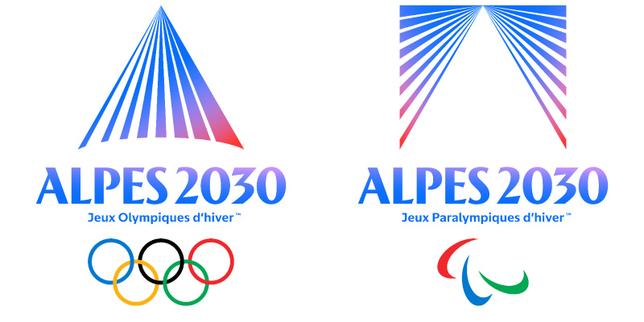
JO 2030 : « Une montagne de lumière » pour emblème des Jeux dhiver dans les Alpes françaises Les organisateurs des Jeux olympiques et paralympiques 2030 ont dévoilé, jeudi, à Briançon, lidentité graphique des JOP. Elle représente un faisceau lumineux qui forme la silhouette dune montagne.
le monde · about 2 hours ago
Regina Schilling im Gespräch: „Ich wollte ihr Werk zum Leuchten bringen Zu Ingeborg Bachmanns 100. Geburtstag ehrt die Regisseurin Regina Schilling sie mit einem Film – und Sandra Hüller spielt die Hauptrolle. Warum die Schriftstellerin ihrer Zeit voraus war.
tagesspiegel · about 2 hours ago
Wasser, Schmetterlinge und mehr als ein Paradies: Fünf Potsdamer Ausstellungen, die Lust auf Sommer machen Die Villa Schöningen hinterfragt Ideale, Jasper Precht und Richard Drews feiern den Moment. Im Pavillon auf der Freundschaftsinsel lockt eine „Ich-Oper – und der Potsdamer Kunstverein ans Wasser.
tagesspiegel · about 2 hours ago
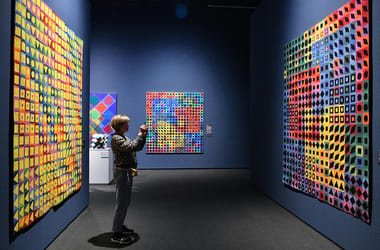
Demokratizálta a művészetet, színes városokat álmodott, elementáris hatása volt a popkultúrára – Victor Vasarely, a retina mérnöke Neve hosszú ideje része a magyar vizuális emlékezetnek. Victor Vasarely jóval több volt képzőművésznél: az építészet, a korszak technológiai változásai éppúgy foglalkoztatták. Születésének 120. évfordulóját országos programsorozat kíséri.
hvg.hu · about 2 hours ago
Pohoda 2026 je vypredaná. Festival vypredal všetkých 33 000 vstupeniek v rekordnom čase Festival Pohoda 2026 je oficiálne vypredaný. Organizátorom sa podarilo predať všetkých 33 000 festivalových permanentiek necelé tri týždne pred festivalom, pričom ide o najskoršie vypredanie v histórii podujatia.
aktuality.sk · about 2 hours ago
Why Buddhism Adopted an Ancient Greek Art Style Buddhism encountered a fascinating fusion with Greek culture in ancient times after Alexander the Greats conquests. This intersection is vividly illustrated in Gandharan art, which prominently features a style reminiscent of classical types. Why did this Eastern religion adopt a Greek art style? Greek naturalism offered a way to visually and emotionally connect with audiences, […]
greek reporter · about 2 hours ago
Il designer John Pasche: così ho inventato quella linguaccia Era uno studente di 24 anni quando i Rolling Stones gli commissionarono il logo. Ispirato alle labbra di Mick Jagger? No: a una dea
corriere · about 2 hours ago

Rockstar Games: Vorbestellungen für GTA VI in wenigen Tagen möglich GTA VI könnte in der Videospielbranche neue Maßstäbe setzen. Rockstar Games verkündet nun, dass das Spiel in wenigen Tagen vorbestellt werden kann.
faz · about 2 hours ago
Paris reimagined: Exploring the citys past, present and future through three iconic landmarks In this edition, we discover how some of Pariss most famous landmarks are being transformed by technology, culture and contemporary art. We travel beneath the Eiffel Tower with a new virtual reality experience that brings the monuments history to life, celebrate the 20th anniversary of the Quai Branly Museum and its extraordinary collection of art and artefacts from around the world, and cross the Pont Neuf as French artist JR turns the citys oldest bridge into a spectacular cave-inspired installation. Together, these three stories offer a fresh perspective on Paris and the many ways it continues to reinvent itself.
france24 · about 2 hours ago
VivaTech 2026: From startup to French unicorn, Pigment harnesses AI potential How can Europe better support tech startups? Its a question being asked at Vivatech, Europes biggest event for innovation and technology. Business Editor Kate Moody has been speaking to Eleonore Crespo - co-founder and co-CEO of Pigment, a business planning platform that helps firms make strategic decisions using artificial intelligence. The company was founded as a startup in 2019, and has since become one of just a handful of French tech unicorns, valued at over $1 billion.
france24 · about 2 hours ago
In era of disruption, tech must deliver for all, says PM Modi at Vivatech in Paris
gdeltproject.org · about 2 hours ago

Dancing to artefacts: London Museum will be democratic space for all, says director A decade in the making, the museum will reopen in November in two restored market halls with displays and late-night DJ setsThe new London Museum will be a social space for the city, its director has said, hosting afternoon tea events, monthly dinner clubs and late-night DJ sets where visitors can mingle among the artefacts while dancing.Sharon Ament said that when it reopened later this year the museum would be a democratic space that engaged with all Londoners rather than merely a repository for its collections, which stretch from the citys neolithic prehistory to modern acquisitions. Continue reading...
theguardian · about 2 hours ago
Humanoid robots and smart homes put AI centre stage at VivaTech 2026 in Paris France is putting artificial intelligence and robotics in the spotlight at VivaTech 2026, which opened on 17 June at Paris Expo Porte de Versailles.
euronews · about 2 hours ago
Les candidats draguent le monde de la Tech Playbook Paris se délocalise au salon Vivatech, à Paris, où jamais autant de candidats à la présidentielle nont choisi de se rendre alors que le sujet de lIA se place au premier plan. Gabriel Attal et Edouard Philippe jouent des coudes pour séduire le monde de la tech, en dégainant une série de propositions, avec […]
politico.eu · about 2 hours ago
At Art Basel, a Nervy, Make-or-Break Mood The auction market is buoyant, but business feels precarious for dealers at the worlds premier contemporary art fair.
new york times · about 2 hours ago

Qui a dit que les marionnettes nétaient que pour les enfants ? Du 26 au 28 juin, le quartier du Thier, à Liège, accueillera pas moins de 14 spectacles dici et dailleurs dans le cadre de la 5e édition du Ptit Poucet Festival dédié aux arts de la marionnette et objets associés. Un événement pour les petits mais aussi les grands. ...
la libre · about 2 hours ago
Punkers, gothics en Mods: in Londen opent het Museum of Youth Culture zijn deuren Voor het eerst is er een museum dat speciaal gaat over subculturen onder jongeren. Door de jaren heen hebben jongeren altijd eenzelfde soort uitstraling gehouden. Met één verschil: „Vroeger zag je amper mensen met overgewicht. Nu wel.
nrc · about 2 hours ago