 Thursday, May 21Thursday, May 21
The German government is increasing its involvement in the defense sector, particularly through state participation in the Franco-German tank manufacturer KNDS. While France holds a larger share of the company, both nations will retain equal decision-making rights on key issues. German Defense Minister Pistorius has advocated for broader state engagement in the domestic arms industry to strengthen military capabilities .
NATO faces uncertainty over U.S. military commitments under the Trump administration, which plans to reduce resources available to European allies during crises. Reports indicate that the U.S. will announce a reduction in NATO capabilities, though current troop levels in Europe remain unchanged. NATO Secretary-General Mark Rutte has downplayed concerns, describing the shift as part of normal adjustments rather than a threat to European security , , . However, the U.S. is reportedly relocating troops from Germany to Poland, a move interpreted as a response to political tensions with German Chancellor Merz . Despite these reductions, the U.S. has reaffirmed its commitment to maintaining a strong military presence in Poland .
The Bundeswehr is expanding its visibility in Germany, including in regions like Hesse, reflecting broader efforts to strengthen national defense amid shifting geopolitical conditions . Meanwhile, France has introduced a voluntary military service program for young adults aged 18–25, replacing its suspended compulsory service .
AllianceBernstein has highlighted challenges in Europe’s defense sector, citing budget uncertainties and bureaucratic procurement processes as key obstacles. The firm has identified specific defense stocks as strategic investments amid these conditions . The U.S. troop withdrawal from Germany, described as a "reverse D-Day," has raised concerns about reduced reinforcements in potential wartime scenarios, with command transitions—including the planned handover of NATO’s Naples command to Italy by 2027—accelerating without full allied consultation .

Rüstungsindustrie: Bundesregierung steigt bei deutsch-französischem Panzerbauer ein Auch wenn Frankreich mehr Anteile am Panzerbauer KNDS hält, sollen beide Staaten die gleichen Rechte bei wichtigen Entscheidungen haben. Pistorius will generell eine stärkere staatliche Beteiligung an der deutschen Rüstungsindustrie.
sueddeutsche · about 5 hours ago
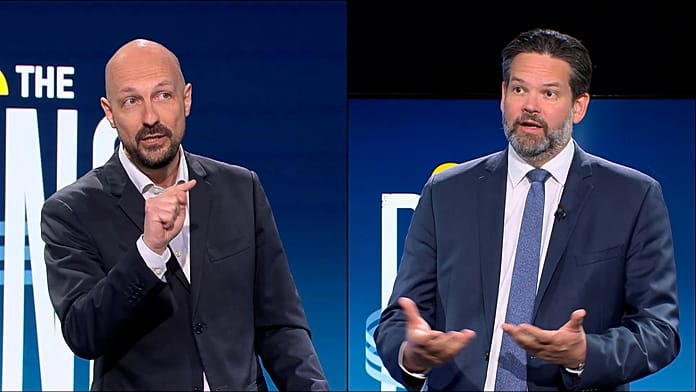
More money for the military - to do what? MEPs clash over Europes defense spending on The Ring Is higher defense spending in Europe a strategic investment or a random act to please Donald Trump? Thats this weeks topic of The Ring featuring MEPs Marc Botenga and Lukas Mandl as opponents.
euronews · about 7 hours ago
Trump planning to limit US military resources for NATO allies in Europe during crises: report
gdeltproject.org · about 8 hours ago

USA utrzymają wysoką obecność wojskową w Polsce. Nowe informacje po rozmowach MON w Waszyngtonie Stany Zjednoczone mają utrzymać wysoką obecność wojskową w Polsce - przekazał w Waszyngtonie wiceszef MON Cezary Tomczyk. Jak dodał, w najbliższych tygodniach odbędą się konsultacje w tej sprawie.
gazeta.pl · about 8 hours ago
NATO: Rutte says US troop withdrawal wont hurt Europe
gdeltproject.org · about 10 hours ago
Inside Frances new voluntary military service scheme In France, compulsory military service was suspended in 1997. But from the start of the new academic year, a new military service – this time voluntary – is being introduced. It is aimed at young people aged 18 to 25, and recruitment is currently underway. France 24 reporters Erika Olavarria and Anaïs Chesnel followed a young volunteer as he explored a military camp.
france24 · about 10 hours ago
Rutte shrugs off shrinking US military presence in Europe as expected A potential U.S. announcement to keep cutting commitments to the alliance is part of normal business, NATO boss Mark Rutte said.
politico.eu · about 12 hours ago
Truppenabzug: Trump will Deutschland bestrafen, trifft aber Polen Weil sich der US-Präsident über Kanzler Merz geärgert hat, sollten 5000 US-Soldaten aus Bayern abgezogen werden. Nun zeichnet sich ab, dass die Reduzierung eine Einheit betrifft, die ins Nachbarland gehen sollte.
sueddeutsche · about 12 hours ago
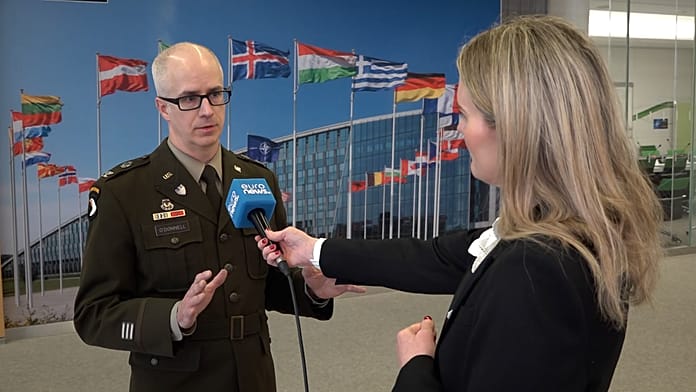
US planning to reduce commitment to NATO – including in wartime The US is due to announce a reduction in the capabilities it makes available to NATO, part of the Trump administrations previously signalled pivot to priorities outside of Europe. The move doesnt change the current number of forces on NATO territory.
euronews · about 12 hours ago
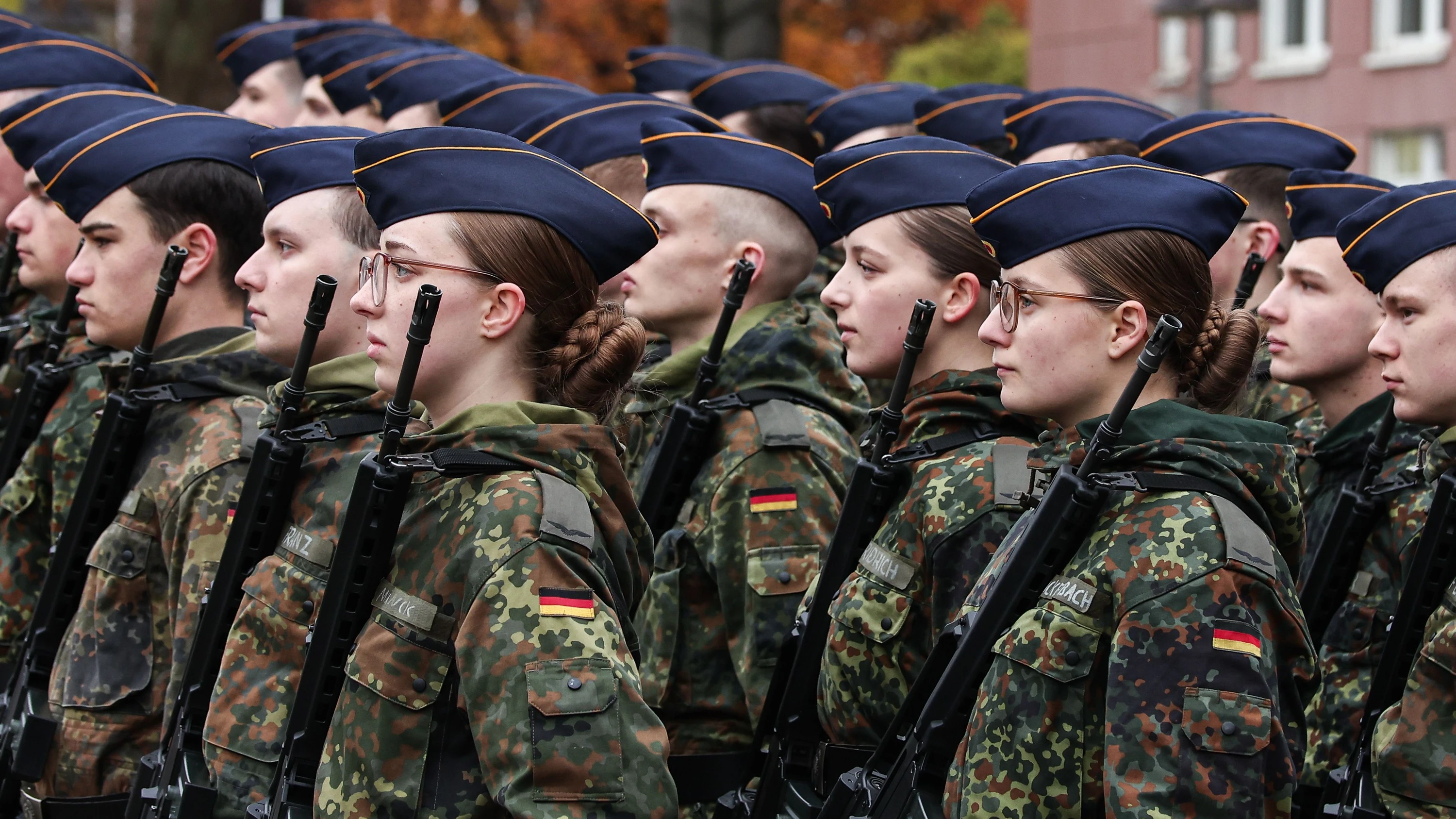
Ausbau der Bundeswehr: In Hessen sind wieder mehr Soldaten zu sehen Im Briefkasten, in der Schule, auf der Straße: Die Bundeswehr wird in Hessen immer sichtbarer. Darin spiegelt sich die veränderte Weltlage.
faz · about 13 hours ago
AllianceBernstein reveals its top defense stock pick as Europes military manufacturers retreat Budget uncertainty and procurement bureaucracy have hindered Europes defense sector this year, AllianceBernstein said.
cnbc · about 13 hours ago
La brigata Usa via dalla Germania: il D-Day al contrario e il disinteresse di Trump per lEuropa Washington riduce le truppe senza consultare gli alleati. Accelerato anche il passaggio di consegne nei comandi Nato, incluso quello di Napoli destinato allItalia entro il 2027. Lipotesi di riduzione dei rinforzi Usa in caso di guerra
corriere · about 14 hours ago