
UK and Poland sign landmark defence treaty to counter rising European threats
Poland and the UK sign landmark defence treaty to counter rising threats in Europe
Polish Prime Minister Donald Tusk and UK Prime Minister Keir Starmer today signed a bilateral Security and Defence Partnership Treaty in London, marking a significant escalation in military and strategic cooperation between the two nations. The agreement, described by officials as a direct response to "hostile threats across Europe," formalizes joint defence initiatives, intelligence-sharing, and coordinated responses to regional security challenges.
The treaty, signed on Wednesday, 27 May 2026, focuses on defence integration, cybersecurity, and health security, according to Polish government spokesman Adam Szłapka. It follows a series of similar pacts Poland has struck in recent months, including agreements with France and an upcoming deal with Germany in June. UK government sources emphasized the treaty’s role in "strengthening Europe’s collective defence" amid growing instability, particularly in Eastern Europe .
Tusk framed the agreement as part of Poland’s broader strategy to "build alliances that deter aggressors", a clear reference to escalating tensions with Russia. The treaty aligns with NATO’s recent reinforcement of its eastern flank, including the deployment of 5,000 additional US troops to [Poland—a](en.wikipedia.org) move announced earlier this week and celebrated by NATO Secretary-General Mark Rutte . While the US deployment was not directly tied to the UK-Poland treaty, analysts note it underscores a coordinated Western response to perceived Russian expansionism.
The agreement also includes provisions for joint military exercises, defence procurement collaboration, and resilience against hybrid threats, such as disinformation and cyberattacks. UK officials highlighted the treaty’s potential to "enhance interoperability" between British and Polish forces, building on existing NATO frameworks . Poland, which has rapidly expanded its defence budget to 4% of GDP—the highest in NATO—has emerged as a key European security hub, hosting NATO’s Multinational Corps Northeast in Szczecin and serving as a logistical gateway for allied forces.
Today’s signing comes as Poland seeks to diversify its security partnerships beyond its traditional reliance on the US. The UK, which has positioned itself as a "European security leader" post-Brexit, has prioritized defence ties with Poland as part of its broader strategy to deepen engagement with the continent. The treaty follows the UK’s 2025 Defence and Security Treaty with France and reflects a growing trend of bilateral defence agreements among European nations, often outside the EU’s formal structures.
Background and outlook The UK-Poland treaty builds on a centuries-old strategic relationship, from the Anglo-Polish military alliance during World War II to modern cooperation in Afghanistan and Iraq. However, today’s agreement represents the most comprehensive defence pact between the two nations in decades. With Poland set to host NATO’s 2026 summit in Warsaw, the treaty signals Warsaw’s ambition to play a central role in shaping Europe’s security architecture.
Analysts warn that the treaty’s success will depend on sustained political will and resource allocation, particularly as both nations face domestic pressures. For Poland, the agreement also serves as a hedge against potential shifts in US policy, particularly if former President Donald Trump—who has criticized NATO’s funding model—returns to power in 2028. Meanwhile, the UK’s Starmer government has framed the pact as part of a "reset" in European relations, distancing itself from the more isolationist tendencies of its predecessors.
The treaty’s long-term impact may extend beyond military cooperation, with officials hinting at expanded economic and energy security ties, including potential collaboration on nuclear energy and critical mineral supply chains. As Europe braces for a prolonged period of geopolitical tension, the UK-Poland partnership could emerge as a cornerstone of the continent’s defence strategy.
Articles

Tusk o traktacie z Wielką Brytanią: Polska musi budować sojusze, które będą odstraszały agresorów Premierzy Polski i Wielkiej Brytanii podpiszą w Londynie Traktat o Partnerstwie w Zakresie Bezpieczeństwa i Obronności. To kolejny z serii dwustronnych partnerstw zawieranych przez polski rząd z innymi państwami, ostatnio m.in. z Francją. W czerwcu Polska ma podpisać umowę z Niemcami.
gazeta.pl · 1 day ago
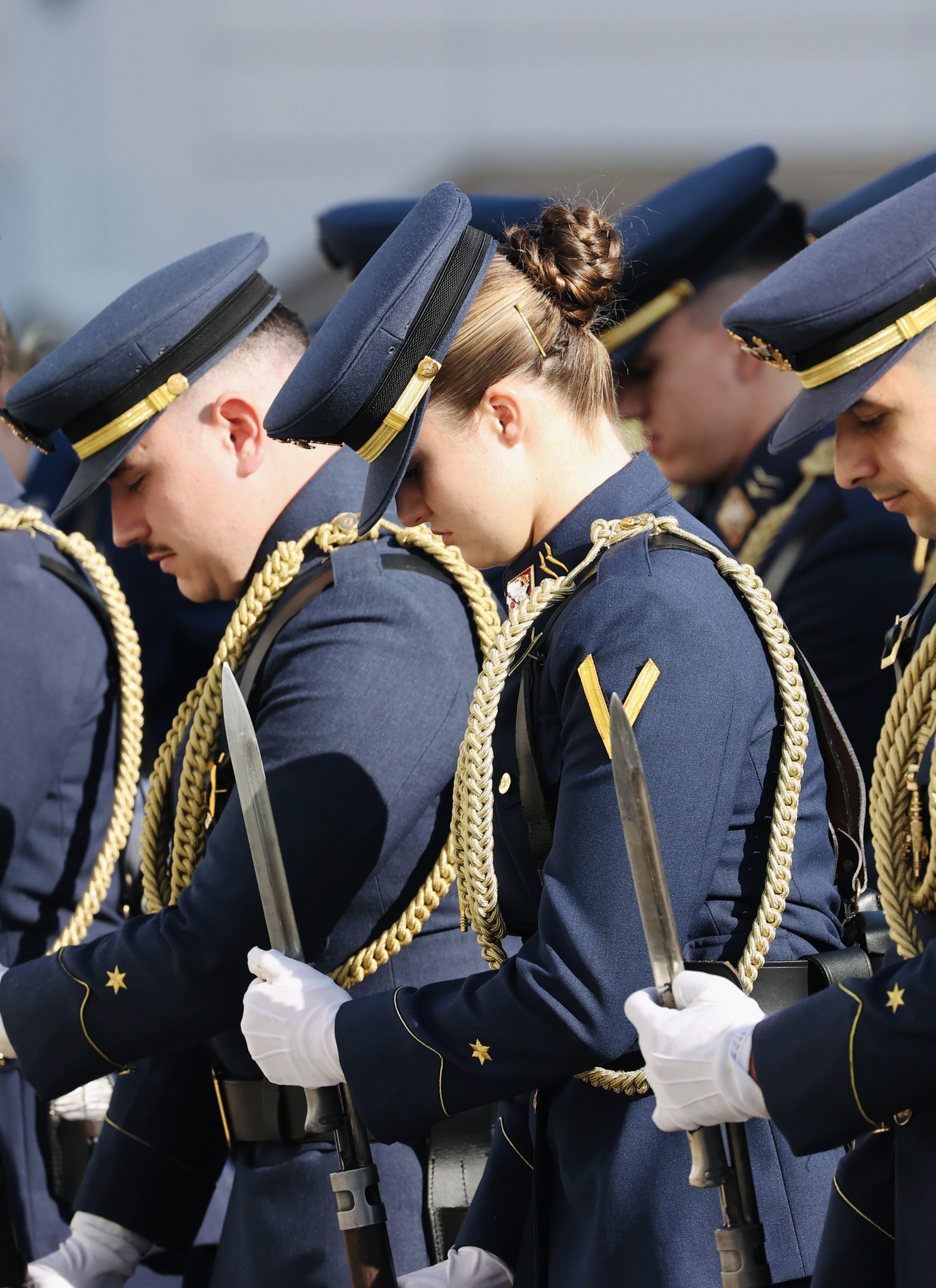
La Princesa Leonor da un paso más en sus compromisos oficiales y participará en la cita militar más importante La heredera acudirá por primera vez al Día de las Fuerzas Armadas, que se celebrará en Vigo Leer
elmundo · 1 day ago

Polska podpisze nowy traktat. "Dotyczy głównie kwestii obronności i bezpieczeństwa zdrowotnego" Traktat podpiszą w środę w Wielkiej Brytanii szefowie obu rządów Donald Tusk i Keir Starmer. - wyjaśnił rzecznik rządu Adam Szłapka.
gazeta.pl · 1 day ago
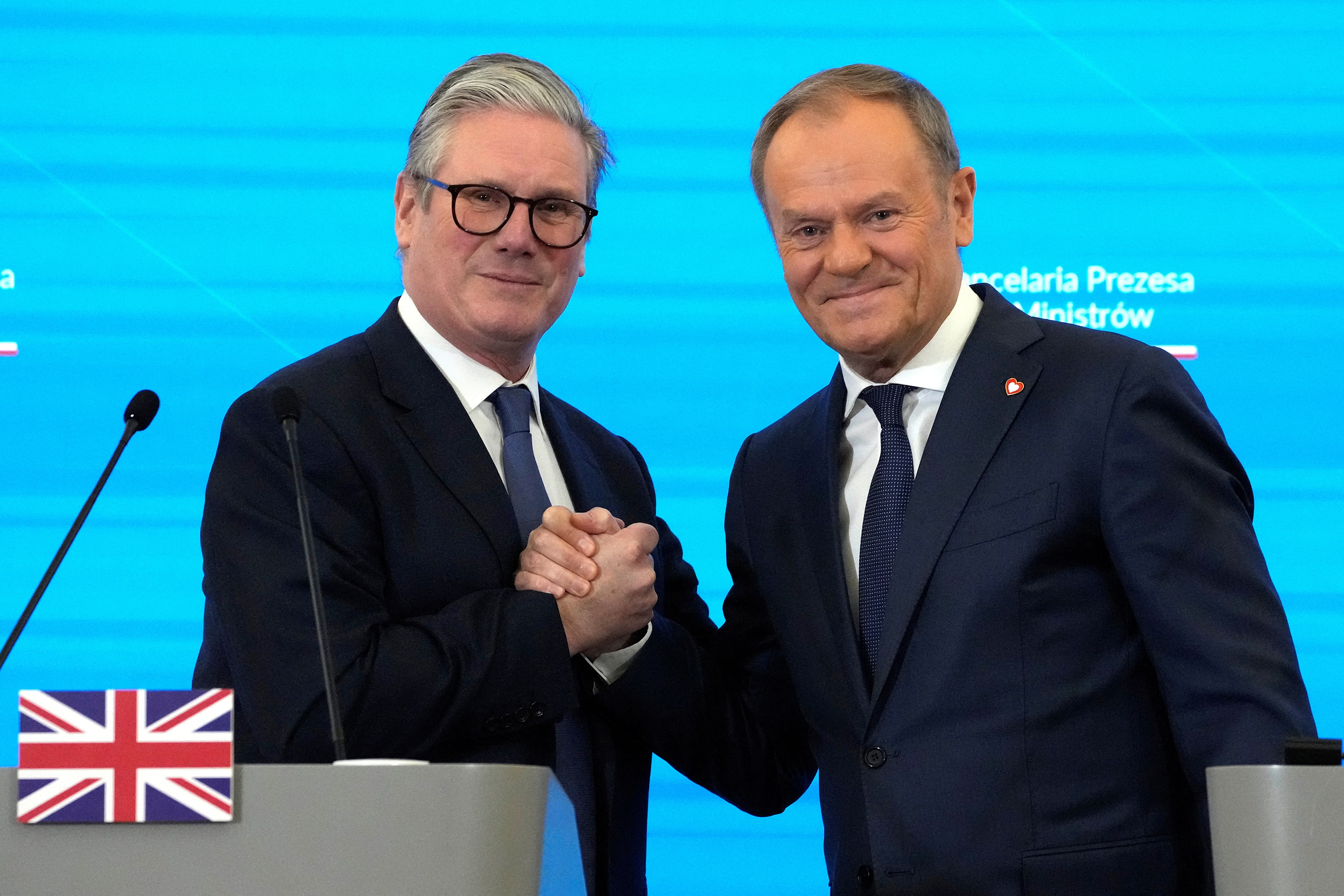
Reino Unido y Polonia firmarán un tratado de defensa para reforzar la cooperación militar ante amenazas en Europa
gdelt bot · 1 day ago

UK, Poland set to sign defence treaty to tackle hostile threats across Europe reut.rs/4uALLny
bluesky bot · 1 day ago
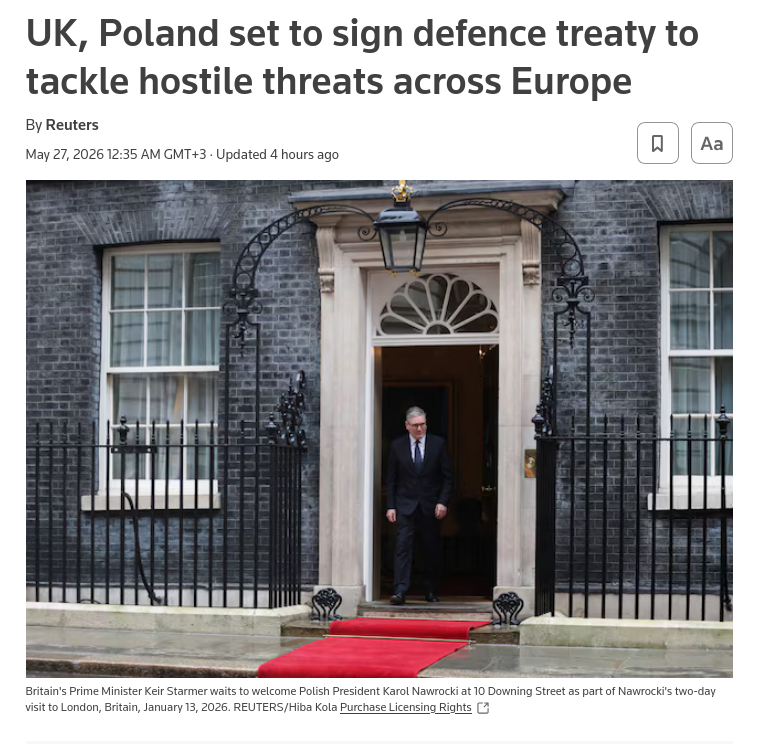
Britain will sign a new defence and security treaty with Poland on Wednesday to strengthen defence cooperation in the face of increasing hostile threats across Europe, the government said, following similar deals with France and Germany. #Russia #EU #Poland #UK
mastodon bot · 1 day ago

Bahnstrecke nach Polen: Vier Länder setzen auf die Oder-Partnerschaft mit Polen
die zeit · 1 day ago
UK and Poland set to sign major defence and security treaty as PM steps up relationship with Europe to keep nation safe
gdeltproject.org · 1 day ago
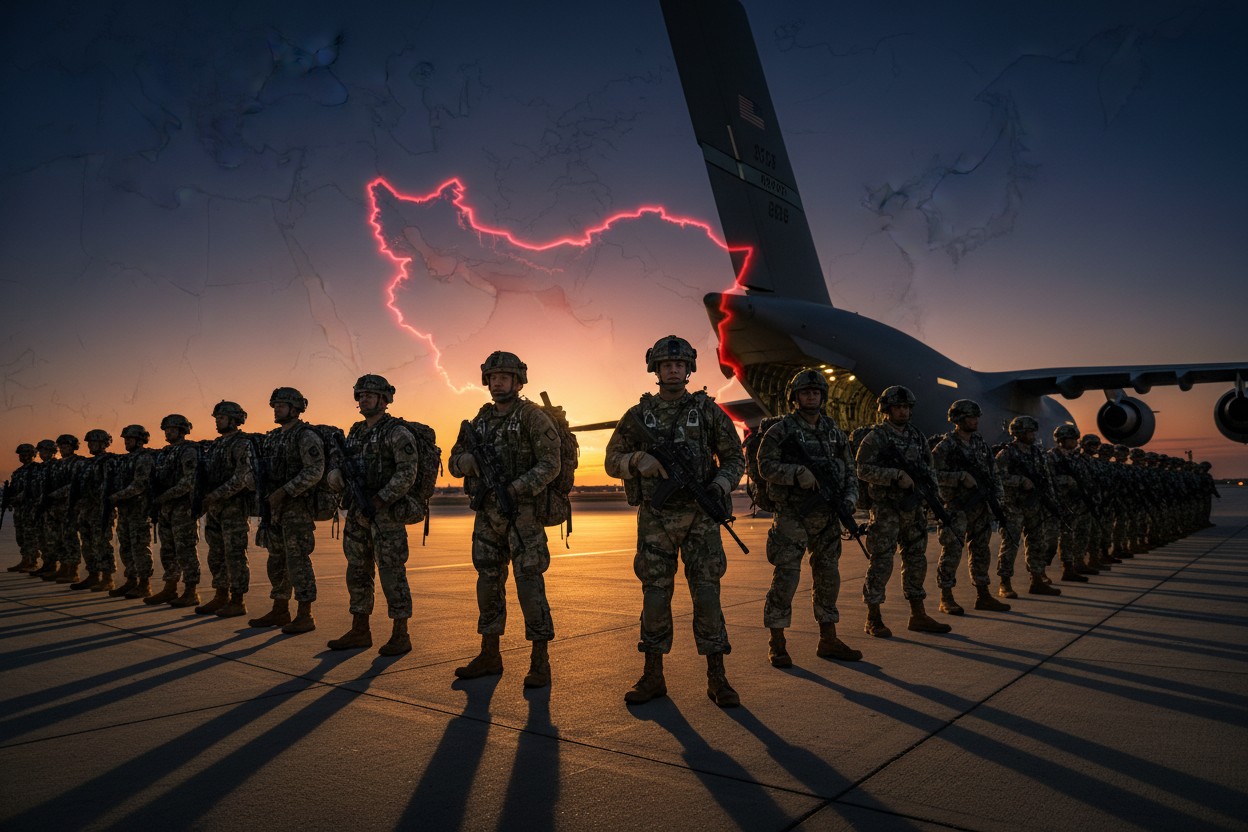
Trump deploys 5 , 000 troops to Poland , reversing Pentagon cancellation – NaturalNews . com
gdelt bot · 2 days ago

Starmer to host Tusk as pair set to sign UK-Poland security treaty
news.yahoo.com · 2 days ago
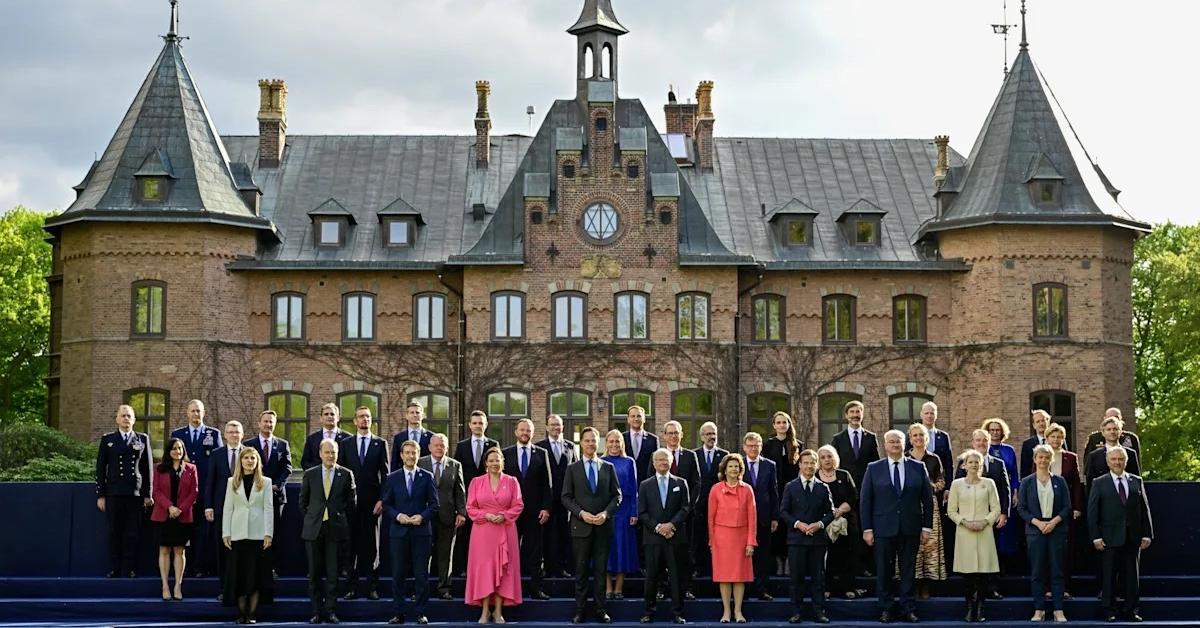
Otan : Rutte celebra el anuncio de más tropas de EE UU a Polonia
gdelt bot · 2 days ago
UK, Poland Sign Major Defence, Security Treaty
gdeltproject.org · 2 days ago