 Saturday, July 4Saturday, July 4
Germany’s Reform Push Faces Turbulence as Merz Promises “Very Good Years” Ahead
BERLIN — Chancellor Friedrich Merz (CDU) has doubled down on his government’s embattled reform agenda, declaring that Germany stands on the brink of “very good years” if the coalition’s plans are fully implemented. Speaking at the CDU’s state party conference in Düsseldorf on Saturday, Merz dismissed critics as “cultural pessimists” and “whiners,” while unveiling a July action plan to crack down on social benefit fraud—a move aimed at shoring up public support for the government’s austerity measures.
The government’s reform package, agreed upon this week after months of negotiations between the CDU/CSU and SPD, includes 34 measures targeting healthcare, pensions, income tax, and corporate bureaucracy. Key proposals—such as easing labor regulations, reducing reporting burdens on businesses, and streamlining data protection—have been hailed as necessary steps to revitalize Germany’s stagnant economy. Yet implementation remains stalled, with no laws yet enacted despite the agreement’s announcement. “The emphasis is on *agreed*, not *implemented*,” noted *Frankfurter Allgemeine Zeitung* .
Finance Minister Lars Klingbeil (SPD) faces the immediate challenge of closing a €34 billion hole in the 2027 federal budget, a task that has forced him to tap into a long-standing reserve fund—a move he had sought to avoid. The shortfall stems from weaker-than-expected tax revenues, higher costs for unemployment insurance, and the economic fallout from the Iran war, which has driven up energy prices. To balance the books, Klingbeil plans to cut €2–3 billion annually from the Climate and Transformation Fund (KTF), redirect €2.7 billion in emissions trading revenues to the core budget, and reduce federal subsidies to social insurance systems, including a €1 billion cut to pension funds .
The reforms have sparked internal dissent, particularly over the planned overhaul of the heating subsidy program, which currently covers up to 70% of costs for climate-friendly heating systems. SPD lawmakers, led by faction chief Matthias Miersch, are pushing for steeper social differentiation in the subsidies, while the CDU has resisted outright cuts. The KTF, which also funds renewable energy expansion, will see its budget trimmed, though Klingbeil insists long-term climate investments remain secure .
Merz, who has faced criticism within his own party for overpromising and underdelivering, framed the reforms as proof that the political center can still deliver. “We are proving that the political center can find solutions, forge compromises, and reform the country,” he told delegates. He also reaffirmed plans to fully implement the pension commission’s recommendations, though he sidestepped a dispute with CSU leader Markus Söder over the future of Germany’s €538-a-month “mini-jobs,” which Söder had suggested would not be abolished .
Yet the government’s optimism contrasts sharply with Germany’s economic realities. The country’s GDP growth has stagnated over the past seven years, lagging behind competitors like the U.S. and China, which have posted double-digit growth in the same period. Volkswagen’s announcement this week that it would close multiple plants and cut up to 100,000 jobs underscores the urgency of structural reforms. “Germany is still the world’s third-largest economy, but the cracks are showing,” warned *Süddeutsche Zeitung* .
With the cabinet set to approve the 2027 budget draft on Monday, the coalition’s ability to translate its reform blueprint into tangible results will be tested. For now, Merz’s defiant tone suggests he is betting on political will over economic headwinds—but the road ahead remains fraught with uncertainty.
Follow us for live European news
4 further sources not geolocated

Sparzwänge im Bundeshaushalt: Klingbeil plant Kürzungen von Finanzhilfen im Klimafonds Mit dem reduzierten Budget könnte es ab 2027 weniger Heizungsförderung geben. Bereits zugesagte Förderungen bleiben aber unberührt. Ziel ist mehr Effizienz.
tagesspiegel · about 2 hours ago
Haushalt: Bund plant mehr Geld für Neu- und Ausbau der Schiene Bei der Bahn soll nicht nur das Bestandsnetz saniert werden. Geplant ist auch der Neubau von Strecken. Im kommenden Jahr soll es dafür mehr Mittel geben – und woanders Kürzungen.
handelsblatt · about 2 hours ago
CDU: Gelbes Trikot für den Kanzler: Wüst stellt sich auf NRW-Parteitag in Merz Schatten Eigentlich gehört die Bühne beim CDU-Parteitag dem Ministerpräsidenten. Doch der Kanzler ist überraschend angereist. Wüst macht Platz – um Gerüchte aus dem Weg zu räumen.
handelsblatt · about 2 hours ago
Precious metals tumble as Fed rate hike fears strengthen US dollar Precious metals declined sharply in the first half as expectations of Federal Reserve rate hikes—driven by inflation from the US-Israel-Iran war—sent investors fleeing to dollar assets, with gold dropping 7.1 and silver plunging 17.4 as hawkish policy stoked selling pressure across commodity markets.
yenisafak · about 2 hours ago
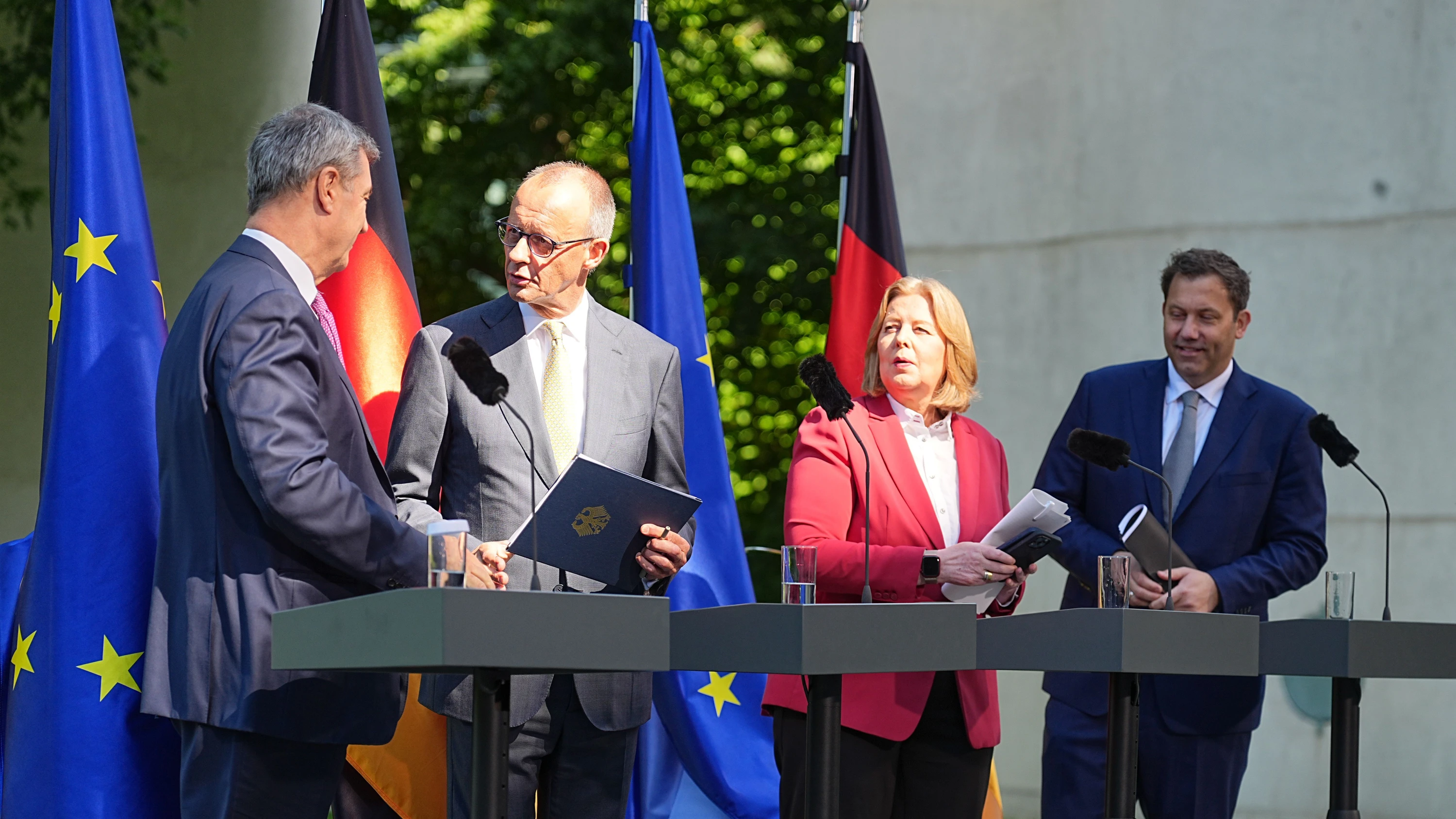
Reformen der Regierung: Die unzureichende Politik des Möglichen Das Reformpaket der Koalition ist umfassender, als viele erwartet haben. Aber die Lage des Landes verlangt weitaus mehr.
faz · about 2 hours ago
Friedrich Merz in NRW: „Das kann nur der erste Schluck aus der Pulle sein Unter der Woche hat die schwarz-rote Koalition ihre lang erwarteten Reformpläne präsentiert. Beim Landesparteitag in Düsseldorf erlebt Kanzler Merz ein erstes CDU-Applausometer für seine Vorhaben.
sueddeutsche · about 2 hours ago

Exames: segunda fase a 20 de julho, resultados a 7 de agosto Na sexta-feira, o Ministério tutelado por Fernando Alexandre anunciou o adiamento da divulgação dos resultados da primeira fase dos exames nacionais, inicialmente prevista para 14 de julho, para 17 de julho, fixando o dia 14 como data limite para a classificação das provas
observador · about 2 hours ago
OFICIAL Noua procedură ANAF pentru firmele care redirecționează 20 din impozitul pe profit către ONG-uri ANAF a publicat în Monitorul Oficial procedura prin care firmele din România pot direcționa până la 20 din impozitul pe profit către ONG sau alte acțiuni de sponsorizare și mecenat.
hotnews.ro · about 2 hours ago

14h. PS quer pedido de desculpa do primeiro-ministro José Luís Carneiro descreve a situação dos exames nacionais como "absolutamente grave" e quer que o Governo se retrate publicamente. União Europeia felicita Estados Unidos. E a atualização dos fogos.
observador · about 2 hours ago

Zahl der getöteten Nutrias steigt erneut drastisch an Die invasiven Sumpfbiber vermehren sich in Deutschland unaufhaltsam. Jetzt präsentieren die Jäger neue Zahlen. Im Vergleich zu 2006 ist die Zahl der Abschüsse um 1700 Prozent gestiegen.
welt.de · about 2 hours ago
Die meisten Migranten wollen nach Frankreich: Zahl der Asylanträge in Deutschland sinkt um 27 Prozent Neue EU-Zahlen zeigen, aus welchen Ländern die meisten Asylbewerber kommen und welche Staaten besonders beliebt sind. Vor allem für eine Gruppe ist die Bundesrepublik nach wie vor das Hauptzielland.
tagesspiegel · about 2 hours ago
Politiker und Bürger: Mehr Vertrauen wagen Die Politik sollte nicht mit Misstrauen gegenüber den Bürgerinnen und Bürgern arbeiten. Sondern auf Vertrauen und Verantwortungsbewusstsein setzen. mehr...
taz.de · about 2 hours ago

Image der Stadt: Frankfurt braucht eine klare Linie Frankfurt ist nicht zuletzt als Wirtschaftsstandort mehr denn je darauf angewiesen, eine klare Linie zu finden, wohin die Stadt sicherheitspolitisch steuern will. Ein Konzept ist bisher nicht erkennbar.
faz · about 2 hours ago
The Government of Federation of BiH Allocates Three Million BAM to the Radio-Television of Herceg-Bosna Today in Mostar, the Federal Minister of Transport and Communications, Adrijana Katić, and the Director of the Radio-Television of Herceg Bosna (RTV Herceg-Bosna), Slavica Koračić, signed an Agreement on allocating three million BAM. The agreement regulates the use of funds approved for the realization of the project Improvement of RTV Operations – investing in in-house […] The post The Government of Federation of BiH Allocates Three Million BAM to the Radio-Television of Herceg-Bosna appeared first on Sarajevo Times.
sarajevo times · about 2 hours ago

Poll: Do you think workers earning more than €44k should pay less tax? Tánaiste Simon Harris says the government plans on raising the income threshold.
thejournal · about 2 hours ago

Government borrowing to top up its savings funds was always a possibility, says McGrath IFAC hit out against the government in June stating that it will have to borrow to top up its new savings funds.
thejournal · about 2 hours ago
School assistants to be introduced for children with disabilities A total of 290 new positions for school assistants and chaperones for children with disabilities, as well as an increase in social benefits, were approved by Cabinet this week, President Nikos Christodoulides announced on Saturday. This week in Cabinet, we took two significant decisions of particular social importance that substantially improve the daily lives of […]
cyprus mail · about 2 hours ago

Quitter son pays nest pas (toujours) une solution Aux États-Unis comme en Allemagne, de plus en plus de gens envisagent lexpatriation pour fuir les crises économiques et politiques. Sils se comprennent sur le plan personnel, ces départs aggravent en fait la situation dans chaque pays.
courrier international · about 2 hours ago

87.000 Euro weniger Rendite: Selbstnutzer von Immobilien gegenüber Vermietern steuerlich benachteiligt Eine neue Auswertung zeigt: In Deutschland eine Immobilie kaufen und selbst einziehen ist finanziell deutlich unattraktiver, als sie zu vermieten. In anderen europäischen Ländern ist das nicht so.
faz · about 2 hours ago

Merz says Germany has some very good years ahead
news.yahoo.com · about 2 hours ago

A Brexit rule change means British teens in the EU face soaring student fees for UK degrees.British teenagers living in the EU could be priced out of UK universities in two years time as a Brexit rule change means they face the double whammy of paying costlier international fees, while losing access to student finance. #HigherEducation #Brexit #Students #EU
mastodon bot · about 2 hours ago
„Justiția este nu capturată, ci constant atacată, susține Radu Marinescu. Fostul ministru acuză „o parte a clasei politice Fostul ministru al Justiției Radu Marinescu susține că reformele din sistemul judiciar sunt blocate prin faptul că România nu are un guvern cu puteri depline și acuză „o parte a clasei politice că a declanșat un război împotriva Justuției. „Inițiative esențiale precum îmbunătățirea sistemului de protejare a victimelor infracțiunilor, degrevarea instanțelor și a parchetelor pentru …
hotnews.ro · about 2 hours ago
Adrian Câciu: „La finalul acestei luni, lucrurile vor duce către un guvern majoritar și tind să cred că va fi PSD, PNL, UDMR Fostul ministru al Finanțelor, Adrian Câciu, a declarat, vineri seară, la Digi24, că negocierile politice ar putea conduce, până la finalul lunii iulie, la formarea unui guvern majoritar format din PSD, PNL și UDMR. Social-democratul a exclus însă varianta unui „guvern de armistițiu și a susținut că USR și-a impus „linii roșii care au contribuit la actualul blocaj politic.
digi24 · about 2 hours ago
Corendon and TUI offer to operate Dutch government jet, say plan could save €100 million Airlines Corendon and TUI have offered to operate the Dutch governments current Boeing PH-GOV aircraft instead of replacing it, saying the plan could save taxpayers 100 million euros, De Telegraaf
nltimes.nl · about 2 hours ago
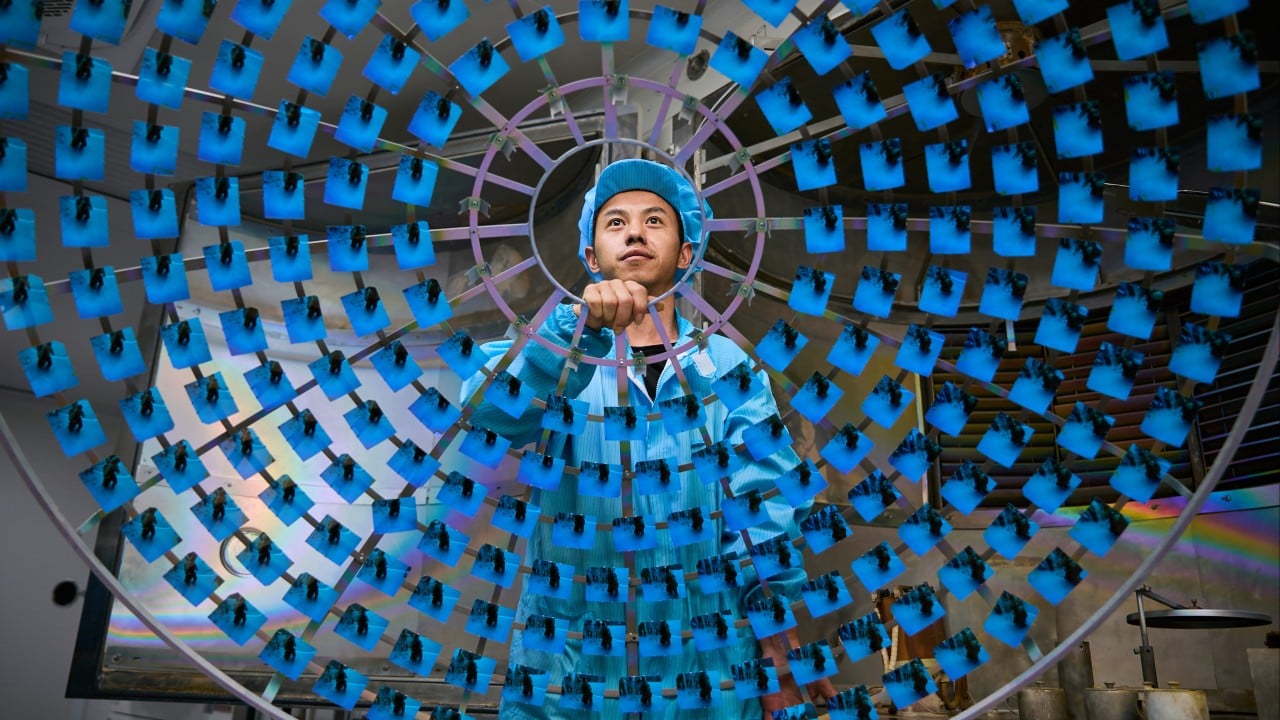
Blaming China wont bring jobs back to post-industrial economies Almost anywhere you look these days, you can find claims from political, academic and other various sources that Chinas supposed overproduction and exports of manufactured goods pose unfair advantages. These sources may also claim such unfair advantages justify protectionist countermeasures. But it is difficult to counter ones own folly. For decades, the US, much of Europe and even Japan, long proud of its manufacturing skills, have prided themselves on becoming post-industrial and...
south china morning post · about 2 hours ago

KYIV POST: Presumed Next UK PM Rules Out Early Elections Andy Burnham, currently the sole candidate to succeed Sir Keir Starmer as UK prime minister and Labour Party leader, stated he will not call early general elections and will govern based on the 2024 party manifesto. During a public online forum, Burnham also expressed support for electoral reform and pledged continued military support for Ukraine. #Europe #World #Ukraine
mastodon bot · about 2 hours ago

Klingbeils Wackelhaushalt – Neue Steuern, mehr Personal, noch mehr Schulden Nur mit einem Griff in die Rücklage und zusätzlichen Einnahmequellen kann Finanzminister Lars Klingbeil die Milliardenlücke im Bundeshaushalt schließen. Innerhalb von fünf Jahren sollen mehr als eine Billion Euro zusätzliche Schulden kommen.
welt.de · about 2 hours ago
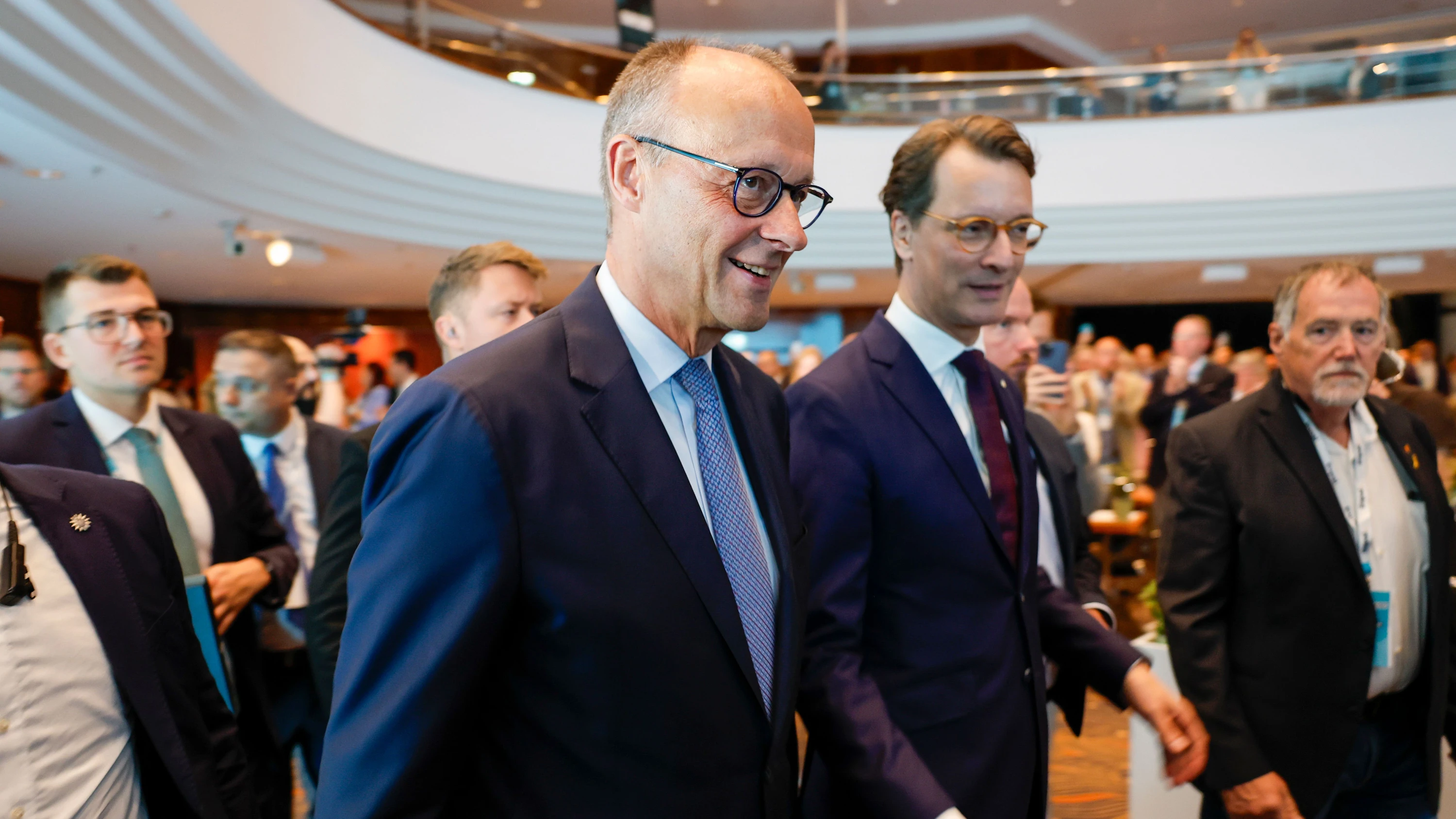
Merz bei NRW-CDU: „Kulturpessimisten, Untergangspropheten, Nöler, Nörgler und Berufskritiker: Wegtreten." Kein Wort zur AfD, kein Wort zur Weltlage: In Düsseldorf tritt Friedrich Merz ganz als Reformkanzler auf – und hat Botschaften an Hendrik Wüst dabei.
faz · about 2 hours ago
„Die Regierung von Merz ist fatal für Deutschland BSW-Gründerin Sahra Wagenknecht kritisiert Versuche, den AfD-Parteitag zu verhindern, und betont die Notwendigkeit sachlicher Debatten. Sie sieht Überschneidungen, aber auch klare Unterschiede zur AfD. „Wir stimmen jedem vernünftigen Antrag zu.
welt.de · about 2 hours ago
Merz kritisiert „Nöler und Nörgler – und will härter gegen Sozialbetrug durchgreifen Noch im Juli soll ein Aktionsplan zur Bekämpfung von Sozialleistungsmissbrauch kommen, sagt Bundeskanzler Friedrich Merz. Und er verspricht, dass vor Deutschland noch „sehr gute Jahre liegen können.
welt.de · about 2 hours ago