 Sunday, June 7Sunday, June 7
The U.S. Supreme Court has cleared the way for Alabama to redraw its congressional districts in a manner that consolidates Black voters into a single majority district, a decision that strengthens Republican prospects in the upcoming midterm elections. In a 6-3 ruling issued Tuesday, the court allowed the state to use a map that eliminates one of its two majority-Black districts, overriding a lower court’s finding that the new boundaries were drawn with discriminatory intent. The decision follows the court’s April ruling in *Louisiana v. Callais*, which effectively gutted a key provision of the Voting Rights Act by requiring plaintiffs to prove intentional discrimination—a standard critics say is nearly impossible to meet.
The ruling delivers a tactical advantage to Republicans, who now face a more favorable electoral map in Alabama just months before the November midterms. Black voters and civil rights groups have condemned the decision as a setback for voting rights, arguing it undermines decades of progress in combating racial gerrymandering. Alabama’s new map is expected to reduce the influence of Black voters in congressional races, potentially costing Democrats a seat in a state where Black residents make up 27% of the population but will now control only one of seven districts.
Meanwhile, primary elections in six states—including California, Iowa, and New Jersey—are shaping the battlefield for November. In Iowa, Democrat Josh Turek will challenge Republican incumbent Ashley Hinson for a Senate seat, while in Maine, Democratic Senate candidate Graham Platner faces mounting pressure after reports surfaced that he exchanged sexually explicit messages with women during his marriage. Platner met with Democratic leaders in Washington on Tuesday amid concerns the scandal could jeopardize the party’s efforts to regain control of Congress.
The Supreme Court’s decision marks the latest in a series of rulings under the Trump administration’s reshaped judiciary that have rolled back voting protections. With midterm primaries underway, the ruling could have ripple effects in other states where redistricting disputes remain unresolved, including Louisiana and Georgia. Legal challenges are expected, but the court’s conservative majority has signaled little appetite for revisiting the issue before the elections.
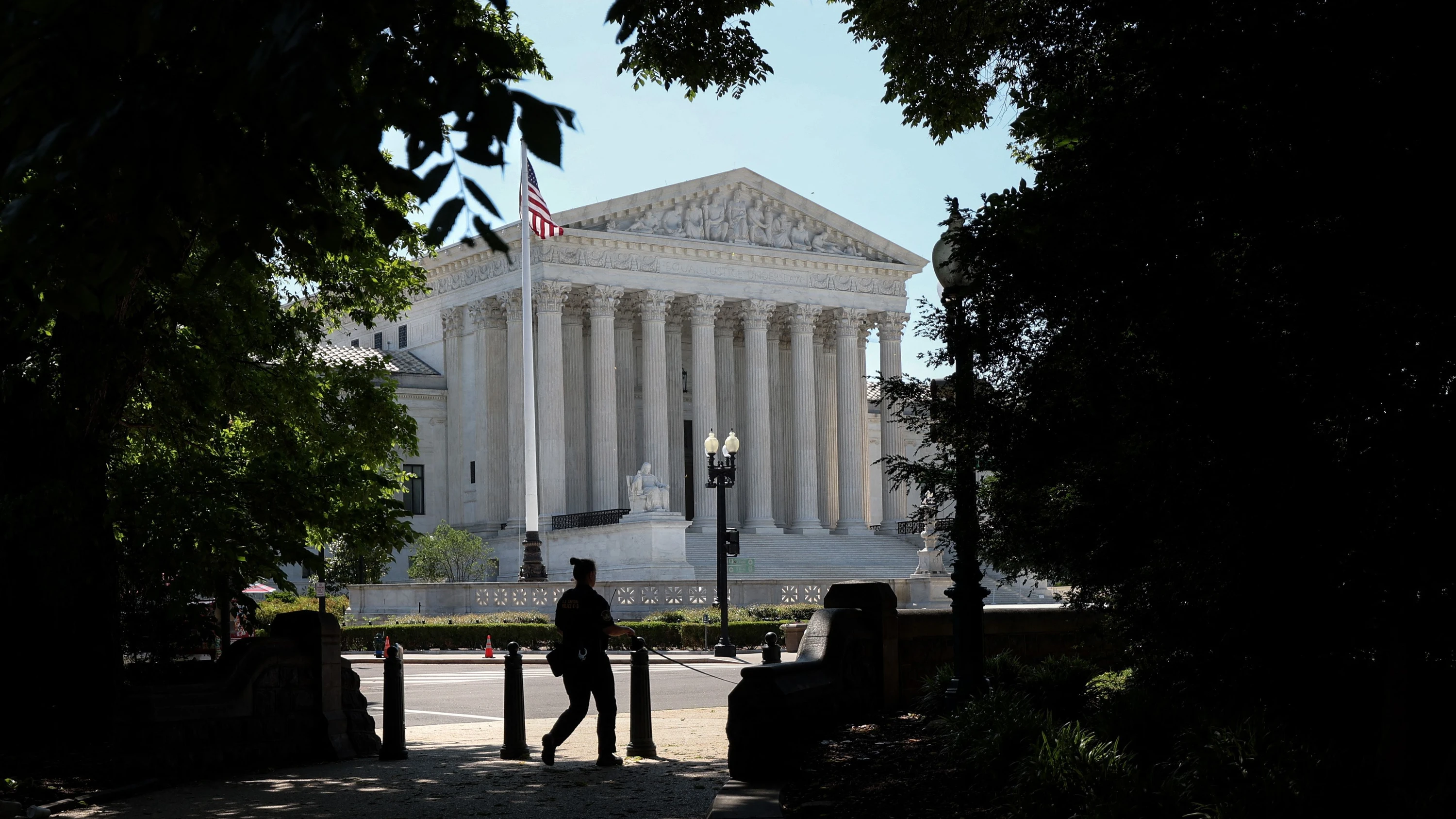
USA unter Trump: Supreme Court erlaubt Neuzuschnitt der Wahlkreise in Alabama Liveticker zur US-Politik unter Donald Trump aktuell: Aktuelle News & Nachrichten von heute ► Jetzt lesen im Liveticker der FAZ
faz · 4 days ago

Midterm primaries 2026 live: results and reaction as six states including California and Iowa cast ballots All the latest results and updates as New Jersey, South Dakota, New Mexico and Montana also vote in primariesCalifornia elections: governor, LA mayor and Congress at stakeIowa: Democrat Josh Turek to face Trump-backed Ashley Hinson in bid to flip red Senate seatSign up for the Breaking News US emailVoters in Maine wont head to the polls until next week, but the states primary election has been shaken up by recent news about Senate hopeful Graham Platner.According to information his wife shared with his campaign last year, Platner exchanged sexually explicit texts with other women during his marriage, the New York Times and the Wall Street Journal reported, and which the Guardian has confirmed.Graham Platner met on Tuesday with Democratic leaders in Washington DC as the embattled Maine Senate candidate contends with yet another revelation threatening his campaign, which is at the center of his partys hopes of regaining control of Congress.Platner did not respond to questions from reporters and quickly entered a waiting car as he exited the meeting, which stretched for more than an hour and a half at the headquarters of the Democratic Senatorial Campaign Committee (DSCC). A spokesperson for the DSCC did not respond to a request for comment. Continue reading...
theguardian · 4 days ago

USA: Supreme Court erlaubt Alabama Neuzuschnitt der Wahlkreise Der US-Bundesstaat Alabama darf Wahlkreise so ändern, dass in nur einem Wahlkreis eine Mehrheit schwarzer Wähler besteht. Dies nützt den Republikanern bei den Midterms.
die zeit · 4 days ago

Supreme court approves Alabama map that erases majority-Black district Court decision that represents win for Republicans comes after lengthy battle over states congressional mapSign up for the Breaking News US newsletter emailAlabama can use a redrawn congressional map that eliminates one of the states two majority-Black districts in this years midterm elections, the US supreme court ruled in a 6-3 decision on Tuesday, another major blow to Black voters and a win for Republicans.The courts emergency ruling is the most consequential decision it had issued since its landmark ruling in late April that struck down a critical provision of the Voting Rights Act. In that case, Louisiana v Callais, the courts majority made it nearly impossible to win Voting Rights Act claims, saying that plaintiffs had to prove intentional discrimination. But on 26 May, a three-judge panel said the map Alabama wants to use for this years midterm was enacted with discriminatory intent. Continue reading...
theguardian · 4 days ago

USA unter Trump: Traditionelles Pressedinner wird nach Angriff auf Trump nachgeholt Liveticker zur US-Politik unter Donald Trump aktuell: Aktuelle News & Nachrichten von heute ► Jetzt lesen im Liveticker der FAZ
faz · 4 days ago

Trump says hell speak at July White House Correspondents Dinner in ballroom that I built after shooting marred last one We cannot allow Lunatics to change our way of life, or even its scheduling, Trump wrote on Truth Social
independent · 4 days ago
Trump to speak at White House dinner inside ballroom that I built after shooting interrupted last event We cannot allow Lunatics to change our way of life, or even its scheduling, Trump wrote on Truth Social
independent · 4 days ago
What to know about Tuesdays primaries in California, New Jersey, Montana Voters in six US states are casting primary ballots that will set the battle lines for Novembers midterm elections.
aljazeera · 4 days ago
Midterm primaries 2026 live: results and reaction after six states including California and Iowa cast ballots All the latest results and updates as New Jersey, South Dakota, New Mexico and Montana also vote in primariesCalifornia elections: governor, LA mayor and Congress at stakeSign up for the Breaking News US emailKnocking on strangers doors on a warm May afternoon in Trenton, New Jersey, Adam Hamawy did not seem fazed when more than a few went unanswered.Its his first time running for office, but this is an area where he has experience. After returning from a medical mission in Gaza in 2024, Hamawy went to Washington to describe the crisis – which he viewed as a US-funded genocide – to lawmakers, only to encounter too many doors that were closed, that didnt even want to listen. Continue reading...
theguardian · 4 days ago